
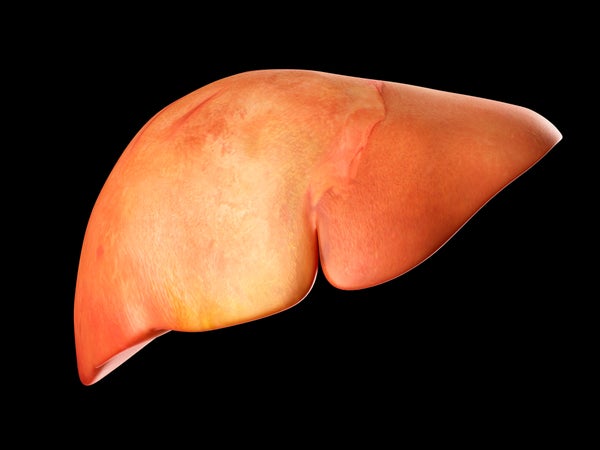
A machine that maintains livers for transplant at body temperature, instead of in a cold solution on ice, helps to improve tissue quality and reduce the discard rate of organs that are suitable for transplantation.
In the first randomized clinical trial of its kind, researchers tested the technique head-to-head against cold storage, with the results published in Nature on 18 April1. The method could prolong survival for organ recipients and reduce the death toll among the tens of thousands of patients globally who need donor livers today.
“This is a line-in-the-sand moment for liver transplantation,” says Darius Mirza, a transplant surgeon at Queen Elizabeth Hospital in Birmingham, UK, who helped to test the device, which is known as metra (Greek for ‘womb’).
On supporting science journalism
If you're enjoying this article, consider supporting our award-winning journalism by subscribing. By purchasing a subscription you are helping to ensure the future of impactful stories about the discoveries and ideas shaping our world today.
Transplant experts say that the device, and others like it, could boost the supply of livers available for transplant by reducing the number that are discarded.
Physiological mimicry
The metra device works by supplying the liver with oxygenated blood, anti-clotting drugs and assorted nutrients, all while keeping the organ at a steady 37 °C. Because immune cells are removed from the device’s blood supply to avoid inflammation, “the liver is allowed to recover in a very benign environment”, says Peter Friend, a transplant surgeon at the University of Oxford, UK, and co-founder of the device’s manufacturer, OrganOx.
The trial involved 220 patients across Western Europe whose livers had failed because of hepatitis, cirrhosis, cancer or other causes. Each participant was randomly allocated a donor liver that was either hooked up to the metra machine, or stored on ice—which slows down cellular metabolism to mitigate damage, but makes the organ prone to injury when blood supply returns to the tissue.
Recipients of livers kept on the device showed a 50% average decrease in levels of an enzyme associated with organ damage, compared with recipients of livers preserved on ice. The rate of early allograft dysfunction—a serious and potentially deadly complication of transplantation—occurred in only 10% of machine-stored liver recipients, versus 30% of those allocated ice-stored ones. (The one-year trial was too short and small to detect any difference in long-term patient survival.)
The randomized nature of the study means that the donor livers were equally viable at the point of organ retrieval, regardless of preservation technique. However, transplant surgeons in the study had to discard twice as many of the livers kept on ice as organs on the metra. They also ended up being able to maintain livers for an average of 12 hours, compared to around 8 hours for those kept on ice.
Damage from prolonged preservation on ice might explain some of those differences. But transplant surgeon David Nasralla at the University of Oxford thinks that the bigger benefit comes from the ability to watch and monitor organ performance in real time, because the metra machine provides continuous data on parameters such as blood flow, bile production and lactate clearance.
“You’ve got objective evidence about the functional quality of a liver,” says Nasralla, who co-led the trial. “That resulted in a lot of surgeons feeling that it was safe to transplant an organ that otherwise they would have felt very uncomfortable about.” Surgeons also felt less of a time crunch and often delayed operations until daytime hours, when outcomes are typically better because transplantation teams are more alert.
Metra in practice
The OrganOx device is already approved in Europe and is undergoing late-stage testing in the United States. However, it’s not routinely used outside of clinical trials—in large part because it costs between £4,000 (US$5,700) and £7,000 for each recipient.
Experts anticipate ice storage will remain the norm for quality livers from donors declared brain dead, around 80% of which are transplanted. But for high-risk livers—say, those from donors whose hearts stopped beating, only a small fraction of which are used today—a preservation system could become routine.
Mirza is currently testing whether livers that surgeons deem unsuitable for transplant when stored on ice might become useable after several hours of recuperation and monitoring on the metra device. If successful—and if machine-storage technologies were implemented widely—“we could potentially double the number of transplants in the US”, says Korkut Uygun, a bioengineer at the Massachusetts General Hospital in Boston and co-founder of Organ Solutions, a company that’s also developing machine perfusion technologies for liver transplantation.
Warm liver preservation could also open the door to further treatment of donor organs, says Jedediah Lewis, chief executive of the Organ Preservation Alliance, a non-profit organization in Berkeley, California. An extended transplant window could make time for drug or stem-cell based treatments—even gene therapy. “You could potentially make the organ better in the recipient than it was in the donor,” he says. “It sounds pie in the sky, but this is the next big step towards that.”
This article is reproduced with permission and was first published on April 18, 2018.