
Rising ocean temperatures and acidification are known to be altering the way fish grow and reproduce—and now research shows these climate change side-effects may also change how fish think and act.
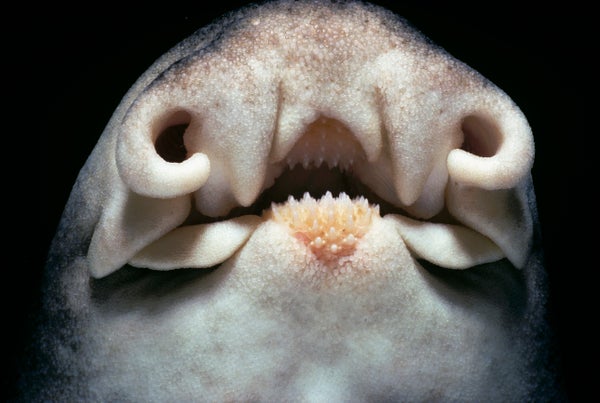
A recent study has found Port Jackson sharks become “right-handed” when incubated at the kind of temperatures projected to prevail by the end of this century, if climate change continues at its current pace. Some scientists think such shifts could lead to behavioral changes that tip marine ecosystems out of balance.
“Handedness” is a function of lateralization—the tendency for one side of the brain or the other to take over specific tasks. This delegation of responsibilities is believed to help humans and many other animals free up brain space for other tasks, at least partly by automating some behaviors that can increase survival efficiency. For example, a default preference for swimming in a certain direction helps fish form schools and find food. Although global warming will likely be negative for large numbers of sharks, the cognitive boost offered by lateralization may turn survivors into sharper, fast-learning predators. “Lateralization may enable sharks to process information more efficiently, even if their brains are smaller or less well-developed,” says lead author Catarina Vila Pouca, a behavioral ecologist at Macquarie University in Sydney.
On supporting science journalism
If you're enjoying this article, consider supporting our award-winning journalism by subscribing. By purchasing a subscription you are helping to ensure the future of impactful stories about the discoveries and ideas shaping our world today.
Vila Pouca and colleagues incubated Port Jackson shark eggs in seawater 3 degrees Celsius above today’s average maximum temperatures in their habitat off eastern Australia. This simulated the upper end of projections for the end of this century, when oceans are expected to be 1 to 3 degrees C warmer if greenhouse gas emissions continue at current levels. One month after these sharks hatched (only about 60 percent of them survived the embryo stage), the researchers placed the survivors into a Y-maze and assessed their turn preferences. Most preferred to turn right. Those in a control group, incubated in the current average maximum temperature of their natural environment, showed no preference. Vila Pouca and colleagues reported the findings in Symmetry earlier this year.
Shark embryos can take up to 10 months to develop, making them vulnerable to high water temperatures and other environmental changes—which are known to disrupt physical growth. Hot conditions speed up metabolism, causing embryos to burn through their yolk reserves and hatch too early, Vila Pouca notes. To strike a balance between cutting costs and maintaining function, some tissue and body parts may be compromised to save energy. “Brain tissue is metabolically expensive, so if embryos don’t have enough time to develop properly, this is the first thing that will be affected,” she says.
Possibly to help cope with this heat-stunting, the surviving embryos’ brains become more strongly lateralized—apparently making some behaviors automatic in order to squeeze more cognitive power out of these smaller brains. This may enable sharks to better watch for threats or learn more about their environment while hunting, for example, or to scan their surroundings for competitors when seeking a mate.
Although a cognitive edge may help surviving sharks adapt to warming oceans over the coming decades, the resulting changes could be detrimental to the marine ecosystems the sharks dominate. This is because sharks help maintain balance in ocean habitats by keeping prey populations under control, ensuring a diversity of marine life flourishes. If lateralization shifts the way they catch prey—and perceive their environment—these changes could cascade down the food web. Smarter sharks could make things even worse for smaller or competing fish facing their own climate change problems, such as ocean acidification, which also affects handedness in other fish species.
The study is an important first step in understanding how end-of-century temperatures may impact shark cognition, says Leon Green Ekelin, an ecophysiologist at the University of Gothenburg in Sweden who was not involved in the new work. Sharks “are underrepresented in climate change research, despite being important for ecosystem health,” he notes. But in order to gain a better understanding of how lateralization affects shark behavior in different situations he says they need to be tested in competitive scenarios. “The behavioral shift could be a beneficial response to changes in their environment,” he adds, “or it could simply be brain damage.”
Vila Pouca believes understanding how climate change shapes animal behavior is important because it can reveal unexpected ways in which they may adapt to their rapidly changing environments. “Looking at lateralization can help us understand brain development and its impact on behavior,” she says. “To build a complete picture, we need to investigate how climate change may affect other behavioral traits such as escape responses and learning abilities.”