
By Steve Gorman
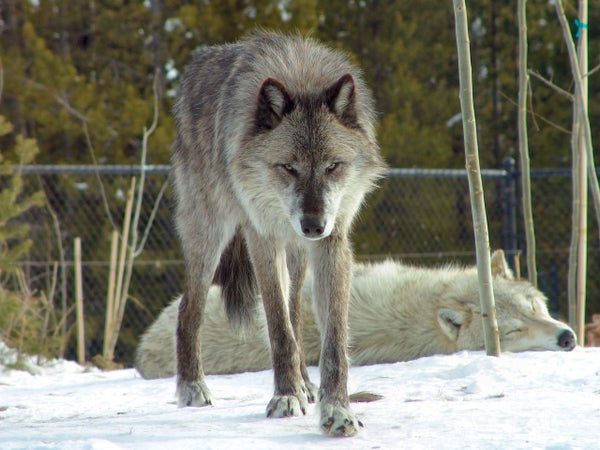
Aug 29 (Reuters) - Wildlife agents authorized to eradicate a group of 11 wolves for repeated attacks on cattle in Washington state have hunted down and killed six animals from the condemned pack and are searching for the rest, a state game official said on Monday.
State biologists fatally shot two members of the so-called Profanity Peak wolf pack from a helicopter on Aug. 5 after confirming five fatal wolf attacks on livestock in that area. Further lethal-control efforts were later called off.
On supporting science journalism
If you're enjoying this article, consider supporting our award-winning journalism by subscribing. By purchasing a subscription you are helping to ensure the future of impactful stories about the discoveries and ideas shaping our world today.
But eradication orders were renewed, and expanded to the entire pack, on Aug. 19 when the state Fish and Wildlife Department determined the same group of wolves was behind additional attacks that left two calves dead and a third injured.
Aerial kill teams have since destroyed four more wolves, including a pup, and wildlife agents are looking for the remaining five members of the targeted pack, said Craig Bartlett, a spokesman for the Fish and Wildlife Department.
"We've never taken out an entire pack before," Bartlett said, adding officials could still decide at some point to suspend the hunt and spare some of the remaining wolves if livestock attacks appear to have been halted.
In the meantime, he said, the number of cattle killed or injured by wolves in the area had grown to 12.
The Profanity Peak wolves make up one of 19 wolf packs known to inhabit Washington, 15 of them in the eastern third of the state where federal Endangered Species Act protections for gray wolves were lifted in 2011.
Wolves are still listed as endangered under state law, which allows officials to remove wolves found to be repeatedly preying on livestock. But the population has grown steadily since 2008, when the first pack documented in Washington in many decades was confirmed, and they now number about 90 animals statewide, Bartlett said.
The current effort targeting the Profanity Peak pack marks the third time state officials have used lethal means against wolves. The two previous efforts, in 2012 and 2014, resulted in the deaths of 10 wolves, but some members of those packs ended up being spared, Bartlett said.