On supporting science journalism
If you're enjoying this article, consider supporting our award-winning journalism by subscribing. By purchasing a subscription you are helping to ensure the future of impactful stories about the discoveries and ideas shaping our world today.
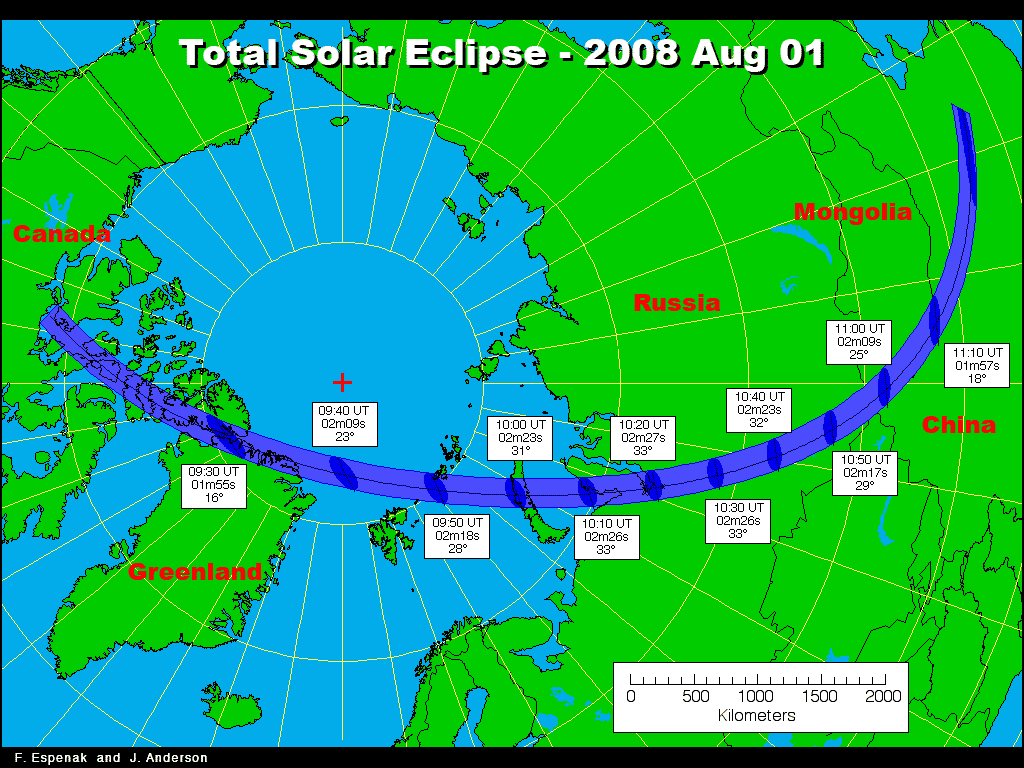
Get your pinhole cameras—and laptops—ready. This Friday, August 1, a total solar eclipse will occur as the moon passes directly between the sun and Earth for the first time in more than two years. For a few minutes, the moon will blot out the sun, casting its dark shadow over a narrow, moving strip of land and revealing the sun's corona.
View a slide show of the eclipse
Sadly, this eerie, awe-inspiring event—known as totality—will be visible only from remote parts of the Northern Hemisphere: Starting in northern Canada, the moon's shadow, or umbra, will glide across the Arctic into central Asia. (View the path of totality at NASA's eclipse Web site.) "It is best to see the eclipse live," says Paul Doherty, a senior staff scientist at the Exploratorium science museum in San Francisco. "If you don't want to travel," he says, "you will wait an average of 300 years for a total solar eclipse to come to you.
But that doesn't mean you can't share in the experience remotely. Doherty will be part of an eclipse expedition broadcasting the eclipse live via the Web from Xinjiang Province in northwestern China, near the Mongolian border, beginning at 3:30 A.M. Eastern time through totality at 4:09 A.M.
The Web cast, sponsored by the Exploratorium, will also be broadcast in the virtual world of Second Life, where you can join other avatars (users' digital representations of themselves) to make the Web cast more of a social experience. Interactive exhibits allow users to get a feel for the phenomenon, such as by placing their avatars' heads in a virtual umbra. Professional astronomers in the eclipse viewing theater will be there to answer users' science questions, Doherty says.
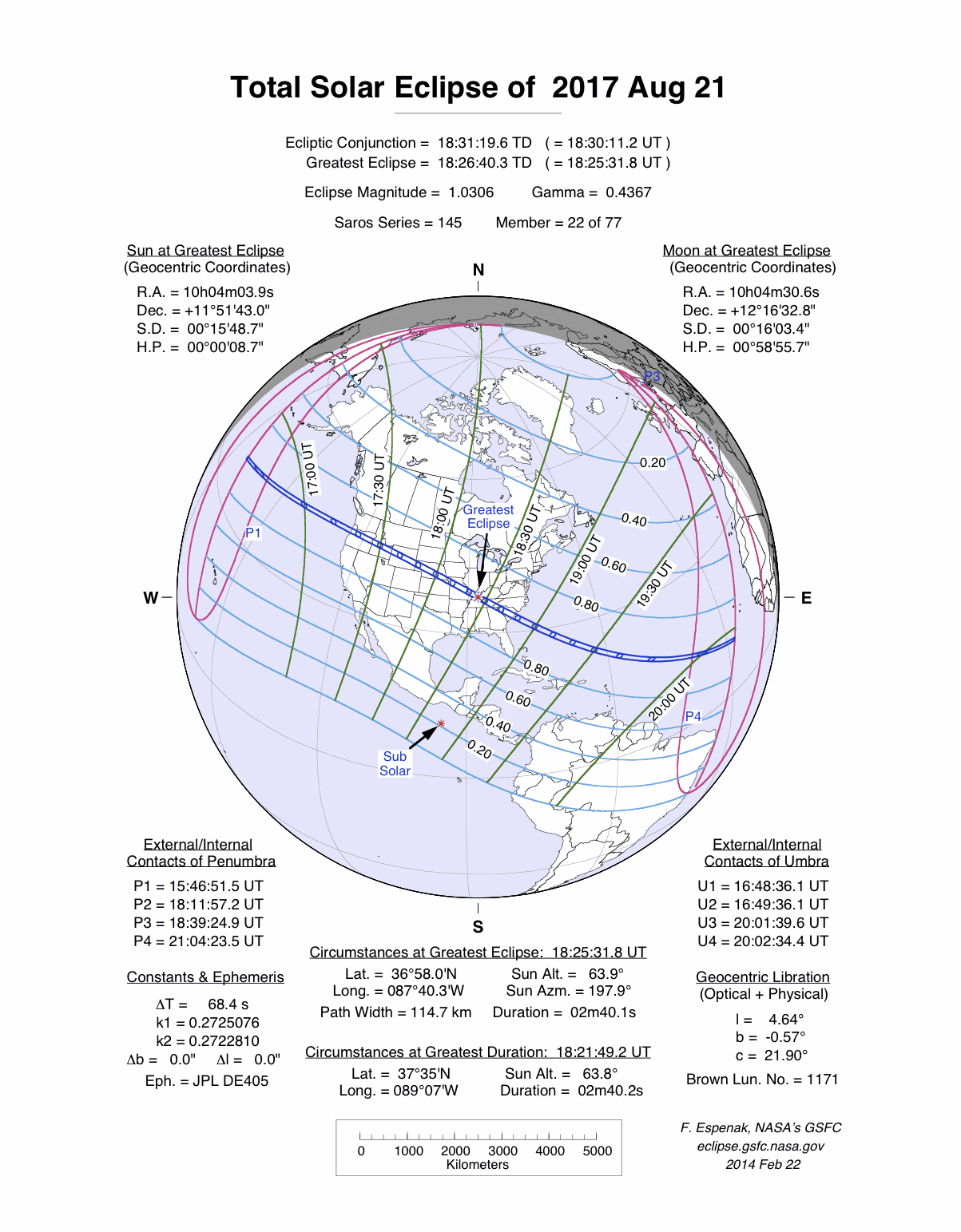
Or try a different vantage point. The Web site NovosibirskGuide.com will also broadcast the eclipse as seen from Novosibirsk, Russia. And a partial eclipse will be visible from northeastern North America, and most of Europe and Asia. If you miss out, you'll have to wait nearly a year to see the moon banish the sun in real-time. The next solar eclipse takes place on July 22, 2009, starting in India and crossing through Asia and Japan into the western Pacific Ocean. The next total eclipse visible in the U.S. will occur on August 21, 2017.
In honor of this week's fortuitous alignment of heavenly bodies, ScientificAmerican.com, in collaboration with its counterpart, Spektrum der Wissenschaft, Germany's leading science magazine, presents this in-depth report on solar eclipses. Browse these links and articles from our respective archives to find out why eclipses happen, what we can learn from them, and how you can make the most of this historic event. After the eclipse happens, check back for images of the eclipse taken by adventurous souls who viewed it firsthand. Does that include you? If so, we welcome you to share your photos with us!