
Theoretical physics is full of big, thrilling ideas: dark energy, mysterious particles and multiverses, to name a few. It can all be overwhelming to the uninitiated, and challenging for scientists to communicate to the public. So how can physicists bridge that gap and discuss their work in a manner that is both captivating and educational?
Clifford V. Johnson, a theoretical physicist at the University of Southern California, wants to spark public conversations that are as jam-packed with big ideas as those he routinely has in private with his academic colleagues. His solution: a graphic novel that immerses readers in the complexities of cutting-edge physics research without drowning them in unnecessary technical details. “As a scientist, I feel it’s really important to communicate what scientists do to the general public,” he says. “What better medium to talk about physics than a graphic novel, where you’re engaged in actively creating the space and the time?”
In The Dialogues: Conversations about the Nature of the Universe (The MIT Press) Johnson combines his scientific expertise with his passion for comic book art to take readers on a journey around the world, following a diverse cast of characters conversing on topics such as black holes, time, immortality and religion. In one vignette a couple at a costume party discuss the meaning of a “beautiful equation” in science; in another two women discuss what the possibility of an endless, infinite universe might mean for life on Earth. By the end of the novel, Johnson hopes, readers will be prepared to begin dialogues of their own.
On supporting science journalism
If you're enjoying this article, consider supporting our award-winning journalism by subscribing. By purchasing a subscription you are helping to ensure the future of impactful stories about the discoveries and ideas shaping our world today.
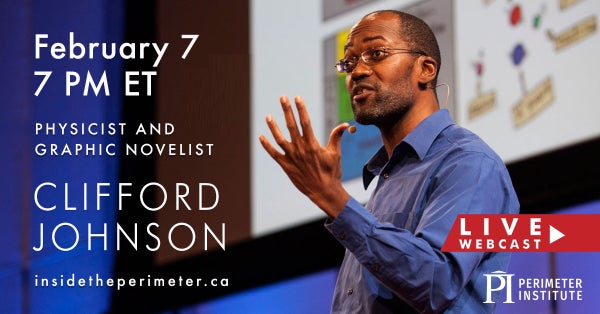
Join Professor Johnson at the Perimeter Institute for Theoretical Physics in Ontario as he describes the process of creating compelling visual narratives for complex scientific concepts. The discussion, “Graphic Talk about the Universe,” is part of Perimeter’s public lecture series and will take place on Thursday, February 7 at 7 P.M. Eastern time. Online viewers can participate in the discussion by tweeting to @Perimeter using the #piLIVE hashtag.