
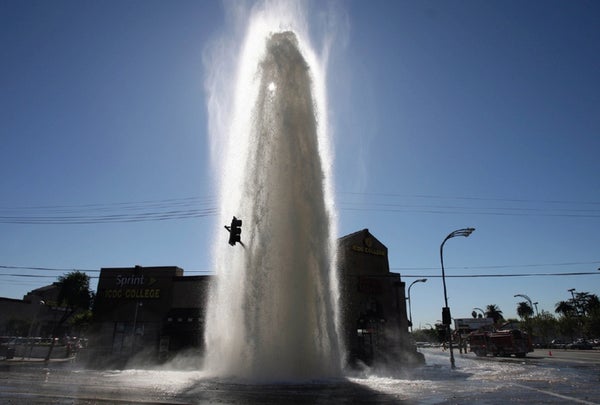
Flint, Mich., was in the midst of its leaded water crisis in February when its residents suffered yet another hit to their water supply. A cracked pipe that delivered potable water to the town meant that for three days they had to boil their tap water to protect against bacterial contamination. Such water main breaks nowadays are hardly unexpected—much of the nation's waterworks requires upgrades and replacement. Solutions include relining pipes or replacing them with corrosion-resistant polyvinyl chloride (PVC). Some communities also have embraced reclamation of household wastewater, along with the capture of storm water on roofs and streets. These approaches can reduce total volume and pressure spikes that overstrain pipes while lowering the energy required to pump and treat all that water.
By the Numbers
1,180,000
On supporting science journalism
If you're enjoying this article, consider supporting our award-winning journalism by subscribing. By purchasing a subscription you are helping to ensure the future of impactful stories about the discoveries and ideas shaping our world today.
Miles of water main pipes in the U.S.
240,000
Total number of water main breaks that occur annually in the U.S.
$17 billion
Estimated increase over the next 30 years in annual U.S. costs required to replace aging water mains
SOURCES: WATER MAIN BREAK RATES IN THE USA AND CANADA: A COMPREHENSIVE STUDY, BY STEVEN FOLKMAN. UTAH STATE UNIVERSITY, APRIL 2012 (miles of pipes); 2013 REPORT CARD FOR AMERICA'S INFRASTRUCTURE. AMERICAN SOCIETY OF CIVIL ENGINEERS, MARCH 2013 (water main breaks); BURIED NO LONGER: CONFRONTING AMERICA'S WATER INFRASTRUCTURE CHALLENGE. AMERICAN WATER WORKS ASSOCIATION, 2012 (replacement costs)