
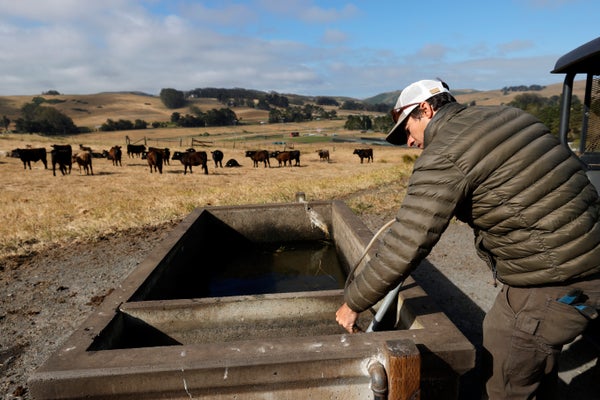
A record number of water wells in California have gone dry as climate change amplifies heat and drought in the parched state.
Residents reported having 1,394 dry wells statewide from January through last month, an increase of nearly 40 percent from the same time last year. It’s the highest number since the start of record keeping in 2013.
“You have this increasing severity of climate change” with increased temperatures, said Paul Gosselin, deputy director of the California Department of Water Resources Sustainable Groundwater Management Office. That combined with a historic drought “reduces the real availability of surface water.”
On supporting science journalism
If you're enjoying this article, consider supporting our award-winning journalism by subscribing. By purchasing a subscription you are helping to ensure the future of impactful stories about the discoveries and ideas shaping our world today.
The drop in water comes as the need for agricultural irrigation and other needs increase, Gosselin said, adding that there’s been a lack of sound water management in some areas of the state.
California has been in a drought since 2020, on top of a dry year in 2018 and a drought that lasted from 2011 to 2017. At the same time, summers have experienced record-breaking temperatures that have desiccated vegetation and soils.
This summer, nearly three-quarters of California was in extreme or exceptional drought, according to the U.S. Drought Monitor. Scientists said that drought in the western United States marked the region’s driest 22-year stretch in more than 1,200 years (Climatewire, Aug. 2).
Approximately 31 million Californians get a portion of their drinking water from a public water system that relies in part on groundwater, according to the State Water Resources Control Board. Up to 2 million residents get their water from private domestic wells or from a water system serving fewer than 15 service connections.
The number of dry wells marks a sharp increase from just a few years ago. Fewer than 100 dry wells were reported annually in 2018 through 2020. The dry wells are spread across the state, with the highest number in the Fresno area.
California is helping residents by providing bottled and trucked-in water and funding projects to connect communities to water systems, said Kris Tjernell, deputy director for integrated watershed management at the Department of Water Resources. There are also incentives for farmers to use less water, he said.
A group of three laws passed in 2014, known as the Sustainable Groundwater Management Act, requires local water agencies to implement sustainable water system plans. It set deadlines of 2040 for the most urgent areas. The state is reviewing plans submitted by those local authorities.
California also is putting in place longer-term plans. Those include increased use of plants to desalinate ocean water, recycling water, conservation and creating more sites for groundwater storage.
State Natural Resources Secretary Wade Crowfoot warned recently that California faces a dire situation.
“We are receiving significantly less water supply from the precipitation that falls because of the hotter and drier climate, and that is alarming,” Crowfoot said last month at a meeting of the California Coastal Commission. Scientists predict that “by 2040, we’re going to lose 10 percent of our water supply.”
Reprinted from E&E News with permission from POLITICO, LLC. Copyright 2022. E&E News provides essential news for energy and environment professionals.