
Over the past century the average life expectancy in developed countries has increased by 30 years, from roughly age 50 to 80. Vaccines, sanitation, antibiotics, and other advances allow many more people to survive infectious diseases that used to kill them during childhood. (In the U.S., though, the span dropped by nearly three years during the COVID pandemic, a testament to the power of infections to shorten lives.)
Longer lifespans overall have been a public health success. But they have also created a new and important gap: healthspans, usually defined as the period of life free of chronic disease or disability, do not always match longevity. After more than a decade of caring for a relative with Alzheimer’s disease, I know this fact well.
By one calculation, based on the World Health Organization’s healthy life expectancy indicator, an American who expects to live to 79 might first face serious disease at 63. That could mean 15 years (20 percent of life) lived in sickness. Indeed, aging is the biggest risk factor for cancer, heart disease and dementia.
On supporting science journalism
If you're enjoying this article, consider supporting our award-winning journalism by subscribing. By purchasing a subscription you are helping to ensure the future of impactful stories about the discoveries and ideas shaping our world today.
Extend healthspan with some preventive maintenance.
One reason for this gap is that, for decades, biomedical research and clinical practice have focused on treating individual diseases, which can extend lives but not necessarily healthspan.
Starting in the 2010s, medicine began to take a different approach based on the biology of aging (a field called geroscience). “We’re now saying our focus should be on extending healthy life rather than just length of life, and slowing aging is the tool to do it,” says Jay Olshansky, a longevity expert at the University of Illinois Chicago. There are molecular and cellular processes in all our tissues and organs that determine both lifespan and healthspan. These “pillars of aging” include DNA damage, the aging or senescence of individual cells, inflammation, and stress responses.
Natural variations in these factors are mostly the result of environmental differences. Genes also play a role, accounting for about 25 percent of the variability, more in extreme cases. (Very long-lived smokers probably won the genetic lottery.) The upshot is that some people age faster than others, and with biological aging comes susceptibility to disease and disability.
How do you assess biological age? Molecular markers such as chemical modifications to DNA are one way, says computational biologist Morgan Levine of Altos Labs in San Diego. “Do your cells have a pattern of chemical tags like someone who is 20 or 30 or 40?” she asks.
Geroscientists have yet to deliver a pill or treatment that can slow or reverse what the pillars of aging do. But they are excited about some possibilities. For example, senolytic drugs target senescent cells, which have stopped dividing but linger in the body instead of being cleared by the immune system. Research has shown that these “zombie cells” secrete proteins that interfere with other cells’ health. The zombies have been linked to osteoarthritis, cancer and dementia. For a 2015 study, researchers used senolytics to remove senescent cells in mice and delayed, prevented or alleviated multiple disorders. Clinical trials are underway in people but are still months to years from completion, so researchers are cautious. They also note that few popular wellness claims about “prolonging your youth” are grounded in evidence.
For now, one way to extend healthspan is through unsurprising preventive maintenance. Experts recommend checkups, staying on top of cholesterol levels and blood pressure, and following guidelines such as those from the American Journal of Clinical Nutrition for body fat percentage, lean body mass and bone density. “Know where you are so if something needs to be tweaked you can take steps to do that,” says Matt Kaeberlein, former director of the University of Washington Healthy Aging and Longevity Research Institute and chief executive officer of Optispan, a health tech company.
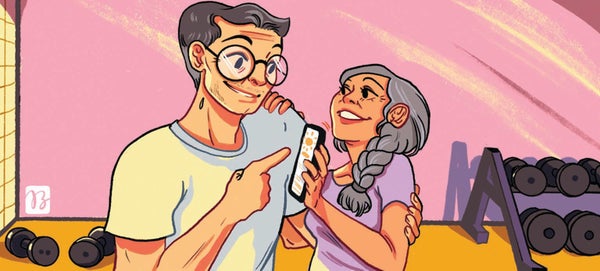
Those steps are also familiar: commonsense nutrition, sleep, exercise and social connection are the four main factors. “The reason those things work is because they modulate the biology of aging,” Kaeberlein says. For example, regular low- or moderate-intensity exercise helps to prevent cardiovascular disease and type 2 diabetes. How much extra health can these steps get us? “Ten years is probably pretty realistic,” Kaeberlein says.