
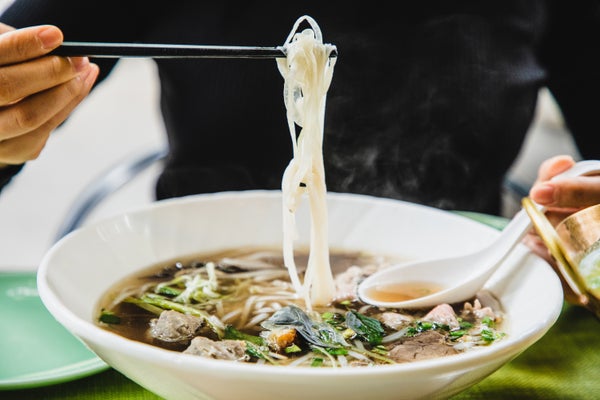
The day after indulging in maybe one too many a libation with friends or family, my body seems to instinctually crave a big bowl of pho. The Vietnamese staple’s light but perfectly salty broth, tender slices of flank beef, and crisp bean sprouts and cilantro, along with a generous squeeze of lime and sriracha, does wonders to perk me up from a bad hangover—or a cold, a flu or really any ailment.
While recently ranking hangover foods while having drinks with a friend, I wondered: Is there any real scientific benefit to my favorite hangover soup? What, exactly, is the best thing to eat or drink to aid hangover symptoms? I called up an expert to find out.
“I would stress: balance macronutrients before and after drinking,” says Sara Police, an associate professor in the department of pharmacology and nutritional sciences at the University of Kentucky. “If you know you’re going to go out for Saint Patrick’s Day or a celebratory event [where you anticipate drinking alcohol], it’s going to be helpful to have a complete meal.”
On supporting science journalism
If you're enjoying this article, consider supporting our award-winning journalism by subscribing. By purchasing a subscription you are helping to ensure the future of impactful stories about the discoveries and ideas shaping our world today.
There is no scientifically proven “hangover cure”—and although some research groups are testing legitimate remedies, most treatments focus on relieving symptoms related to alcohol consumption. If symptoms are severe, people should seek medical attention. Besides abstaining from booze, scientists also don’t have a bulletproof way to prevent hangovers. That said, Police has some science-backed nutrition tips that can help ease recovery.
What happens during a hangover?
“Thinking about a hangover itself, there’s a spectrum of severity,” Police says.
The amount of alcohol a person has consumed, their sex and body size and their drinking tolerance all influence how bad they might feel after drinking too much. The symptoms are likely familiar to any who has ever overindulged: a pulsing headache, nausea, vomiting, muscle cramps or severe dehydration. These unpleasant effects are “evidence of your body working really hard to metabolize what you put into it,” Police says. “Your body has to rid itself of ethanol,” the chemical in alcohol that makes people sick.
Most of the work happens in the liver, where two key enzymes, alcohol dehydrogenase and aldehyde dehydrogenase, ultimately break down ethanol into water and carbon dioxide. But as the body prioritizes clearing alcohol, it creates a “logjam” in other metabolic processes, Police explains.
Glucose synthesis (gluconeogenesis) and the processing of fats (fatty acid oxidation) slows down. This often causes low blood sugar, or alcohol-induced hypoglycemia—which can cause shakiness, anxiousness, dizziness and fatigue. Alcohol also suppresses the body’s water-conservation hormone, or antidiuretic hormone, essentially “pulling the drain plug” on the kidneys and increasing urination and the risk of dehydration, Police says. Additionally, alcohol warms the body, which can increase the loss of fluids and electrolytes through sweat.
Foods for Recovery
“Alcohol metabolism is expensive in terms of energy and nutrients,” Police says. That’s why she recommends focusing on whole nutritional value of meals before or after drinking rather than quick fixes.
Such a meal should include a good source of protein, such as eggs, in order to stock up on or refuel depleted amino acids, including cysteine and methionine, which are building blocks for protective antioxidants. “Antioxidants combat [unstable molecules known as] free radicals, which damage your cells and can cause inflammation,” she says.
Complex carbohydrates such as whole grains are better options than high-sugar foods that might briefly improve symptoms of low blood sugar but ultimately make people feel ill for longer. “A really dense sugar food is going to cause your glucose to spike—and the faster your glucose rises, the faster it will drop,” Police says. “Then you’re on a rollercoaster of trying to feel good versus trying to find a steady state.”
Before drinking, consuming healthy fats from foods such as avocado or salmon can help slow gastric emptying—decreasing the rate at which food (including alcohol) gets absorbed and eventually metabolized in the body. Tempting greasy junk foods such as pizza, burgers or chips might satisfy bellies in the moment, but “I don’t know that there’s a basis around nutritional benefit of that,” Police says.
Taking regular multivitamins could also help replace essential vitamins and minerals lost during alcohol metabolism, Police says. She adds that ginger can also calm the stomach. It stimulates digestive enzymes that counteract queasiness and has been clinically shown to help with nausea.
Rehydration is key. In addition to water, sports drinks or electrolyte powders may help—but Police cautions against options with a lot of added sugar. She personally prefers coconut water, which naturally contains potassium, magnesium and calcium.
She suggests that soup—like my go-to bowl of pho—could also help on the rehydration front.
“A salty broth with some protein and the citrus? I mean, I think that’s great,” Police says: the warm salty broth provides fluids and electrolytes, and the lean meat, veggies and citrus supply protein and vitamins. After deliberating with Police, I feel more confident about my hangover food of choice.
“I think if it works for you, then eat it, drink it,” she says. “We are, anecdotally, our own personal experiment.”