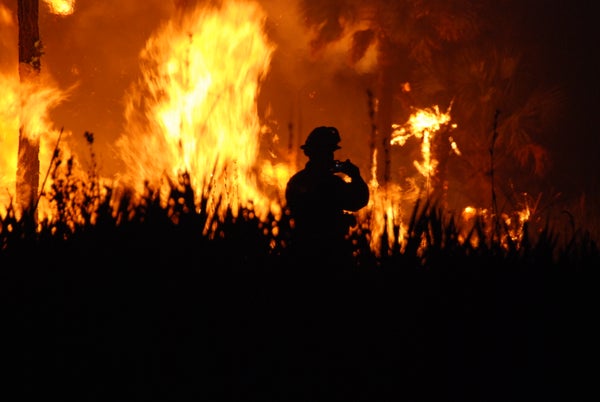
The wildfire season started early this month in the northwestern U.S., and the huge blaze still burns in Fort McMurray, Alberta, after three weeks of fighting the flames. What causes wildfires on this scale, and how can we prevent them?
Although three weeks have passed since the fire started, there remain over 1,000 firefighters and 50 helicopters in Fort McMurray, Canada to fight the wildfire raging there. One thousand more firefighters are expected in the next week and the fire remains “out of control.” The fire covers more than 522,000 hectares, but is no longer considered a threat to nearby communities. Also fortunately, gas and electricity have been restored to the surrounding areas, and residents will be allowed to start returning to their homes in the areas deemed safe starting in June.
Wildfires, also known as forest fires, grass fires, or even bushfires in Australia, are uncontrolled fires that usually happen in so-called “wild” areas uninhabited by people. However, they spread quickly, especially in times of drought, and can extend into areas where there are houses and other agricultural resources. They can burn twice as hot as the surface of Venus and reach higher than 50 meters (over 160 feet).
On supporting science journalism
If you're enjoying this article, consider supporting our award-winning journalism by subscribing. By purchasing a subscription you are helping to ensure the future of impactful stories about the discoveries and ideas shaping our world today.
Great science journalism requires human expertise, time, effort and creativity. And it costs money. That’s why I and the journalists here at Scientific American hope you’ll join our community.
When you subscribe, you are supporting staff and freelance journalists who are passionate about telling science stories that are true, important and compelling. Our editors and reporters are often experts in their fields, which means they understand the nuances of big discoveries and can untangle the breakthroughs from the hype. With a subscription, you are also supporting rigorous fact-checking to ensure the words we publish are precise and accurate. And you’re supporting original illustrations, graphics and photos that bring you closer to an advanced laboratory, an ice sheet in Antarctica or a space mission in orbit. You’re helping us craft other types of high-quality journalism as well: Our newsletters are carefully written, edited and curated by staffers you have or will come to know and love. Our Science Quickly podcast is based on original reporting, collaboration with editors and scientists and exacting production.
Subscriptions keep this engine running so we can continue to deliver thoughtful, rigorous and independent science journalism to you. In an era of viral misinformation, this work is crucial. If you value what we do, I hope you’ll consider joining us as a subscriber
Thank you,
Jeanna Bryner, Editor in Chief, Scientific American