
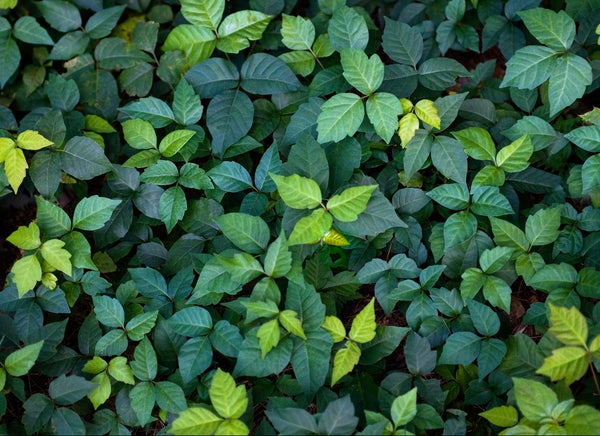

Avid listeners of this podcast may recall my past revelations that I have a super power. When I encounter poison ivy or poison oak, even in the tiniest amount, my body’s immune system explodes in a systemic reaction, creating a situation that requires fast treatment. It’s itchy, uncomfortable, and I’ve spent many sleepless weeks on steroids trying to keep the rash at bay.
Well, stop rolling around in poison ivy, you might be thinking. I wish! Unfortunately, for me, it’s usually my dog that frolicks in the plant. Dogs do not react to the plant’s oils, so she carries on none the wiser but brings the oils to me.
On supporting science journalism
If you're enjoying this article, consider supporting our award-winning journalism by subscribing. By purchasing a subscription you are helping to ensure the future of impactful stories about the discoveries and ideas shaping our world today.
In one instance, however, I broke out in a poison ivy-type rash after visiting a friend in downtown Los Angeles and my dog was nowhere in sight. This was a bit much, even for me. I think I saw one tree the entire time, and it certainly wasn’t hosting a nefarious vine. So, how was that possible? It was then that I learned—the hard way—that poison ivy is just one member of a family of trees, the anacardiaceae family, that can carry an oily irritant that causes a rash.
You see, my friend had cooked for me a popular meal from her homeland of Trinidad, which was full of delicious, fresh mango. Mango, it turns out, is also a member of the anacardiaceae family.
What is the difference between poison ivy, poison sumac, and poison oak?
The anacardiaceae family of trees, sometimes called the cashew family, includes mango, poison ivy, poison oak, sumac, Peruvian pepper, pistachio, and you guessed it, cashews. They all contain urushiol, the sneaky oil that causes the skin to erupt in rashes for some people and is the bane of my existence, but to varying degrees. The oil is found in all parts of the plant, including the leaves, stems, and even the roots.
Urushiol is the reason cashews are never sold in the shell and are typically roasted. The oil is found on the outer shell (similar to mangos, where it’s found on the skin) and roasting the cashews at high temperatures can kill any remaining oil that makes its way through to the nut. The Center for Disease Control published a report in 1982 about a batch of >7500 bags of shell-contaminated cashews being sold in Pennsylvania and Maryland, mostly as part of a Little League fundraiser. Around 20 percent of the unlucky cashew-eaters developed a rash.
Also in the family is Toxicodendron vernicifluum, or the Japanese lacquer tree. This tree produces the sap used in painting those beautiful lacquered boxes. There have been cases of rashes developing in reaction to contact with lacquerware because the oil remains in the paint.
»Continue reading “What Do Cashews, Mangos, and Poison Ivy Have in Common?” on QuickAndDirtyTips.com