
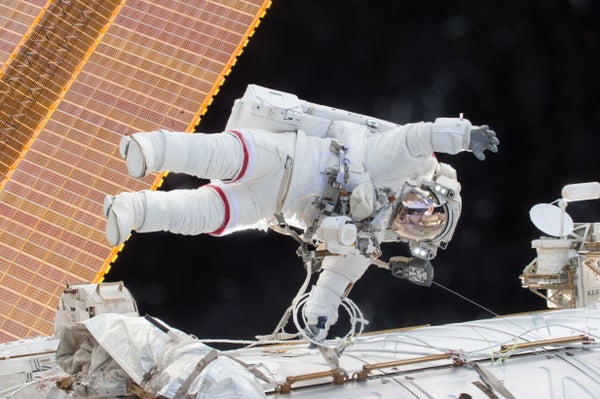
When you look at Earth from space, you realize just how vulnerable life is on this planet. The atmosphere is incredibly thin and fragile looking. Almost like a contact lens on someone’s eye. During my first mission, in 1999, to fix the Hubble Space Telescope, I remember passing over South America and being awed by the sheer size of the Amazon rainforest. On my last mission in 2016, only 17 years later, burning and clear-cutting were clearly evident. After seeing the Earth dramatically change from this unique perspective, I firmly believe that solving climate change is the moonshot of the 21st century. Many of the tools and resources that I used on my missions, such solar panels and rechargeable storage batteries, are also the answer to our problems here on Earth.
On the International Space Station, solar energy powered almost everything: navigation, life support, science experiments. The station uses eight giant solar rays that collect energy from the sun and stores it in batteries to operate all of its systems. The batteries are critical so that when you’re on the dark side of the Earth, you still have energy. And for the last 20 years, it’s worked great.
After these experiences, I decided to put solar panels on my home in Colorado this year. I wanted energy from the sun powering my house instead of any other source. The sun has been the most reliable and important power source for the last four and a half billion years and will continue to be so for the rest of human existence. I am happy to take advantage of it here on Earth.
On supporting science journalism
If you're enjoying this article, consider supporting our award-winning journalism by subscribing. By purchasing a subscription you are helping to ensure the future of impactful stories about the discoveries and ideas shaping our world today.
Rechargeable solar battery systems are needed now more than ever before. Already in 2020, one in three Americans have experienced a blackout or expect to in the near future, underscoring the importance of rechargeable solar batteries and preparing for potential outages while social distancing and working from home. The 2020 Atlantic hurricane season was the most active on record, and America’s West Coast experienced historically bad wildfires this summer and fall, leading to many blackouts that were particularly challenging as many homeowners were working from home because of the COVID pandemic.
Unsurprisingly, the pandemic is driving increased demand for home energy systems. Residential solar energy provider Sunrun recently released a
study that showed homeowners are considering solar energy systems and rechargeable batteries because of increased home energy consumption during the pandemic. According to the study, 57 percent of homeowners say the pandemic has made them want to make home improvements, including nearly 40 percent who have a growing interest in backup power sources. Solar can both help us mitigate climate change and help us adapt to climate change by making our homes more resilient to extreme weather.
Beyond powering our own homes through blackouts, solar and batteries can help us power our neighbors’ homes and our communities. New collaborations between utilities and the private sector to launch “virtual power plants,” or VPPs, which are networks of home battery and solar systems linked together and to the grid, are already taking shape. When demand surges and the grid is strained, VPPs can mitigate blackouts and eliminate the need to fire up dirty, faraway fossil fuel–burning plants.
As the cleantech industry achieves scale, every newly installed solar energy system drives the price down for customers. Solar is quickly becoming more affordable than ever before. It is now just as affordable to install a solar energy system as it is to pay a local utility provider for power in many parts of the country.
You don’t see political borders from space—only humanity as a whole. We’re facing one of the greatest challenges in the history of humankind, but we are a very capable and resilient species. We can meet this challenge by leveraging solar power and new advances in battery storage. This is our century’s moonshot, and we need to rise to the challenge.
