
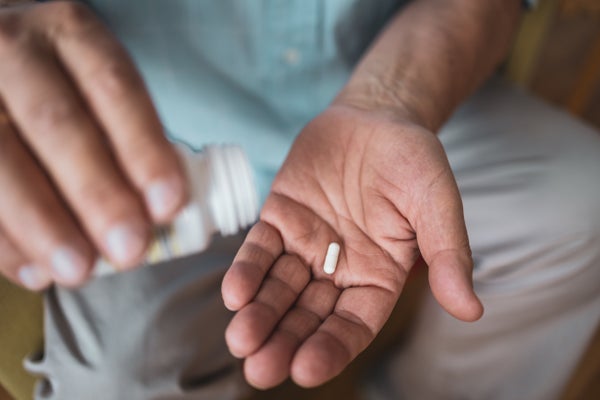
For the first time in 25 years, the U.S. Food and Drug Administration has approved a new type of painkiller. Suzetrigine, sold as Journavx, is administered twice daily in 50-milligram oral tablets to treat moderate and severe acute pain.
Clinical trials showed that the medication dampened pain as effectively as an opioid-based painkiller. And perhaps most importantly, suzetrigine does so without the same risk of addiction.
How does suzetrigine work?
On supporting science journalism
If you're enjoying this article, consider supporting our award-winning journalism by subscribing. By purchasing a subscription you are helping to ensure the future of impactful stories about the discoveries and ideas shaping our world today.
The drug dampens pain signals before they reach the brain. It prevents nerve cells all over the body from firing by obstructing so-called sodium ion channels. These channels are embedded in a nerve cell’s membrane, and by opening and closing, they carry electrical impulses along the nerve.
Drug companies have been trying to create painkillers that target sodium ion channels for decades, but the development pipeline had largely dried up after many false starts. With suzetrigine, developed by pharmaceutical company Vertex, they finally succeeded.
The FDA’s approval is based on two phase 3 clinical trials conducted in patients after tummy tuck and bunion removal surgeries. In both trials, about 1,000 patients received suzetrigine, placebo, or the combination of the opioid hydrocodone and acetaminophen formerly sold as Vicodin. Suzetrigine and the opioid treatment both cut pain by about three points on the standard 10-point pain rating scale. Suzetrigine worked faster and had fewer side effects.
Why is suzetrigine so important?
For decades, people experiencing pain have had two options. One has been over-the-counter medications that offer limited relief, including acetaminophen and nonsteroidal anti-inflammatory drugs (NSAIDS) such as aspirin and ibuprofen. The other has been opioids, with their risk of addiction and adverse side effects. These limited options have made opioids the only choice for many people who experience serious pain, whether acute or chronic, and it has fueled an opioid crisis that kills more than 100,000 people in the U.S. each year and ravages communities.
Suzetrigine, along with similar new medications that are now being tested, will provide a much needed third option for people who seek pain relief. Because the drug works only on peripheral nerve cells and not on the brain or spinal cord, it does not carry the risk of addiction that opioids do.
While suzetrigine is only approved to treat acute pain, Vertex has reported positive results from a trial of the drug’s safety and efficacy in people who experience chronic pain from diabetic peripheral neuropathy. A phase 3 clinical trial is now underway. Other companies are also working to develop medications that target sodium ion channels in different ways.
“We are definitely hopeful that we can replace opioids, and that’s the goal here,” said Ana Moreno of Navega Therapeutics to journalist Marla Broadfoot in a recent Scientific American feature article on the promise of these sodium-ion-channel-blocking drugs.
What are the side effects of suzetrigine?
Among trial participants, the most common side effects of the drug were itching, muscle spasms, increased levels of creatine phosphokinase in the blood and rash. The medication should not be taken alongside others that strongly inhibit an enzyme called CYP3A, which includes some antibiotics and antivirals. People on suzetrigine should also not eat grapefruit.
[Read more: “Why Grapefruit Interferes with Medication, and What to Do about It”]
Vertex says that the medication will be available for $15.50 per 50-milligram pill, or about $30 per day. In contrast, comparable doses of the hydrocodone and acetaminophen combination retail for an average of about $7 per day. It remains to be seen how insurance companies and Medicare will cover suzetrigine.