You may have seen singer Avril Lavigne’s recent media appearances discussing her experience with Lyme disease. What is this mysterious illness, and how can you tell if you have it?
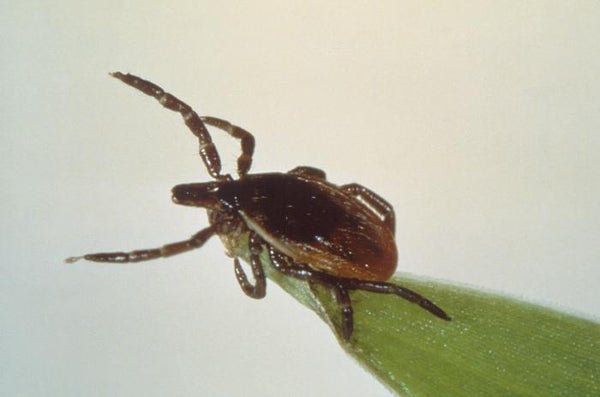
The Lyme disease bacterium, Borrelia burgdorferi, is spread through the bite of infected ticks. The blacklegged tick (or deer tick, Ixodes scapularis) spreads the disease in the northeastern, mid-Atlantic, and north-central United States.
In recent years, Lyme disease has almost become another one of those fad medical conditions that tends to catch headlines (and audiences), similar to Vitamin D, supplemental testosterone, and gluten sensitivity. I’m not saying these things are not real … they are very real for some. But they are overly-used and abused in order to gain media attention (sorry again, Dr. Oz).
With Lyme disease being so over-hyped in the media, and with it being such a mysterious illness with common symptoms, it's challenging to decipher fact from fiction. And that’s my goal for today’s episode—to explain what we do know about Lyme disease, and what may be over-sensationalization.
On supporting science journalism
If you're enjoying this article, consider supporting our award-winning journalism by subscribing. By purchasing a subscription you are helping to ensure the future of impactful stories about the discoveries and ideas shaping our world today.
What Is Lyme Disease?
Lyme disease stems from the bite of a tick, of all things. And in the Unites States, it is associated with one blood-sucking species that transfers a bacteria called “Borrelia burgdorferi.”
If you enjoyed this article, I’d like to ask for your support. Scientific American has served as an advocate for science and industry for 180 years, and right now may be the most critical moment in that two-century history.
I’ve been a Scientific American subscriber since I was 12 years old, and it helped shape the way I look at the world. SciAm always educates and delights me, and inspires a sense of awe for our vast, beautiful universe. I hope it does that for you, too.
If you subscribe to Scientific American, you help ensure that our coverage is centered on meaningful research and discovery; that we have the resources to report on the decisions that threaten labs across the U.S.; and that we support both budding and working scientists at a time when the value of science itself too often goes unrecognized.