
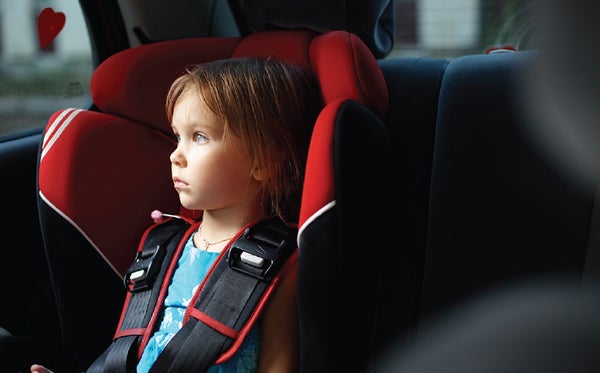
Last September a man in Massachusetts posted a video on Facebook showing a baby alone in a car in a gas station parking lot. As the video went viral, commenters vigorously condemned the mother, despite her returning within three minutes. According to news reports, police charged her with reckless endangerment.
Such incidents—and attendant outrage—are not uncommon in the U.S., where a hodgepodge of state laws govern when parents may leave kids unattended. Cognitive psychologist Barbara Sarnecka of the University of California, Irvine, wondered if moral judgment, rather than rational concern, may play a part in the American attitude toward briefly leaving a child alone—a social norm that is not universally shared around the globe. A wealth of research on “motivated reasoning” suggests that people often adjust their beliefs to align with moral views.
To investigate, Sarnecka and her colleagues asked 1,501 participants to complete an online questionnaire in which they read about mothers leaving children between the ages of 10 months and eight years alone for short periods. Reasons for the mother leaving included everything from “unintentional” to “working” to “meeting an illicit lover.” Respondents rated the risk each scenario posed on a scale from 1 to 10.
On supporting science journalism
If you're enjoying this article, consider supporting our award-winning journalism by subscribing. By purchasing a subscription you are helping to ensure the future of impactful stories about the discoveries and ideas shaping our world today.
According to the findings published in August 2016 in the journal Collabra, the raters reported the risk to the child as lowest if the reason was unintentional and highest if it was meeting a lover, despite the fact that the child's situation and danger level were identical. The risk ratings were strikingly high overall, with 10 being the most common answer. To make sure people were not just using the ratings to express disapproval, the researchers provided an outlet by asking them to make separate moral judgments, but this tactic only increased risk estimates.
The findings confirm that these risk judgments are indeed influenced by moral attitudes. Together with the high estimates across all situations, the results imply that a new social norm of “no child left alone” has come into force in the U.S. This norm “entrenches class privilege,” argues co-author P. Kyle Stanford, a professor of logic and philosophy of science. “Making sure children are supervised 24/7 is something only part of the populace can afford to do.”
This trend is not prevalent around the world, however. On a recent trip to Norway, lead study author Ashley Thomas says she noticed that people often leave infants in strollers parked outside shops or cafés while they nip in for lunch or coffee. This is seen as perfectly acceptable in most Scandinavian countries, where locals value the benefits of fresh air for children. In Japan children run errands and ride public transit without an adult. In fact, first graders sometimes wear yellow hats to school to make them easier for adults to look out for—the polar opposite of most U.S. parents' attitude toward strangers. The team plans to look next at whether results vary among different respondent groups.