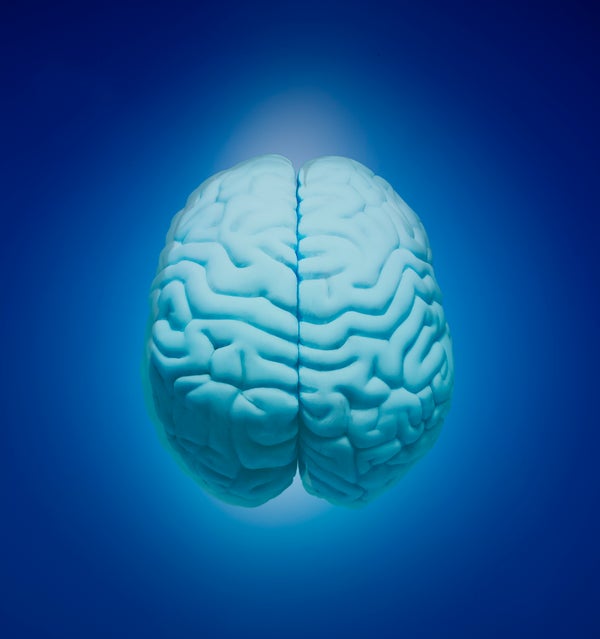
When Does Your Intelligence Peak?

Are we really at our smartest in our 20s? At what age do we strike the right balance between cognitive ability and expertise?

Join Our Community of Science Lovers!


My PhD supervisor, a brilliant and inspiring man, used to jokingly tell me that he had passed his prime and that it was up to me to make the Nobel-prize winning discovery for our group. After all, Albert Einstein was just 26-years-old when he wrote his paper on Special Relativity.

But are we really at our smartest in our 20s? What about the wisdom and experience that come with age? At what age do we strike the right balance between cognitive ability and expertise? When does our intelligence peak?  


On supporting science journalism

If you're enjoying this article, consider supporting our award-winning journalism by subscribing. By purchasing a subscription you are helping to ensure the future of impactful stories about the discoveries and ideas shaping our world today.


Fluid Versus Crystallized Intelligence

It’s an inescapable fact that our cognitive abilities are destined to decline at some point. We will have a harder time remembering where we placed our keys or recalling the details of our favorite family story. However, our intelligence is, unsurprisingly, multi-faceted. We have fluid intelligence—that’s our ability to think quickly, solve new problems, and identify patterns—but we also have what psychologists call crystallized intelligence, which reflects our learned knowledge and ability to relate to our surroundings. These two forms of intelligence are thought to peak at different times in our lives.

»Continue reading “When Does Your Intelligence Peak?” on QuickAndDirtyTips.com

It’s Time to Stand Up for Science

If you enjoyed this article, I’d like to ask for your support. Scientific American has served as an advocate for science and industry for 180 years, and right now may be the most critical moment in that two-century history.

I’ve been a Scientific American subscriber since I was 12 years old, and it helped shape the way I look at the world. SciAm always educates and delights me, and inspires a sense of awe for our vast, beautiful universe. I hope it does that for you, too.

If you subscribe to Scientific American, you help ensure that our coverage is centered on meaningful research and discovery; that we have the resources to report on the decisions that threaten labs across the U.S.; and that we support both budding and working scientists at a time when the value of science itself too often goes unrecognized.

In return, you get essential news, captivating podcasts, brilliant infographics, can't-miss newsletters, must-watch videos, challenging games, and the science world's best writing and reporting. You can even gift someone a subscription.

There has never been a more important time for us to stand up and show why science matters. I hope you’ll support us in that mission.

Thank you,

David M. Ewalt, Editor in Chief, Scientific American

Subscribe