
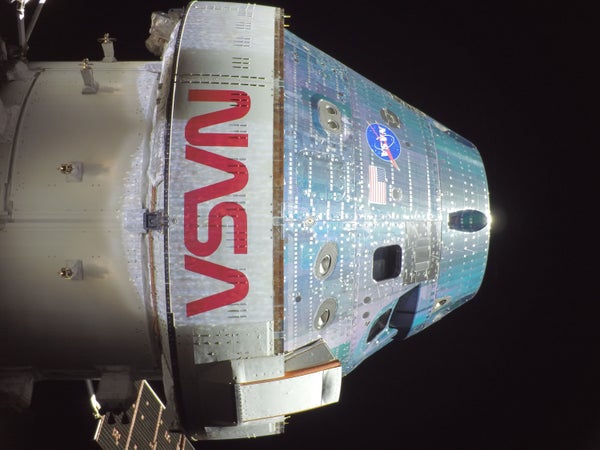
The four astronauts of NASA’s Artemis II mission passed the halfway point of their voyage to the moon. As of 9 A.M. EDT on April 4, the Orion spacecraft was more than 160,000 miles from Earth, less than 120,000 miles away from the moon and traveling around 2,540 miles per hour.
NASA astronauts Reid Wiseman, Victor Glover, and Christina Koch and Canadian Space Agency astronaut Jeremy Hansen started their day to the sound of “In a Daydream,” by the Freddy Jones Band.
“It was really great to wake up this morning and look out the window and see the full moon off the front of the vehicle,” Wiseman said, concluding the morning’s planning conference with Mission Control in Houston. “There’s no doubt where we are heading right now.”
On supporting science journalism
If you're enjoying this article, consider supporting our award-winning journalism by subscribing. By purchasing a subscription you are helping to ensure the future of impactful stories about the discoveries and ideas shaping our world today.
The crew got a “snow day,” as Koch called it, from the initially planned orbital trajectory burn, which NASA determined was not necessary to fine-tune the location of the Orion vehicle. The next of these trajectory burns is scheduled to occur on Saturday evening, early in day four of the mission.
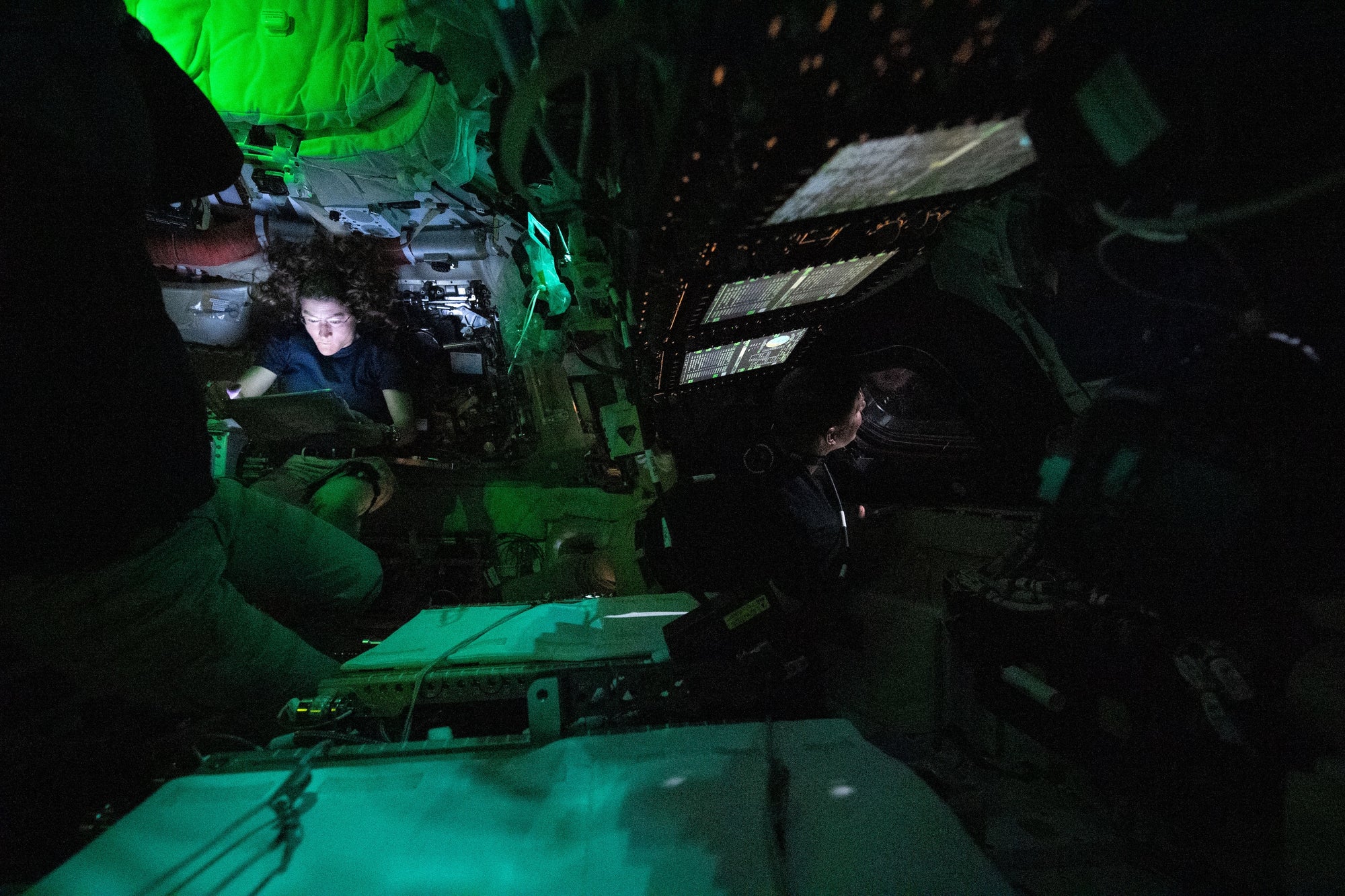
NASA astronaut Christina Koch inside the Artemis II Orion capsule on the third day of the mission.
NASA
Even without a burn, the Artemis II crew saw a busy day, packed with activities. Likely the most important were the astronauts’ first private conversations with family since they departed Earth on Wednesday. The crew also spent half an hour exercising, a key task to ensure their health in microgravity.
Many of the day’s activities related to health in space. For example, Glover, Koch and Hansen practiced CPR, taking turns bracing against Orion’s bulkhead to gain leverage to simulate chest compressions and rescue breathing while recording the proceedings for future crew trainings. Wiseman and Glover also tested out the thermometer, blood pressure monitor, stethoscope and otoscope (a tool that allows doctors to examine a patient’s ear) from the Orion medical kit.
Another key accomplishment of flight day three was a successful test of emergency communications between Orion and NASA’s Deep Space Network. That network connects large telescope dishes in California, Australia and Spain that cooperate to keep in touch with spacecraft beyond Earth’s orbit.
In addition, the astronauts configured their cameras and practiced the observations scheduled for Monday’s flyby of the moon, when the capsule will pass about 4,000 miles from our satellite. Orion is a tight space for four people to navigate, so the crew members have a careful choreography to maximize the data the astronauts can gather.
Their preparations for scrutinizing the moon will continue into day four; for instance, each crew member will review the lunar geographic features they are meant to photograph during the flyby. All four astronauts have been studying the moon extensively in their mission preparation, of course. But the precise launch date and time determined the specific features that each will target during their all-too-fleeting close encounter, making this review time a necessity.
All that work is well and good, but perhaps the highlight of this day of the mission for us Earthlings will be a 20-minute block dedicated to photographing celestial bodies out the windows of the Orion spacecraft.