WHO Declares Zika Public Health Emergency Over

The disease threat still remains an enduring challenge

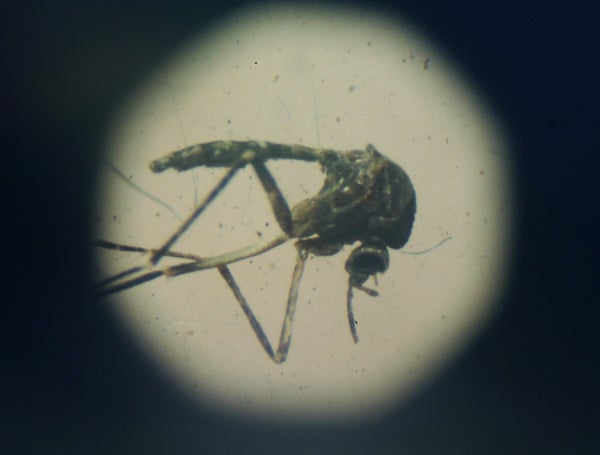
An Aedes aegypti mosquito is seen through a microscope.

Join Our Community of Science Lovers!

The World Health Organization on Friday announced an end to the public health emergency of international concern over Zika, cautioning that the virus remains a significant and an enduring health challenge.

The decision comes nine months after the UN agency first declared an emergency over Zika and its associated complications. Officials stressed, however, that the virus remains a threat wherever it can still be transmitted by mosquitoes and that health officials must not let down their guard.

“We are not downgrading the importance of Zika,” said Dr. Peter Salama, executive director of the WHO’s health emergencies program. “Zika is here to stay, and the WHO’s response is here to stay.”


On supporting science journalism

If you're enjoying this article, consider supporting our award-winning journalism by subscribing. By purchasing a subscription you are helping to ensure the future of impactful stories about the discoveries and ideas shaping our world today.


Some observers fear the decision could make it harder to receive funding for Zika research that they believe remains a high priority. They also worry that efforts to detect and report spread around the world will ease.

But an expert committee advising the WHO on Zika concluded that a “public health emergency of international concern,” as its known in the agency’s vernacular, was no longer needed.

“Many aspects of this disease and associated consequences still remain to be understood, but this can best be done through sustained research,” the WHO said in a statement.

The agency’s designation of a public health emergency was made in February. In practical terms, it meant that recommendations from the WHO aimed at curbing the spread of Zika, minimizing economic impacts or promoting collaborative research, carried more clout among member states.

Since then, more countries have reported Zika-related birth defects. But the actual number of affected births has fallen far short of expectations.

Early estimates of upward of 6,000 affected births in Brazil have been revised sharply downward, to about 2,100 at last count. Of the 27 other countries that have reported cases of Zika-related birth defects, Colombia has recorded the second highest tally, 57. In most countries, the cases are in the single digits.

Republished with permission from STAT. This article originally appeared on November 18, 2016

Helen Branswell is STAT's infectious diseases and public health reporter. She comes from the Canadian Press, where she was the medical reporter for the past 15 years. Helen cut her infectious diseases teeth during Toronto's SARS outbreak in 2003 and spent the summer of 2004 embedded at the US Centers for Disease Control and Prevention. In 2010-11 she was a Nieman Global Health Fellow at Harvard, where she focused on polio eradication. Warning: Helen asks lots of questions.

More by Helen Branswell

STAT delivers fast, deep, and tough-minded journalism. We take you inside science labs and hospitals, biotech boardrooms, and political backrooms. We dissect crucial discoveries. We examine controversies and puncture hype. We hold individuals and institutions accountable. We introduce you to the power brokers and personalities who are driving a revolution in human health. These are the stories that matter to us all.

More by STAT

It’s Time to Stand Up for Science

If you enjoyed this article, I’d like to ask for your support. Scientific American has served as an advocate for science and industry for 180 years, and right now may be the most critical moment in that two-century history.

I’ve been a Scientific American subscriber since I was 12 years old, and it helped shape the way I look at the world. SciAm always educates and delights me, and inspires a sense of awe for our vast, beautiful universe. I hope it does that for you, too.

If you subscribe to Scientific American, you help ensure that our coverage is centered on meaningful research and discovery; that we have the resources to report on the decisions that threaten labs across the U.S.; and that we support both budding and working scientists at a time when the value of science itself too often goes unrecognized.

In return, you get essential news, captivating podcasts, brilliant infographics, can't-miss newsletters, must-watch videos, challenging games, and the science world's best writing and reporting. You can even gift someone a subscription.

There has never been a more important time for us to stand up and show why science matters. I hope you’ll support us in that mission.

Thank you,

David M. Ewalt, Editor in Chief, Scientific American

Subscribe