
Anthony Bourdain (age 61). Kate Spade (55). Robin Williams (63). Aaron Swartz (26). Junior Seau (43). Alexander McQueen (40). Hunter S. Thompson (67). Kurt Cobain (27). Sylvia Plath (30). Ernest Hemingway (61). Alan Turing (41). Virginia Woolf (59). Vincent van Gogh (37). By the time you finish reading this list of notable people who died by suicide, somewhere in the world another person will have done the same, about one every 40 seconds (around 800,000 a year), making suicide the 10th leading cause of death in the U.S. Why?
According to the prominent psychologist Jesse Bering of the University of Otago in New Zealand, in his authoritative book Suicidal: Why We Kill Ourselves (University of Chicago Press, 2018), “the specific issues leading any given person to become suicidal are as different, of course, as their DNA—involving chains of events that one expert calls ‘dizzying in their variety.’” Indeed, my short list above includes people with a diversity of ages, professions, personality and gender. Depression is commonly fingered in many suicide cases, yet most people suffering from depression do not kill themselves (only about 5 percent Bering says), and not all suicide victims were depressed. “Around 43 percent of the variability in suicidal behavior among the general population can be explained by genetics,” Bering reports, “while the remaining 57 percent is attributable to environmental factors.” Having a genetic predisposition for suicidality, coupled with a particular sequence of environmental assaults on one's will to live, leads some people to try to make the pain stop.
In Bering's case, it first came as a closeted gay teenager “in an intolerant small Midwestern town” and later with unemployment at a status apex in his academic career (success can lead to unreasonably high standards for happiness, later crushed by the vicissitudes of life). Yet most oppressed gays and fallen academics don't want to kill themselves. “In the vast majority of cases, people kill themselves because of other people,” Bering adduces. “Social problems—especially a hypervigilant concern with what others think or will think of us if only they knew what we perceive to be some unpalatable truth—stoke a deadly fire.”
On supporting science journalism
If you're enjoying this article, consider supporting our award-winning journalism by subscribing. By purchasing a subscription you are helping to ensure the future of impactful stories about the discoveries and ideas shaping our world today.
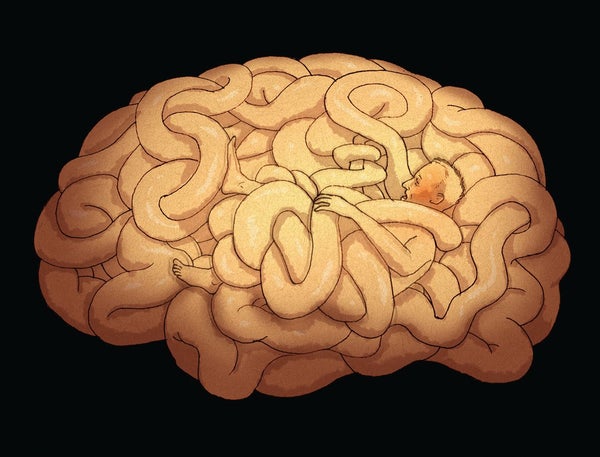
Like most human behavior, suicide is a multicausal act. Teasing out the strongest predictive variables is difficult, particularly because such internal cognitive states may not be accessible even to the person experiencing them. We cannot perceive the neurochemical workings of our brain, so internal processes are typically attributed to external sources. Even those who experience suicidal ideation may not understand why or even if and when ideation might turn into action.
This observation is reinforced by Ralph Lewis, a psychiatrist at the University of Toronto, who works with cancer patients and others facing death, whom I interviewed for my Science Salon podcast about his book Finding Purpose in a Godless World (Prometheus Books, 2018). “A lot of people who are clinically depressed will think that the reason they're feeling that way is because of an existential crisis about the meaning of life or that it's because of such and such a relational event that happened,” Lewis says. “But that's people's own subjective attribution when in fact they may be depressed for reasons they don't understand.” In his clinical practice, for example, he notes, “I've seen many cases where these existential crises practically evaporated under the influence of an antidepressant.”
This attributional error, Lewis says, is common: “At a basic level, we all misattribute the causes of our mental states, for example, attributing our irritability to something someone said, when in fact it's because we're hungry, tired.” In consulting suicide attempt survivors, Lewis remarks, “They say, ‘I don't know what came over me. I don't know what I was thinking.’ This is why suicide prevention is so important: because people can be very persuasive in arguing why they believe life—their life—is not worth living. And yet the situation looks radically different months later, sometimes because of an antidepressant, sometimes because of a change in circumstances, sometimes just a mysterious change of mind.”
If you have suicidal thoughts, call the National Suicide Prevention Lifeline at 800-273-8255 or phone a family member or friend. And wait it out, knowing that in time you will most likely experience one of these mysterious changes of mind and once again yearn for life.