
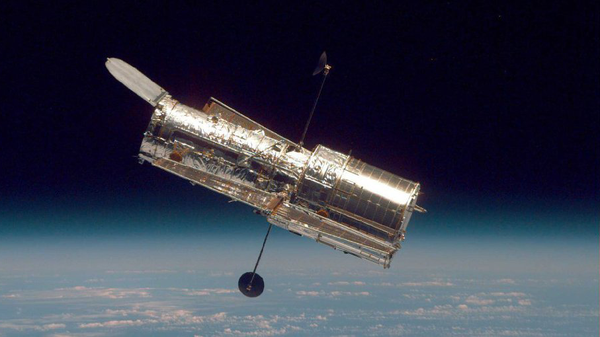

The Hubble Space Telescope was launched into Earth’s orbit in 1990 over 25 years ago. The Spitzer Space Telescope, Hubble’s infrared sister, just celebrated its 15th anniversary in space. Multiple X-ray observatories, including the Chandra X-ray Observatory, XMM-Newton, and the Nuclear Spectroscopic Telescope Array (or NuSTAR) are also surveying the sky from their perches in space, high above the ground here on Earth. In the next decade, NASA plans to launch the James Webb Space Telescope, the next generation Hubble and Spitzer, which will orbit the Sun.
Putting a telescope in space has its limitations. For starters, it can’t be too big because it has to fit inside the rocket that launches it. Our ability to repair it is likewise limited should (knock on wood) anything go wrong. And lastly, to state the obvious, it's pretty expensive. So why do we even do it?
On supporting science journalism
If you're enjoying this article, consider supporting our award-winning journalism by subscribing. By purchasing a subscription you are helping to ensure the future of impactful stories about the discoveries and ideas shaping our world today.
The main reason we put telescopes into space is to get around the Earth’s atmosphere so that we can get a clearer view of the planets, stars, and galaxies that we are studying. Our atmosphere acts like a protective blanket letting only some light through while blocking others. Most of the time this is a good thing. No level of SPF could protect us if we were bombarded by high energy X-rays or gamma rays whenever we went outside. But that protection means we are out of luck when it comes to collecting those forms of light for ground-based studies. We can’t exactly ask the atmosphere to make any special exceptions for light we would hope to reach our telescopes.
»Continue reading “Why Do We Put Telescopes in Space?” on QuickAndDirtyTips.com
