
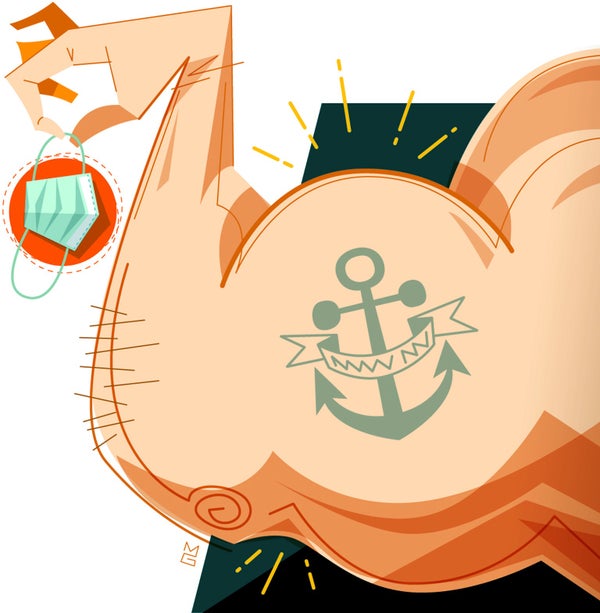
In April, Vice President Mike Pence violated COVID-19 safety protocols at the Mayo Clinic in Minnesota, refusing to don a mask when he toured the hospital. In May, President Donald Trump similarly eschewed a mask—while visiting a mask-making facility. Pence said he wanted to look health care workers in the eye, even though masks don't cover the eyes. Trump has simply said more than once that he is choosing not to do it.
Why? Because “real men” don't play it safe. It's a prescription that, data show, leads men more than women to resist seat belts, take greater physical risks and suffer accidental death at much higher rates. Research has demonstrated that society treats masculinity as an earned status, hard won and easily lost. And the coronavirus has laid bare how some male leaders value projecting a tough guy image over promoting the common good. They defy experts' warnings about the danger they pose to other people susceptible to the virus.
During the coronavirus pandemic, leaders focused on defending a macho image have put their nations at risk in two ways. First, the words and actions of public figures influence their followers through a phenomenon known as social modeling. In Brazil, cell-phone data revealed decreased social distancing after President Jair Bolsonaro dismissed the COVID-19 pandemic. In the U.S., Trump's tweets have encouraged resistance to stay-at-home orders. When leaders fail to endorse safety precautions or actively mock them, fewer people take those precautions.
On supporting science journalism
If you're enjoying this article, consider supporting our award-winning journalism by subscribing. By purchasing a subscription you are helping to ensure the future of impactful stories about the discoveries and ideas shaping our world today.
The second way, indicated by my research with Jennifer Berdahl and Natalya Alonso, is that when leaders endorse hypermasculine norms, poor decisions and organizational dysfunction follow. In research with nearly 2,000 participants, we validated something called the masculinity contest culture scale, which asks subjects to agree or disagree with certain norms that assess whether organizational cultures reward toxic male behavior.
Consider two such norms. The first, “show no weakness,” includes the ideas that admitting you don't know the answer and that seeking others' advice are seen as weak. Trump's resistance to expert opinion and his “I alone can fix it” attitude exemplify this attitude. When leaders see listening to experts as undermining their masculinity, science fails to translate into policy.
Another norm, “dog-eat-dog competition” (assessed by items such as “you're either ‘in' or you're ‘out'” and “you've got to watch your back”), represents the core of the masculinity contest. Every situation is a zero-sum game, promoting suspicion, refusal to admit mistakes, demands for total loyalty and score settling. The result: A win-or-die culture where co-workers constantly compete rather than collaborate. For example, Trump has threatened to withhold critical supplies from states whose governors criticize him.
The pandemic has unmasked the dangers of this type of behavior among national leaders. Trump, reportedly a germaphobe who hates shaking hands even in the best of times, downplayed the virus and continued to press the flesh well into March. In the U.K., Prime Minister Boris Johnson similarly insisted on handshakes as the coronavirus spread, leading the Guardian to label him a “super spreader” weeks before he fell ill with COVID-19 and spent days in the hospital. Bolsonaro, who bragged that his athleticism would insulate him from the virus, continues to wade into crowds, shaking hands and hugging supporters. All three minimized the pandemic when it first spread across their countries. In contrast, countries with female leaders—New Zealand and Germany, for example—have generally done better, by empowering scientific experts and supporting prevention measures.
It's important to note that not all male leaders value a macho image over saving lives. For example, Captain Brett Crozier, who commanded the U.S. aircraft carrier Theodore Roosevelt, prioritized sailors' well-being when coronavirus broke out. He persisted in seeking help after facing delays and opposition to his request to evacuate and quarantine the crew. Relieved of his post, he was cheered by his crew as he departed his ship. Similarly, New York Governor Andrew Cuomo has focused on the communal goal, doing whatever it takes to minimize COVID-19 deaths.
Effective leadership comes from commitment to the mission. Unfortunately, in the current coronavirus crisis, Trump's continuing need to ignore the advice of experts to show that he is some sort of tough guy harms us all.
Read more about the coronavirus outbreak from Scientific American here. And read coverage from our international network of magazines here.