
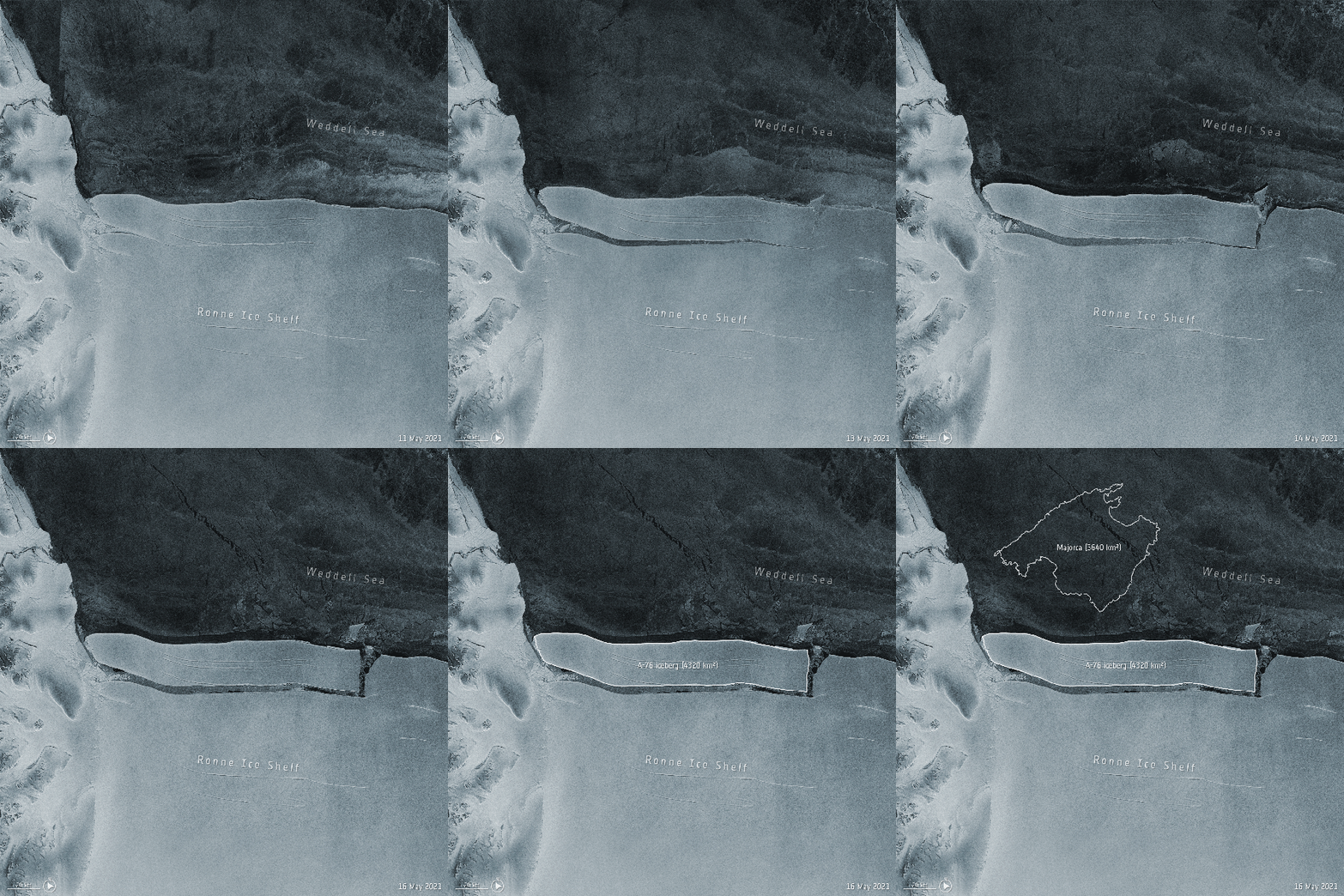
An enormous iceberg, a little bigger than the state of Rhode Island, has broken off of Antarctica.
The finger-shaped chunk of ice, which is roughly 105 miles (170 kilometers) long and 15 miles (25 kilometers) wide, was spotted by satellites as it calved from the western side of Antarctica's Ronne Ice Shelf, according to the European Space Agency. The berg is now floating freely on the Weddell Sea, a large bay in the western Antarctic where explorer Ernest Shackleton once lost his ship, the Endurance, to pack ice.
The 1,667-square-mile (4,320 square kilometers) iceberg—which now the world’s biggest and has been called A-76, after the Antarctic quadrant where it was first spotted—was captured by the European Union's Copernicus Sentinel, a two-satellite constellation that orbits Earth's poles. The satellites confirmed an earlier observation made by the British Antarctic Survey, which was the first organization to notice the breakaway.
On supporting science journalism
If you're enjoying this article, consider supporting our award-winning journalism by subscribing. By purchasing a subscription you are helping to ensure the future of impactful stories about the discoveries and ideas shaping our world today.
Because the ice shelf that this berg calved from was already floating on water, the event won't directly impact sea levels. However, ice shelves help to slow the flow of glaciers and ice streams into the sea; so indirectly, the loss of parts of an ice shelf eventually contributes to rising seas, according to the National Snow and Ice Data Center (NSIDC). The NSIDC also says that the continent of Antarctica, which is warming at a faster pace than the rest of the planet, holds enough frozen water to raise global sea levels by 200 feet (60 meters). Scientists don't think that human-induced climate change caused the calving of A-76 or its nearby predecessor, A-74.
“A76 and A74 are both just part of natural cycles on ice shelves that hadn't calved anything big for decades,” Laura Gerrish, a researcher at the British Antarctic Survey, wrote on Twitter. “It's important to monitor the frequency of all iceberg calving, but these are all expected for now.”
Satellites will continue to track the new iceberg, much as they did for A-68A, the previous title holder for the world's largest iceberg. After splitting from the Antarctic ice sheet in 2017, A-68A was set loose by ocean currents in 2020 and came perilously close to colliding with South Georgia Island, a breeding ground for seals and penguins. The rogue berg shattered into a dozen pieces before it caused any harm, Live Science previously reported.
The Ronne Ice Shelf, which birthed the recent iceberg, is mostly spared from influxes of warm water that disrupt the Antarctic's natural cycle of ice calving and regrowth. But not all parts of West Antarctica have been quite so lucky. Live Science reported in April that the Thwaites Glacier, or the “Doomsday Glacier,” was discovered to be melting faster than previously thought. This was due to a warm water current from the east whittling away at the vital “pinning points” that anchor the shelf to the land.
Copyright 2021 LiveScience, a Future company. All rights reserved. This material may not be published, broadcast, rewritten or redistributed.