
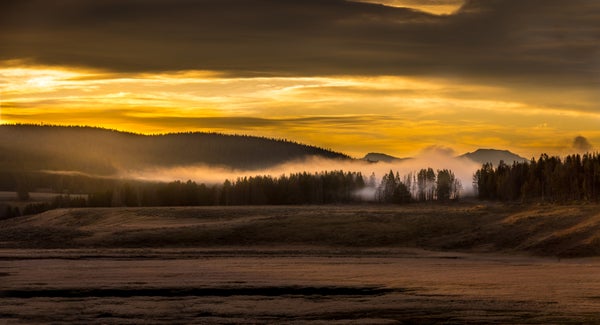
Summers in the nation’s first and oldest national park are rapidly heating up, new research finds. For the last two decades, Yellowstone National Park has been warming at its most intense rates in at least 1,250 years.
2016 was the warmest the region had seen since 770.
The study, published in the journal Geophysical Research Letters, used data from tree rings to reconstruct more than a millennium of summer temperatures in the Yellowstone region. Tree rings can provide a variety of information about the climate and weather conditions a tree has experienced over the course of its lifetime.
On supporting science journalism
If you're enjoying this article, consider supporting our award-winning journalism by subscribing. By purchasing a subscription you are helping to ensure the future of impactful stories about the discoveries and ideas shaping our world today.
Led by Karen Heeter at the University of Idaho in Moscow, the researchers collected samples from both living and fossilized Engelmann spruce trees in northwest Wyoming, including trees inside Yellowstone National Park and in nearby Shoshone National Forest. Some samples were more than a thousand years old.
The samples helped scientists construct a timeline of the Yellowstone climate, focusing on August temperatures — the hottest time of the year.
They used a special kind of analysis known as “blue intensity,” a relatively new method that measures the amount of blue light reflected from tree rings. This method helps scientists determine the density of the tree rings, a characteristic that’s closely correlated with the summer temperatures the tree experienced while it was alive.
It’s one of the few tree-ring records in North America dating back so far, the scientists say. Most others extend back only a few hundred years.
Yellowstone has had its ups and downs over the past millennium, they found, including periods of both warming and cooling. But recent human-caused climate change has taken an unprecedented toll. The region’s most intense warming has occurred since 2000.
Still, there are lessons to be learned from the past. The researchers found that other significant warm periods in Yellowstone’s history have coincided with serious climate-related disasters.
1988, for instance, was the fourth-warmest year in the record. It was also unusually dry. That year, a series of catastrophic wildfires swept through the park, burning nearly 800,000 acres of land.
The fifth-warmest period in the record, stretching from 1931 to 1940, coincides with the extreme drought of the Dust Bowl era.
Scientists have warned that continued climate change in the Yellowstone region, and across the western United States more broadly, could increase the likelihood of severe droughts and the risk of large wildfires. The current rate of warming raises concerns that the park might already be on track for dramatic changes in the coming decades, the researchers note.
“The rate of warmth over a relatively short period of time is alarming and has important implications for ecosystem health and function,” said Heeter in a statement.
Reprinted from E&E News with permission from POLITICO, LLC. Copyright 2021. E&E News provides essential news for energy and environment professionals.