
Ozempic, Zepbound and other glucagonlike peptide 1 (GLP-1) drugs have shown sweeping health benefits—they can control blood sugar, manage body weight and improve heart health. And last year GLP-1 drugs received U.S. Food and Drug Administration approval to treat kidney and liver disease.
Some scientists think these body-wide benefits are likely tied to the drugs’ weight-loss effects, but growing research suggests another factor may be at play: taming inflammation. To tease this out, researchers are trying to chart which anti-inflammatory pathways the drugs might activate. This could help them better understand what’s been seen clinically and open the door to GLP-1 treatments for a variety of inflammatory diseases, says Daniel Drucker, an endocrinologist at the University of Toronto, who is studying GLP-1 drugs’ widespread effects.
“Yes, weight loss is important, but it’s by no means the whole story,” he says. “We have patients [taking GLP-1s] who are telling us, ‘Wow, my arthritis is better,’ ‘My Crohn’s or colitis is better,’ and that motivates us to say, ‘Well, how is that happening?’”
On supporting science journalism
If you're enjoying this article, consider supporting our award-winning journalism by subscribing. By purchasing a subscription you are helping to ensure the future of impactful stories about the discoveries and ideas shaping our world today.
When a healthy immune system kicks into gear, it boosts inflammation to help fight off threats, such as bacteria or viruses. But research has shown that several metabolic and heart diseases impair the immune system’s ability to moderate inflammation—causing harmful levels of inflammation in response to high cholesterol, fat or glucose.
“The immune system gets ramped up where it shouldn’t,” says Marc Bonaca, a cardiologist and vascular medicine specialist at the University of Colorado Anschutz. Treatments that suppress the immune system can help lower chronic inflammation. But there’s a trade-off: dampening the immune system weakens its ability to tackle real infections.
Clinical trials and real-world data suggest that GLP-1s may be able to strike this balance, Bonaca says. Studies have shown that semaglutide (the active ingredient in Ozempic) leads to about a 40 percent reduction in the inflammation blood marker C-reactive protein—independent of weight loss. Other analyses suggest that GLP-1 drugs lower the risk of infections. Combined, this evidence suggests the drugs may be “calibrating or resetting the immune system in a way, not just suppressing it,” Bonaca says.
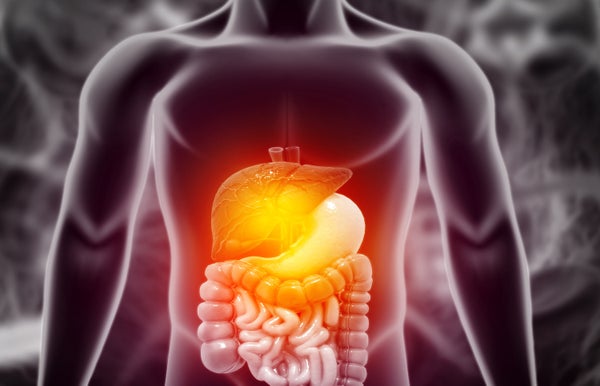
The receptors for GLP-1—the main hormone that the drugs mimic—are found in the gut and in many other organs. This means GLP-1 drugs can bind to cells throughout the body. “The liver, the heart, the blood vessels, the kidney and probably the brain as well—those are the major organs where we are pretty confident there’s a reduction of inflammation [from GLP-1 drugs],” Drucker says. This aligns with the list of conditions GLP-1 drugs have been approved to treat so far.
Most recently, Drucker’s team published a paper this month investigating cells of mice that were engineered to have a type of severe liver disease called metabolic dysfunction-associated steatohepatitis (MASH). Excess fat in the liver drives inflammation, which, over time, can lead to fibrosis—a severe scarring and stiffening of tissues. If the condition remains untreated, people can develop cirrhosis and require a liver transplant.
“Type 2 diabetes and obesity will [over time] contribute substantially to accumulating fat in the liver,” Drucker says. “So there’s no question that controlling blood sugar and losing weight are helpful. But very often that’s extremely difficult to do in people with metabolic liver disease, and diet and lifestyle modification alone has never been proven to substantially reverse the disease in a clinical trial.”
Semaglutide has been shown to help resolve MASH in human clinical trials, and the FDA approved the drug for that disease last year. Drucker’s team wanted to know if these clinical improvements were driven purely by weight loss or by lower inflammation as well.
GLP-1 receptors are expressed at very low levels in the liver, specifically in rare cells called liver sinusoidal endothelial cells. These specialized cells are part of the immune barrier between the gut and liver and “are intimately involved in tissue defense,” says Adnan Said, a gastroenterologist and liver transplant expert at the University of Wisconsin–Madison, who was not involved in the recent study.
By turning off genes that express GLP-1 receptors involved in weight loss outside of the liver, Drucker’s team demonstrated that activating liver sinusoidal endothelial cells with semaglutide independently improved liver disease in mice. When the drug bound to the GLP-1 receptors in this small subset of liver cells, they secreted proteins that turned on a half-dozen other cell types throughout the liver. Those proteins are linked to an array of regulatory actions, including fat synthesis, liver metabolism, immune function and cell survival.
“All of the information that flows out of this subpopulation of liver cells ends up being very important for healing the liver—reducing the amount of fat that’s in the liver, reducing the amount of inflammation that’s in the liver, reducing the amount of fibrosis,” Drucker says. “It’s a very powerful, orchestrated system that’s directed by semaglutide.”
In the liver, the researchers also found GLP-1 receptors in immune cells called T cells, which could contribute some anti-inflammatory benefits, but their role couldn’t be confirmed in the study. While GLP-1 receptors are present in the same set of liver cells in humans, the mechanism will need to be verified through human tissue studies.
“This is preclinical work, and mice models may not replicate the GLP-1 pathways in [a] human liver,” Said says. Other weight-independent benefits of semaglutide, such as increased insulin sensitivity, may also be involved in the observed liver disease improvements, he says.
Still, the findings open compelling new avenues of investigation into how GLP-1 drugs’ anti-inflammatory effects may help with other conditions such as heart failure, sleep apnea and chronic kidney disease, Said says.
Bonaca, who was not involved in the recent research, says the study aligns with observations he and other groups have made on GLP-1 treatments for cardiovascular conditions. He led a trial funded by Novo Nordisk (which makes and sells Ozempic) that tested semaglutide on peripheral artery disease—blockages in the large arteries of the legs that can cause severe cramping and mobility issues. Bonaca suspects that the walking improvements seen in trial participants who took semaglutide were likely from anti-inflammatory mechanisms in the vascular endothelial muscles.
“We see a unique therapeutic profile for these agents, and it’s really unrelated to weight loss,” he says. Bonaca adds that the insights from the new study on MASH reinforces the point. “These are vascular, anti-inflammatory drugs with broad benefits,” he says.
Drucker is interested in seeing similar molecular studies that could clarify anti-inflammatory pathways in other organs. Researchers are already investigating the drugs’ use for various chronic inflammatory diseases. Eli Lilly, the developer of the GLP-1 drugs Zepbound and Mounjaro, is currently running clinical trials on GLP-1 treatments for Chron’s disease, arthritis and psoriasis.
There are limitations: how much GLP-1 drugs curb inflammation matters for different diseases. The anti-inflammatory properties might help with liver disease, for instance, but may have little or no effect in improving other conditions. “We’ll have to look at each disease one by one,” Drucker says. (Drucker has consulted and given talks for Eli Lilly and Novo Nordisk.)
As more evidence reveals the ways in which these drugs work beyond weight loss and blood sugar control, it could change how they are used and prescribed, he says.
The new evidence reflects “an evolution” in how scientists are thinking about GLP-1 drugs, Drucker says. “If your health is more complicated, then your health care provider needs to understand that achieving weight-loss thresholds is not the [clearest] way to think about the benefits of these medicines.”