New Issue: Orbital Catastrophe Ahead? Read Now

Zika Virus Cases Are Confirmed in the U.S.--What You Need to Know

A patient in Texas is the most recent of the 20-plus U.S. travelers who have acquired the disease outside the United States

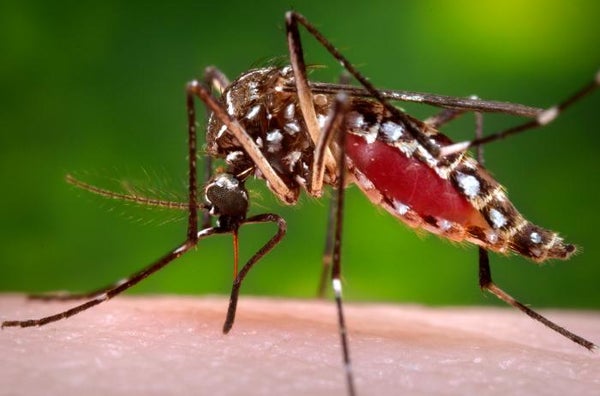
A female Aedes aegypti mosquito.

Join Our Community of Science Lovers!

Zika, the mosquito-borne illness snagging headlines for its links to tiny-headed babies and autoimmune disease, has managed to sicken at least 22 patients in the mainland U.S. since 2007. None of the cases, however, were domestically acquired, according to the U.S. Centers for Disease Control and Prevention.

A total of 14 Zika cases occurred before 2014, the CDC told Scientific American. Then, since 2015 “at least eight U.S. travelers have had positive Zika virus testing performed at CDC. However, CDC is still receiving specimens for Zika virus testing from returning U.S. travelers who became ill in 2015 or 2016,” the agency said, via e-mail.

Yesterday Harris County, Texas health officials confirmed the latest case of imported Zika—one patient who recently traveled to Latin America and subsequently exhibited characteristic symptoms including fever, rash and joint pain. Areas of Texas, like in some other states in the southern U.S., are home to two species of Aedes mosquitoes capable of transmitting Zika, but there are no cases of local transmission of the disease in the U.S. mainland so far.


On supporting science journalism

If you're enjoying this article, consider supporting our award-winning journalism by subscribing. By purchasing a subscription you are helping to ensure the future of impactful stories about the discoveries and ideas shaping our world today.


CDC National Center for Emerging Zoonotic and Infectious Diseases


Subscribe to Support Independent Journalism

Great science journalism requires human expertise, time, effort and creativity. And it costs money. That’s why I and the journalists here at Scientific American hope you’ll join our community.

When you subscribe, you are supporting staff and freelance journalists who are passionate about telling science stories that are true, important and compelling. Our editors and reporters are often experts in their fields, which means they understand the nuances of big discoveries and can untangle the breakthroughs from the hype. With a subscription, you are also supporting rigorous fact-checking to ensure the words we publish are precise and accurate. And you’re supporting original illustrations, graphics and photos that bring you closer to an advanced laboratory, an ice sheet in Antarctica or a space mission in orbit. You’re helping us craft other types of high-quality journalism as well: Our newsletters are carefully written, edited and curated by staffers you have or will come to know and love. Our Science Quickly podcast is based on original reporting, collaboration with editors and scientists and exacting production.

Subscriptions keep this engine running so we can continue to deliver thoughtful, rigorous and independent science journalism to you. In an era of viral misinformation, this work is crucial. If you value what we do, I hope you’ll consider joining us as a subscriber

Thank you,

Jeanna Bryner, Editor in Chief, Scientific American

Subscribe