
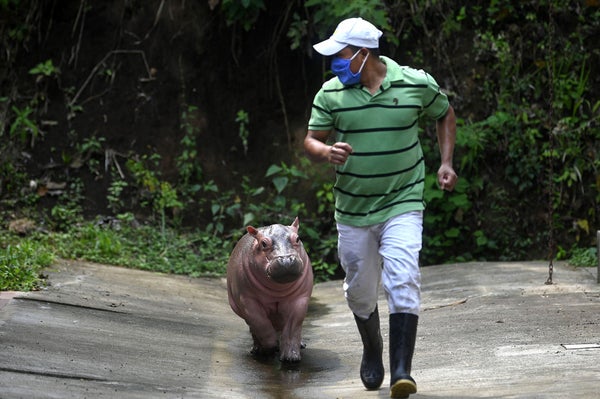
Just as restaurants, clothing stores and offices around the world have had to close their doors to prevent the spread of the novel coronavirus, so have zoos, aquariums and animal sanctuaries. Some zoos have followed other industries by using online technology to keep life going. Many of them livestream animal activity to viewers, post behind-the-scenes photographs and videos, and conduct virtual fundraising.
Though the institutions have been closed to visitors, zookeepers must still go in to feed the animals and provide medical care and enrichment. In order to facilitate this activity, the zoos have taken on additional safety precautions to disinfect facilities and ensure the virus is not unintentionally spread among animals (as happened in the case of several tigers and lions that were infected at the Bronx Zoo). Some zoos are trying to keep animals on the same schedules they had before the lockdown. One aquarium in Japan asked people to participate in video calls with its garden eels in response to worries that the animals would become accustomed to the absence of humans and be skittish when visitors returned.
With no revenue coming in from visitors, some zoos have been concerned about being able to properly feed their animals if the shutdowns continue for a long period of time. A few news outlets have quoted zoo representatives, including ones in Germany and Indonesia, as saying that if the situation got bad enough, they might have to slaughter some of their animals to feed others, though there have not be any reports of that happening.
On supporting science journalism
If you're enjoying this article, consider supporting our award-winning journalism by subscribing. By purchasing a subscription you are helping to ensure the future of impactful stories about the discoveries and ideas shaping our world today.
Here we round up photographs from zoos around the world taken during the height of the pandemic and shutdowns to show the varying ways they have responded.
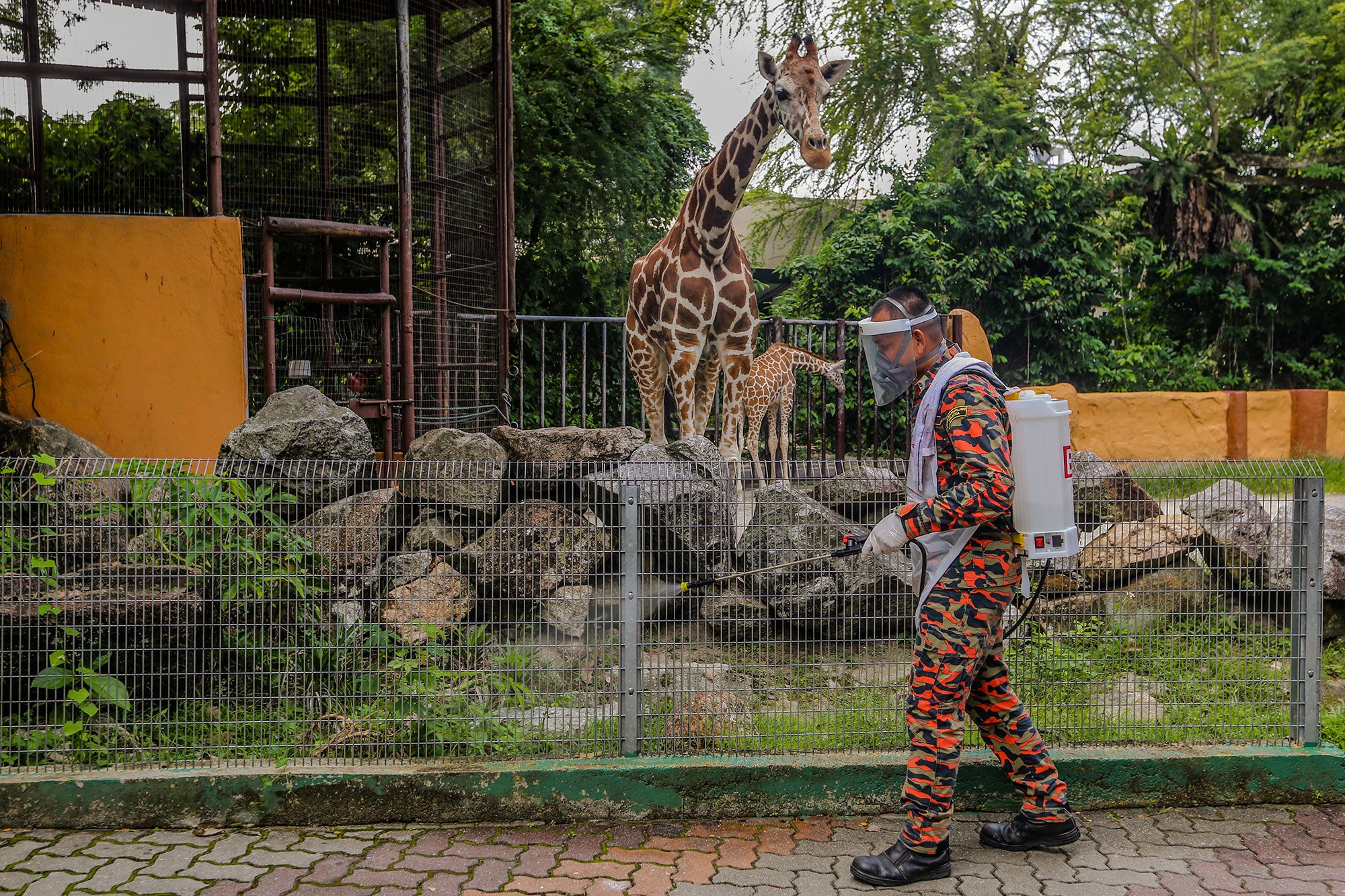
Credit: Mohd Daud Getty Images
A Fire and Rescue Department officer sprays a disinfectant as a preventive measure against the spread of the novel coronavirus at the closed National Zoo in Kuala Lumpur, Malaysia, on April 17, 2020.
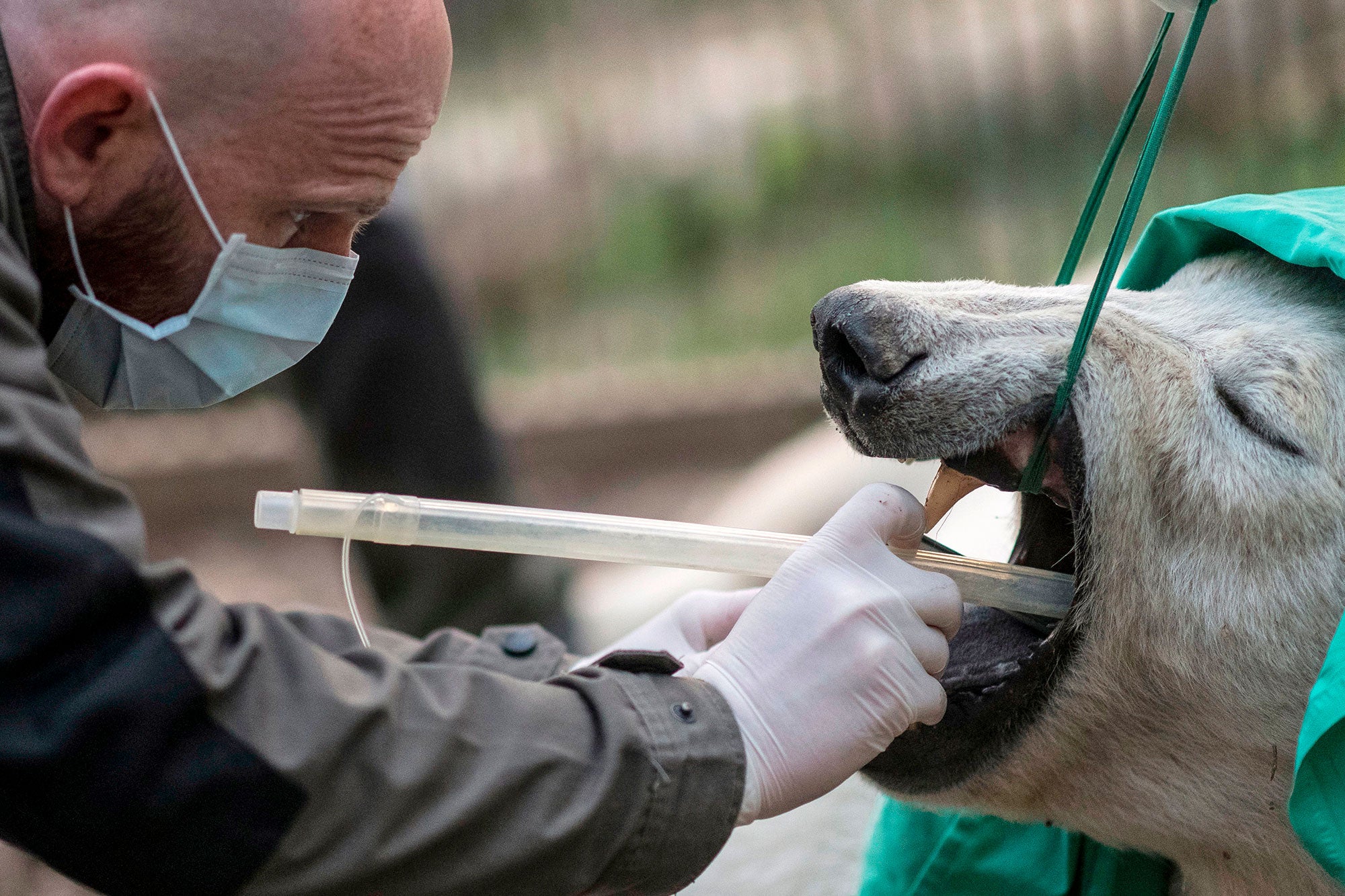
Credit: Sebastien Bozon Getty Images
Veterinarians at the Mulhouse Zoological and Botanical Park in eastern France examine and prepare a young sedated polar bear called Nanuq before her transfer to the CERZA Zoological Park, near Lisieu in the region of Normandy—and later to a zoo in the town of La Flèche in the Loire Valley region—on April 9, 2020. Nanuq weighs just more than 200 kilograms and was born at the end of 2016 at the Mulhouse zoo. The CERZA zoo volunteered to welcome her while her new enclosure is made ready in La Flèche, where work was delayed because of the lockdown across France.
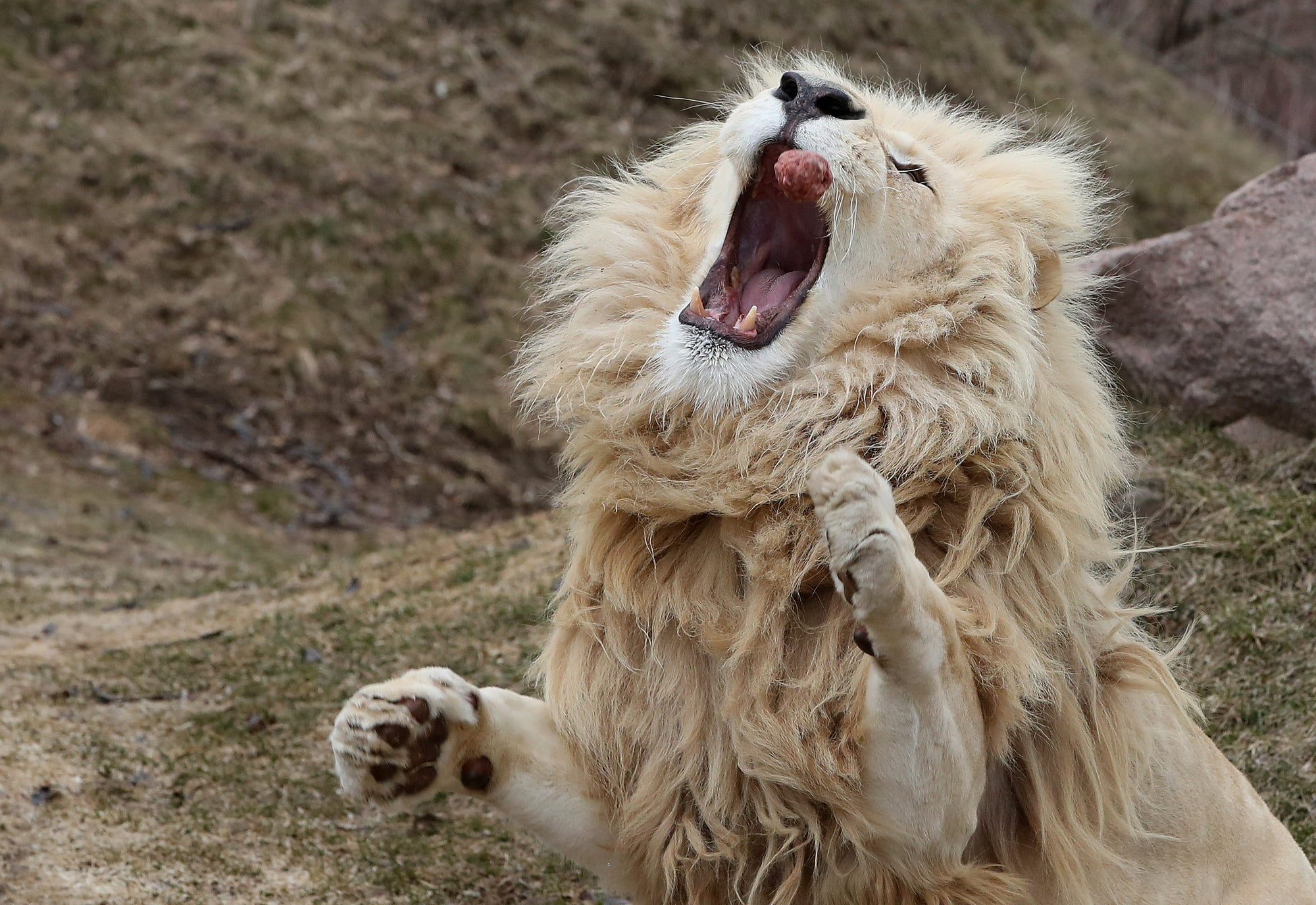
Credit: Steve Russell Getty Images
Though the Toronto Zoo was shut down, Fintan the lion catches a meatball tossed by zookeeper Kim Welfle during the usual “meet the keeper” time on March 18, 2020.
Credit: Ulet Ifansasti Getty Images
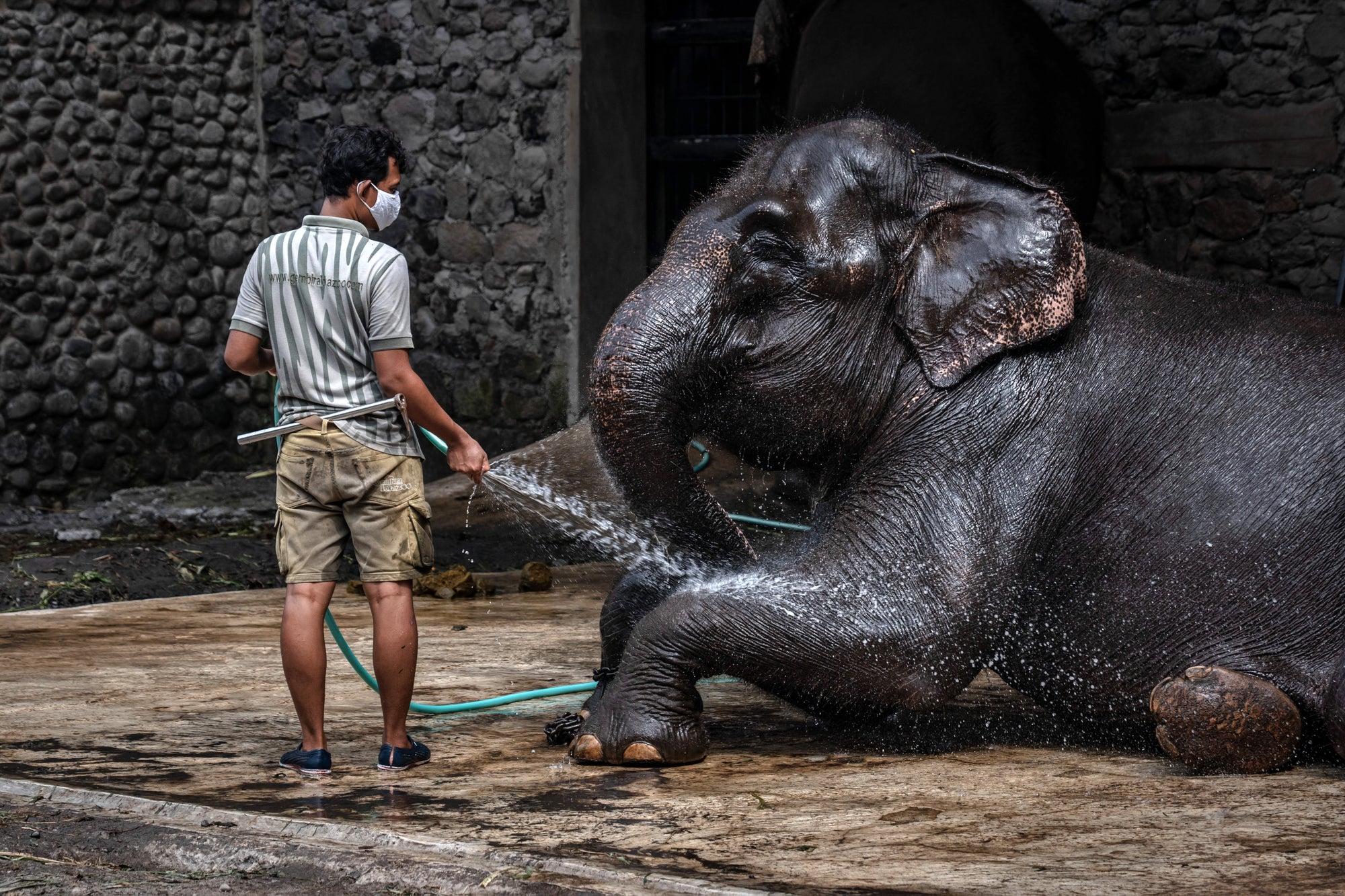
On May 5, 2020, a zookeeper wears a protective mask to spray water on a Sumatran elephant (Elephas maximus sumatranus) inside its enclosure at Gembira Loka Zoo in Yogyakarta, Indonesia, during the country’s lockdown. According to media and the Indonesian Zoo Association (PKBSI), tens of thousands of zoo animals across Indonesia are at risk of food shortage because of a lack of revenue during the COVID-19 pandemic. The PKBSI launched a fundraiser to provide food to zoo animals. According to a story from the international news agency AFP, the situation got bad enough, the association was considering allowing zoos to feed herbivores to carnivores.
Credit: Kyodo News Getty Images
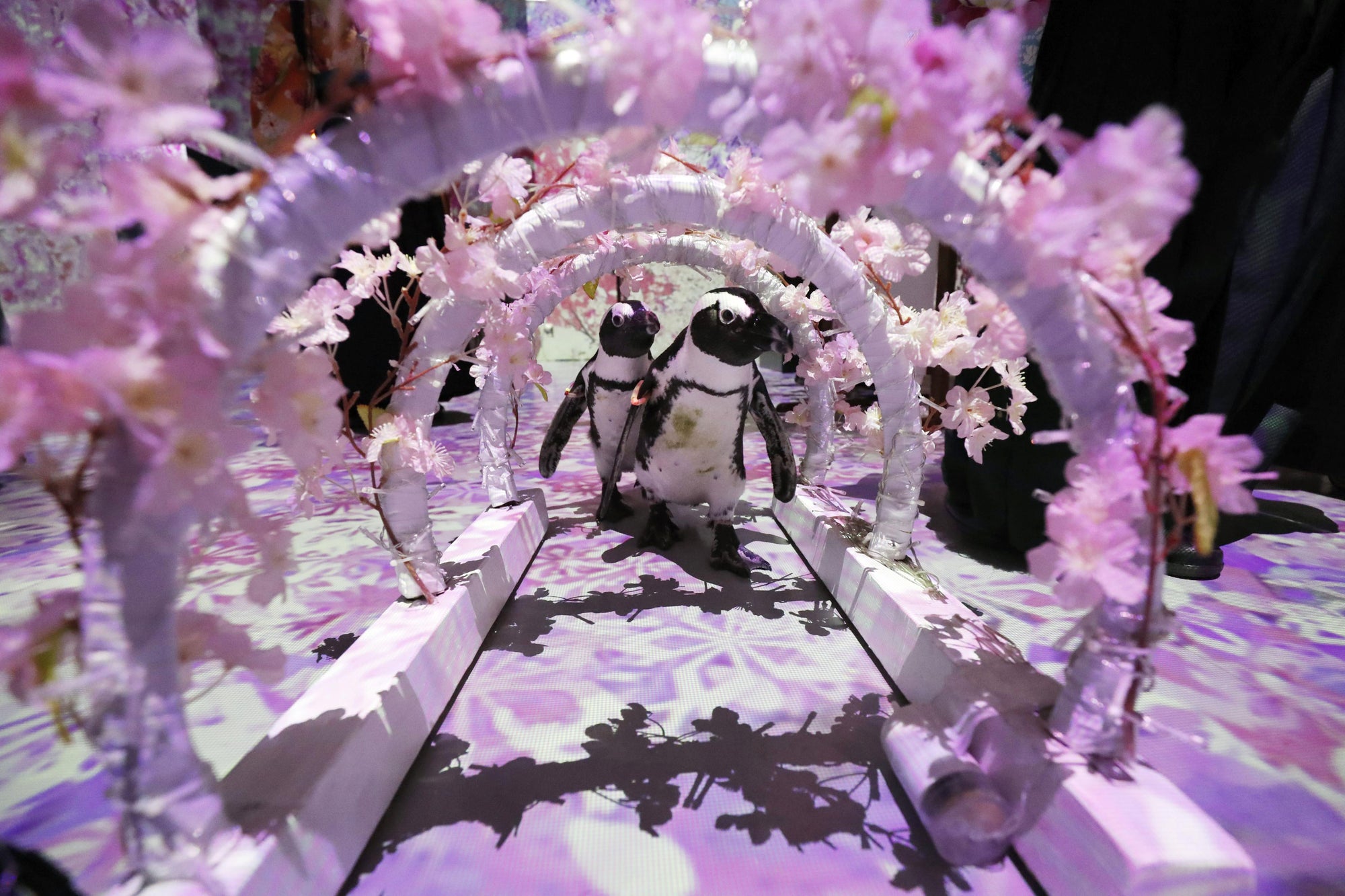
Penguins march through a tunnel of mock small cherry blossom trees at Maxell Aqua Park Shinagawa in Tokyo on April 30, 2020. The closed aquarium uploaded videos of the birds on its Web site in the hopes of encouraging people staying home during the coronavirus pandemic.
Credit: Oli Scarff Getty Images
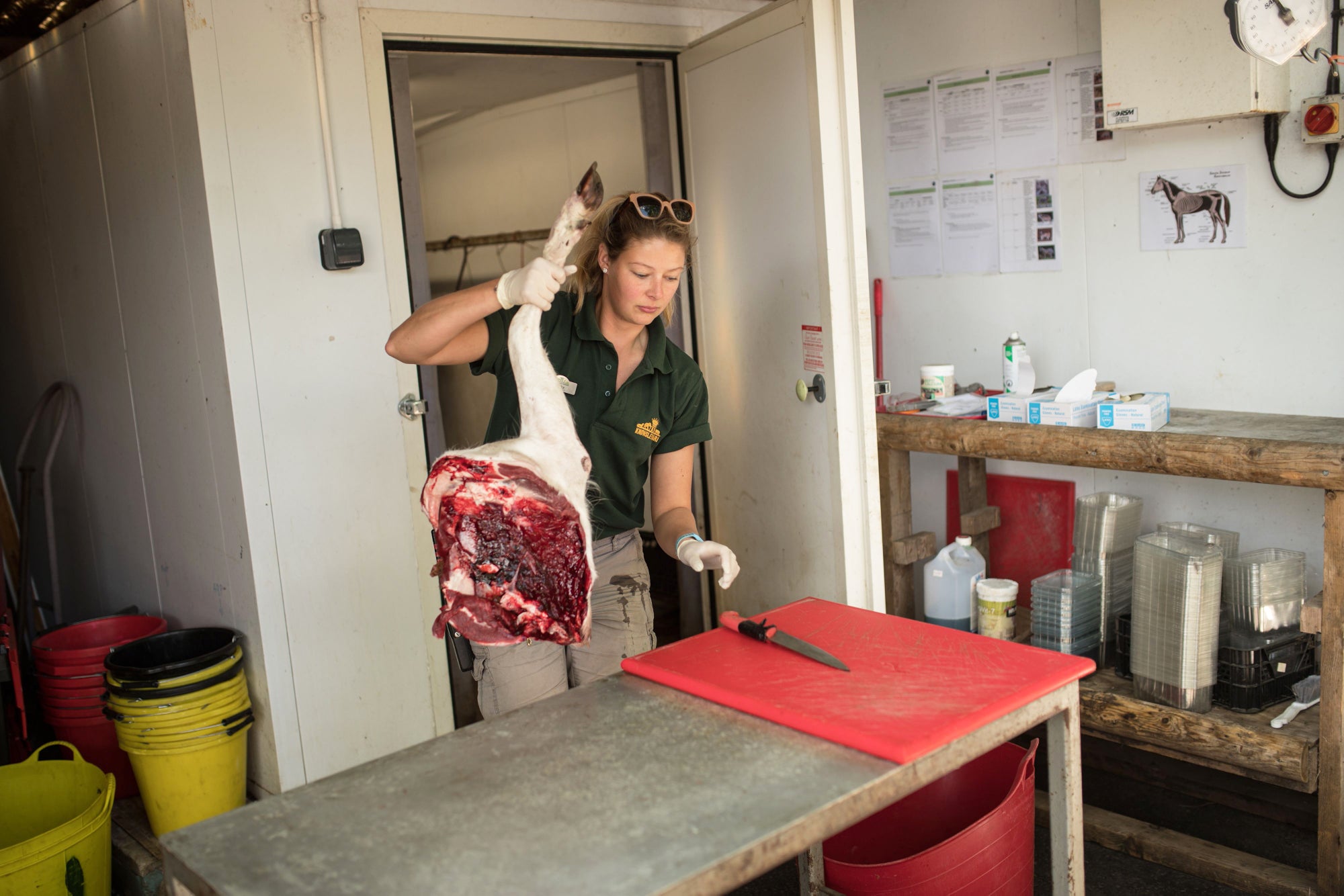
Animal keeper Becky Hall prepares a leg of meat for a female Amur tiger at Knowsley Safari, near Liverpool in northern England, on May 14, 2020. The safari park is closed to visitors, but site maintenance and animal welfare work continue, requiring the majority of staff to be present.
Credit: Kerem Kocalar Getty Images
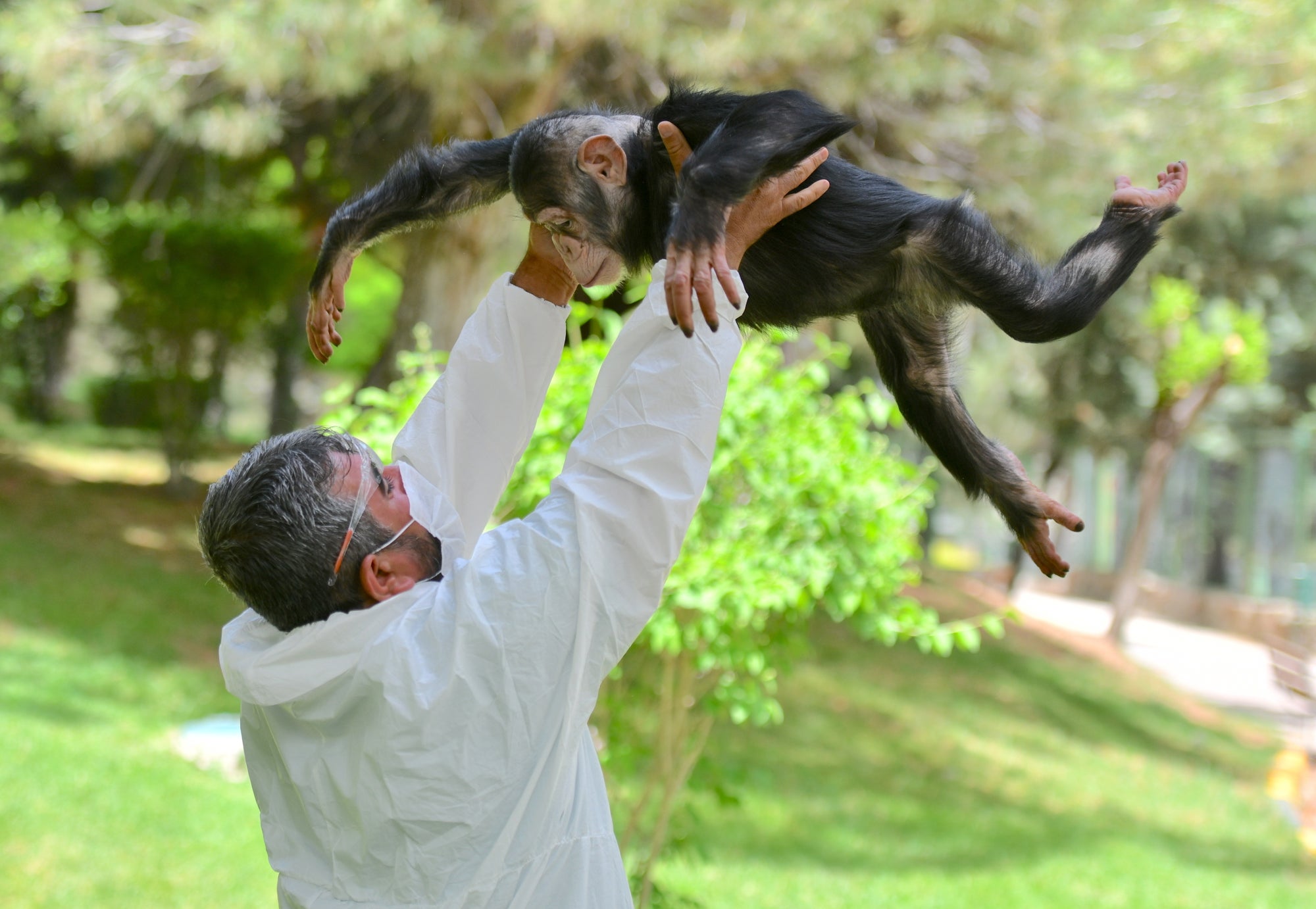
A chimpanzee named Can enjoys outdoor time with his caretaker at the Gaziantep Zoo in Turkey on May 18, 2020—Can’s first time outside of his shelter since coronavirus measures were put in place.
Credit: Justin Sullivan Getty Images
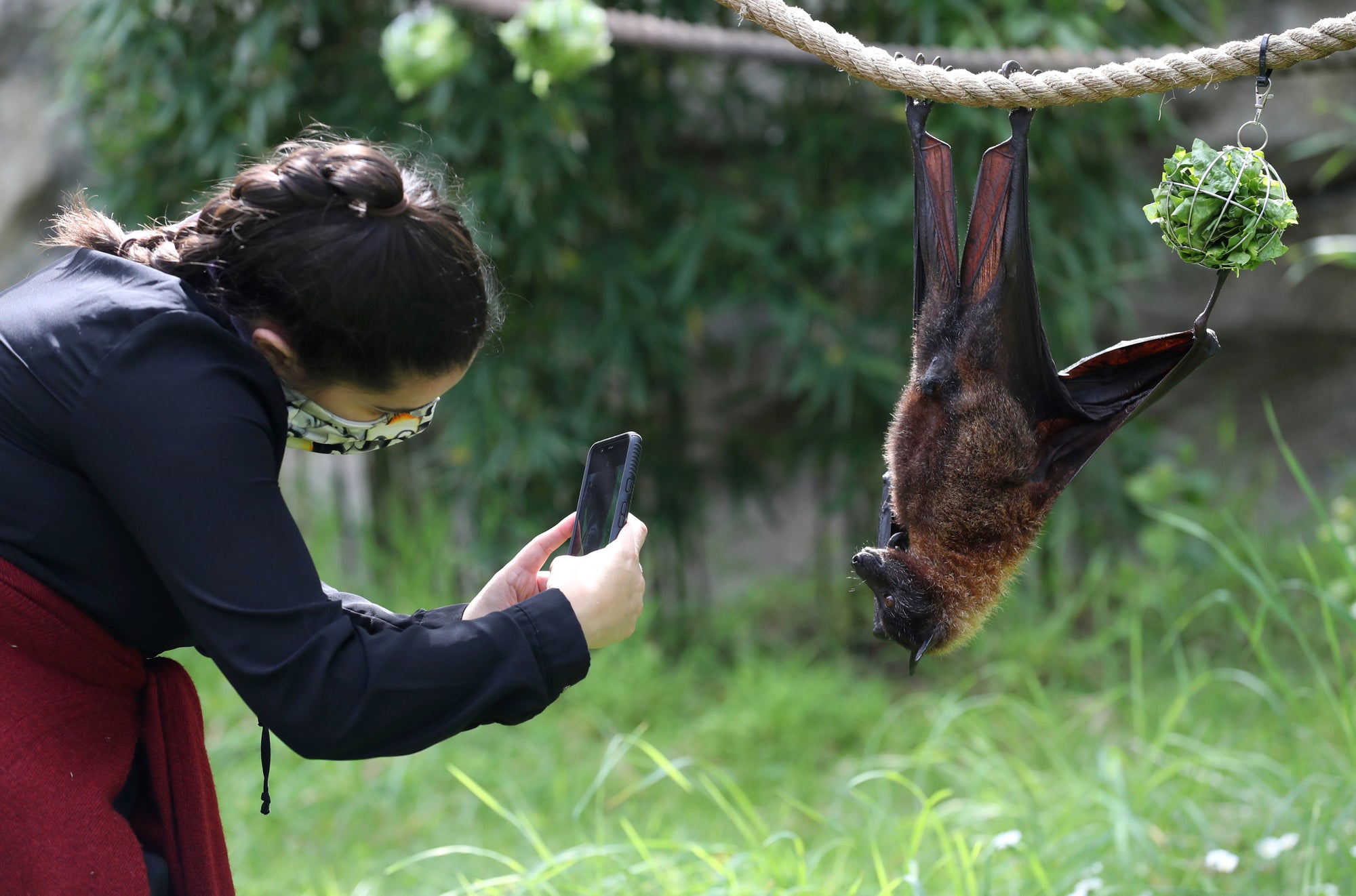
Isabella Linares takes a photograph of a fruit bat before the start of an interactive behind-the-scenes livestream at the Oakland Zoo in California on April 16, 2020. While the zoo has been closed to the public, it had, at the time, offered a subscription-based service in which it livestreamed five weekly programs that featured zookeepers and their animals. Viewers were able to interact with the keepers by submitting questions about the animals.
Credit: Tomohiro Ohsumi Getty Images
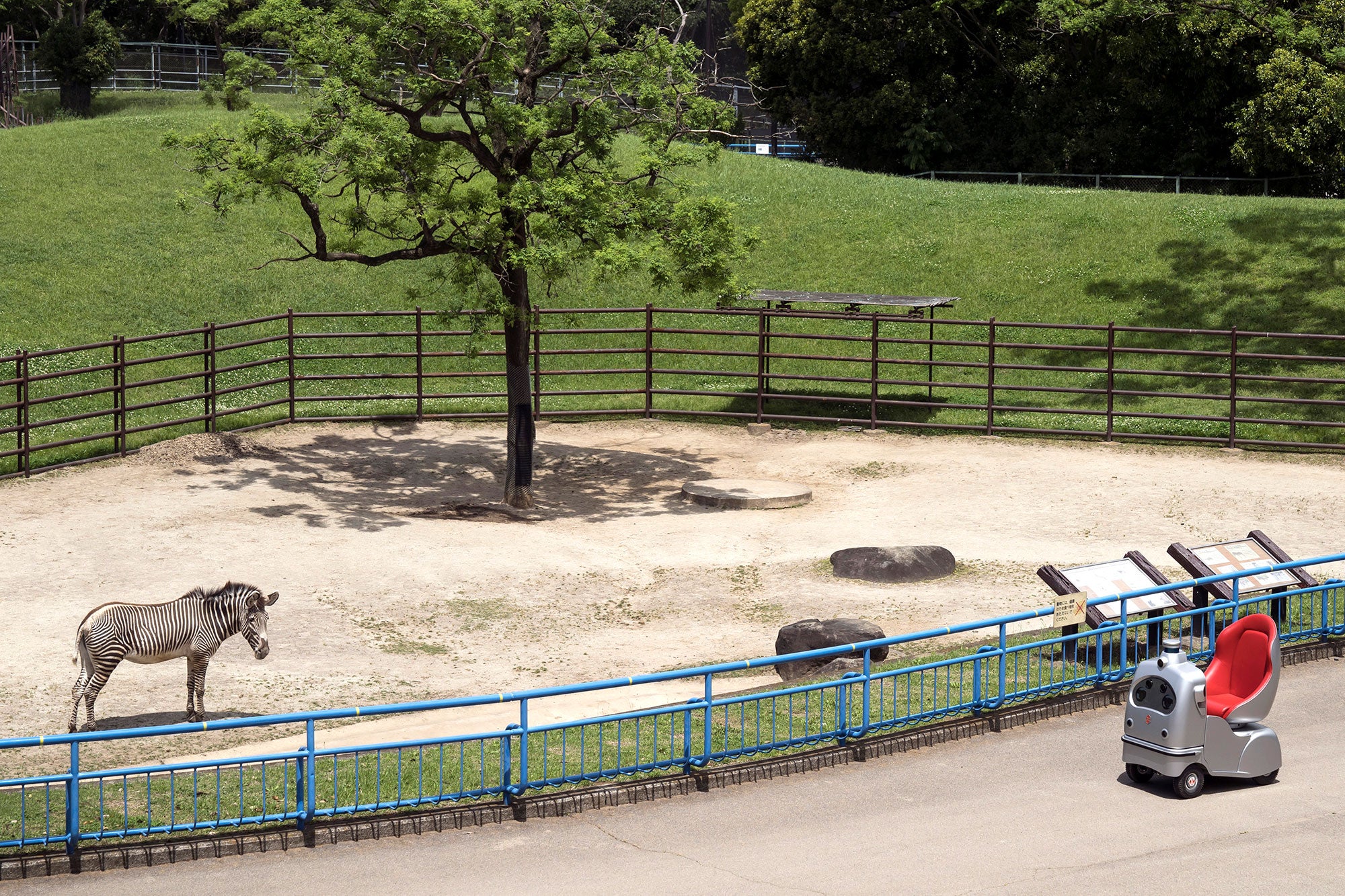
RakuRo autonomous self-driving robot, developed by the company ZMP, moves past a zebra at the Chiba Zoological Park in Japan during a rehearsal for an online virtual tour event on May 15, 2020. Robot maker ZMP and the zoo, which temporarily closed because of the coronavirus pandemic, held the online event so that children isolated at home could virtually tour the zoo through the remote-controlled robot and its 360-degree camera.
Read more about the coronavirus outbreak from Scientific American here. And read coverage from our international network of magazines here.