AstronomyJuly 11, 2023
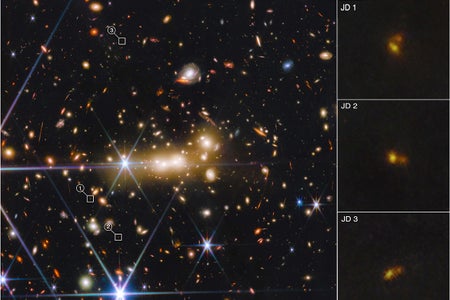
Earliest Merging Galaxies Discovered in New JWST Photos
Astronomers found two colliding galaxies dating back to less than 500 million years after the big bang
Earliest Merging Galaxies Discovered in New JWST Photos
Astronomers found two colliding galaxies dating back to less than 500 million years after the big bang
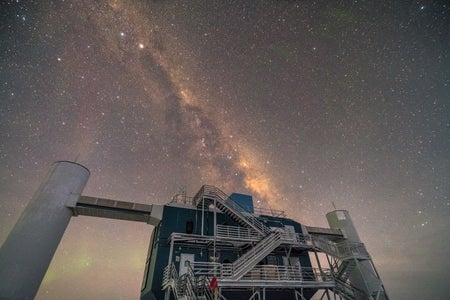
In a First, Scientists See Neutrinos Emitted by the Milky Way
The disk of our galaxy was long thought to produce these ghostly high-energy particles, but they haven’t been detected until now

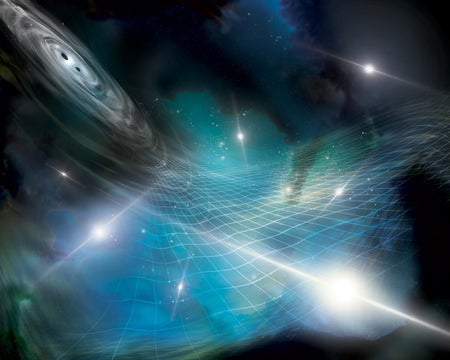
First Evidence of Giant Gravitational Waves Thrills Astronomers
Astrophysicists are tuning in to a never-before-seen type of gravitational wave spawned by pairs of supermassive black holes
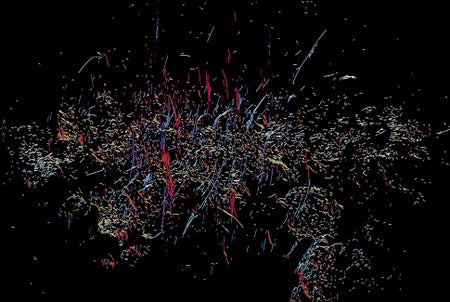
Strange Giant Filaments Reveal a Mystery at the Milky Way’s Heart
Astrophysicist Farhad Yusef-Zadeh has spent decades peering into the center of the Milky Way galaxy, discovering hundreds of enigmatic filaments in the process
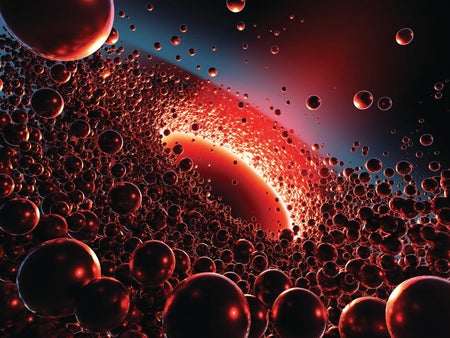
Black Holes Evaporate—Now Physicists Think Everything Else Does, Too
Particle by particle, all matter may eventually disappear, according to new calculations
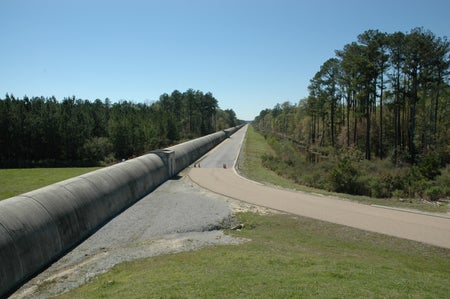
Gravitational-Wave Search Resumes after Three Years and Lots of Headaches
Researchers still hope to discover hundreds of new binary black hole mergers despite technical setbacks that have sidelined key detectors in Italy and Japan
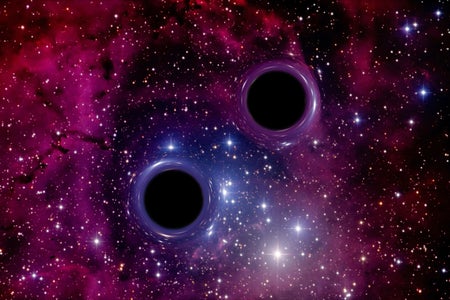
Six Gravitational-Wave Breakthroughs Scientists Can’t Wait to See
After years of downtime for upgrades, the world’s premier gravitational-wave observatories are coming back online with big hopes for transformative discoveries
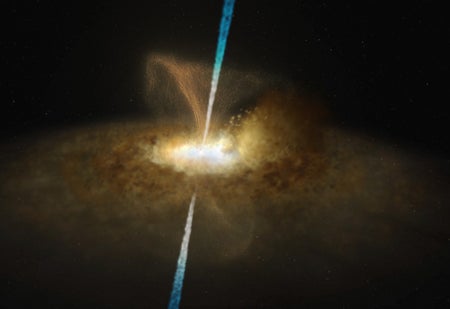
Largest-Ever Cosmic Explosion Has Raged for Years
For at least three years, the mysterious blast has shined 10 times brighter than any supernova
Is Time Travel Even Possible?
Two SciAm editors duke it out to see if wormholes and multiverses could in fact exist.

Astronomy Tool Can Now Detect COVID in Breath
Laser-based optical frequency combs, originally developed to time atomic clocks, can also perform fast, noninvasive tests for COVID—and potentially other diseases as well
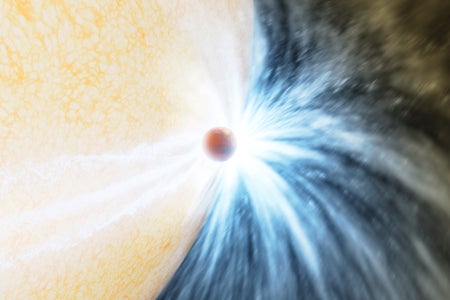
Astronomers Just Saw a Star Eat a Planet for the First Time
A dying star swallowing a giant planet hints at the fate awaiting our solar system some five billion years from now
Is Time Travel Possible?
The laws of physics allow time travel. So why haven’t people become chronological hoppers?