Space & PhysicsDecember 1, 2015
Does the Multiverse Really Exist?
Proof of parallel universes radically different from our own may still lie beyond the domain of science
Does the Multiverse Really Exist?
Proof of parallel universes radically different from our own may still lie beyond the domain of science
New Ideas in the Search for Dark Matter
The invisible dark matter particles that dominate the universe may come in strange and varied forms

Superstars of the First Galaxies
Emerging evidence suggests that the first starlight to shine after the big bang’s flash came from distant suns that ranged from very large to incredibly huge

The Black Hole at the Beginning of Time
Is the big bang, and all that came from it, a holographic mirage from another dimension?
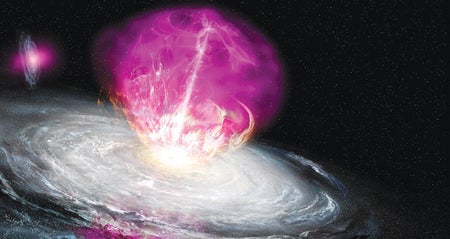
Giant Bubbles Soar over the Milky Way
Newly discovered lobes stretch tens of thousands of light-years above and below the Milky Way's disk. Where did they come from?
Better Than Sci-Fi
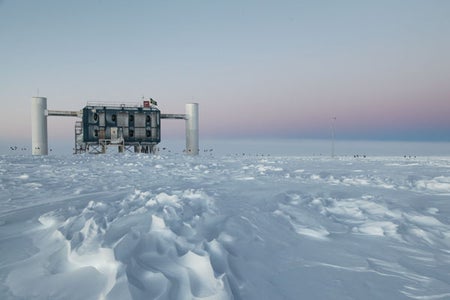
South Pole Experiment Traps Neutrinos from Beyond the Galaxy
Dozens of particles from halfway across the universe have landed in the IceCube experiment. These messengers could help answer some long-standing cosmic conundrums
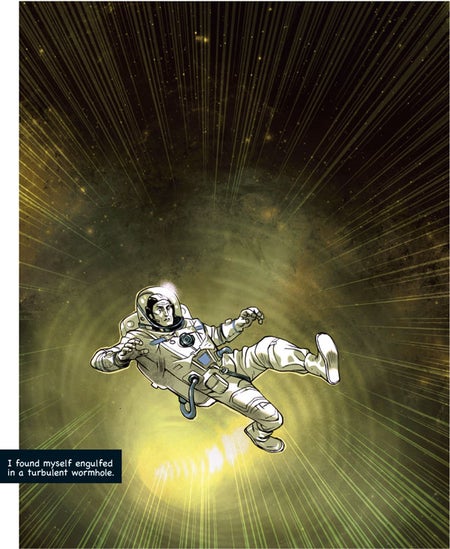
Can Time Travelers Reach the Past via Wormholes?
Astronauts already skip ahead in time, but the laws of physics seem to forbid going backward—or do they?
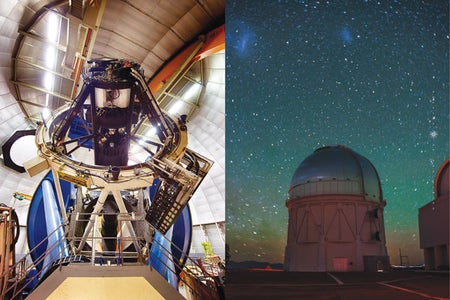
Ambitious Project Probes Mysterious Cosmic Expansion
The Dark Energy Survey is examining distant galaxies to figure out why space is expanding at an ever faster pace

5 Reasons to Thank Your Lucky Constants This Thanksgiving
As you dig into those mashed potatoes, be grateful the universe’s physical constants are so precise that a slight variation in any one would render that drumstick—and even your existence—impossible
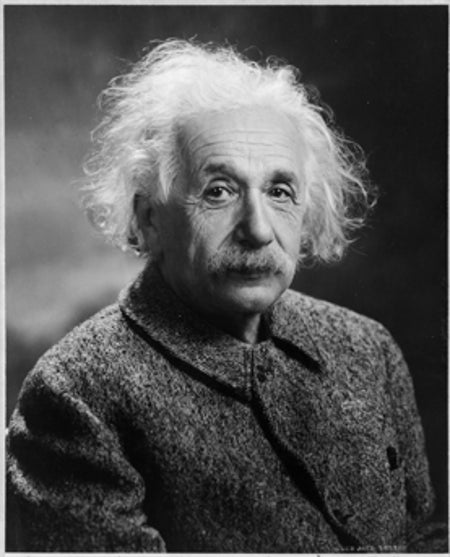
Einstein's Unfinished Dream: Marrying Relativity to the Quantum World
On the centennial of the theory of general relativity, senior Fermilab scientist Don Lincoln reflects on Einstein's quest to understand the quantum world
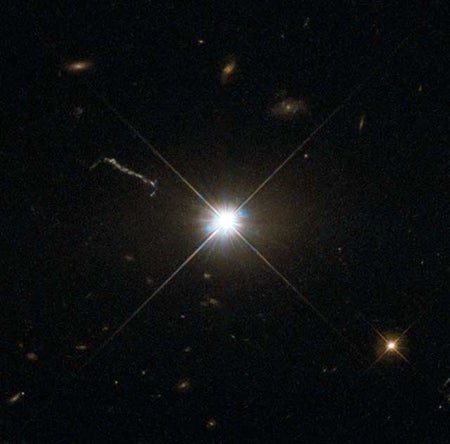
The Case of the Disappearing Quasars
A dozen quasars in the early universe appear to have shut down in just a few years, baffling astronomers