Health CareMarch 1, 2022
Pandemic-Era Research Will Pay Off for Years
The COVID research infrastructure will help fight all sorts of pathogens
Britt Glaunsinger is a molecular virologist at the University of California, Berkeley, and the Howard Hughes Medical Institute.
Pandemic-Era Research Will Pay Off for Years
The COVID research infrastructure will help fight all sorts of pathogens

What Science Has Learned about the Coronavirus One Year On
About a year ago, SARS-CoV-2 (which wasn’t called that yet) was just beginning to emerge in a cluster of cases inside China. We know what has happened since then, but it bears repeating: there have been 69 million cases and more than 1.5 million deaths globally as of December 10, 2020, according to the Johns Hopkins Coronavirus Resource Center.
And as the virus raced around the world, science has also raced to understand how it actually works, biologically. Today on the Science Talk podcast, a virologist who has been part of that massive effort joins us.
Britt Glaunsinger is a professor in the department of molecular and cell biology at the University of California, Berkeley, and an investigator at the Howard Hughes Medical Institute. She has been studying viruses for 25 years, with a particular focus, before December 2019, on the herpesvirus. Over the past 12 months, her lab has been focusing on strategies the virus uses to suppress the body's innate immune system.
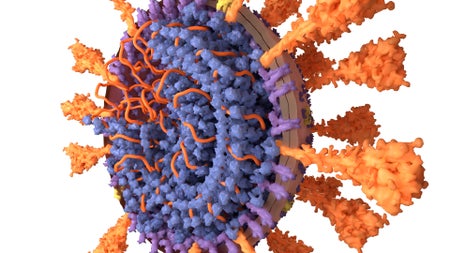
Coronavirus: How It Infects Us and How We Might Stop It
How does SARS-CoV-2 sneak into our body? What can our immune system do and how can the virus sometimes defeat it? How do the leading drug and vaccine candidates work? Will the virus plague us forever? Scientific American presents a conversation about these burning questions with Britt Glaunsinger, a virologist at the University of California, Berkeley, and the Howard Hughes Medical Institute who is a specialist in viral infection.
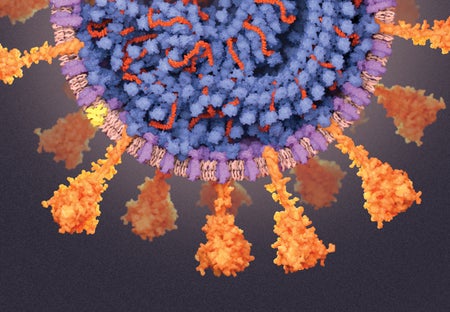
A Visual Guide to the SARS-CoV-2 Coronavirus
What scientists know about the inner workings of the pathogen that has infected the world