EvolutionJune 30, 2021
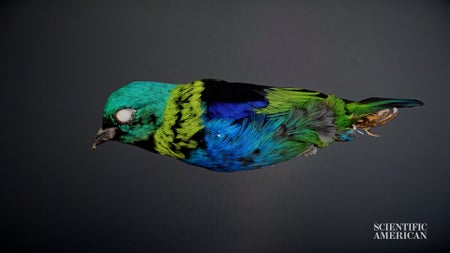
See the Beautiful Color of Rare Birds from Every Angle and in Three Dimensions
A new project will create high-definition interactive models of 2,000 feathered flyers.
See the Beautiful Color of Rare Birds from Every Angle and in Three Dimensions
A new project will create high-definition interactive models of 2,000 feathered flyers.
Misconceptions about Wildfires Are Fueling the Problem
The 2020 wildfire season was the worst in California’s recorded history, with more than four million acres burned and almost 10,500 structures destroyed across the state. The fires were heavily covered by the news media, and some reportssuggested California had suffered apocalyptic devastation and permanent loss. But the more complicated reality of fire’s long-term impact on forests is often poorly reported and misunderstood.
In this video, we talk to experts who say many accounts of California’s blazes sensationalize the extent of forest devastation while paying less attention to fire’s crucial role in nature.
Chad Hanson is a fire ecologist and director of the John Muir Project, an environmental group that advocates for drastic changes in state and national fire policy. He says fire is a natural and unstoppable reality in California. Hanson believes that in some cases, the state’s forests would be healthier and more resilient if certain fires were allowed to burn.
Another expert also notes that to understand 2020 in context, we need to take a very long view of fires in the forest: Valerie Trouet, a researcher who studies tree rings at the University of Arizona, has observed evidence of wildfires in giant sequoias in California dating back almost 3,000 years. She says that although today’s fires sometimes burn more intensely, they used to burn longer and over much larger areas.
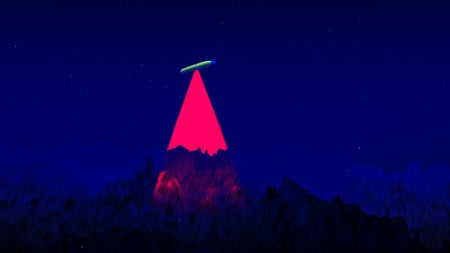
A Map 15 Years in the Making Illuminates a 'Grand Canyon' off California's Coast
Monterey Canyon has come into spectacular view after a decade and a half of effort
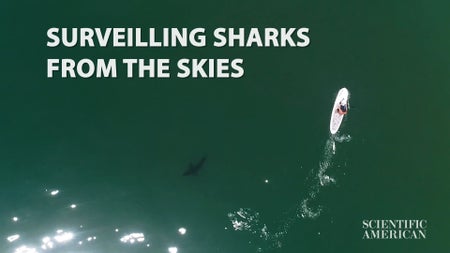
Drones Capture Close Encounters between Great White Sharks and Beachgoers
Over the past decade, the number of encounters between humans and sharks swimming off the coast of California has risen dramatically. Chris Lowe, director of the Shark Lab at California State University, Long Beach, says this summer is shaping up to be a major year for these sharks along the state’s 840-mile coastline.
“We’re already seeing a lot of activity, more than we’ve seen in some of the past years,” he says. “This year is looking to be a big season.”
In 2019 Lowe and his team launched an ambitious two-year shark study using drones, buoys and underwater robots with a $3.75-million grant from California. Prior to the new funding, the Shark Lab’s annual budget was between $20,000 and $40,000.
Now the laboratory has dramatically ramped up its efforts in order to better understand how many of the cartilaginous fish are out there and how they interact with people. The researchers are sharing their information with local lifeguards and the public to enhance safety at the beach.
“The goal is to come up with what we'd call an encounter assessment,” Lowe says. “Who is most likely to encounter sharks—and under what conditions? Are sharks attacking aggressively? Are they attracted to people? Are they repelled by people, or do they just ignore people? So we're right in the middle of a two-year study, and hopefully, by the end of this study, we’ll be able to answer those questions.”
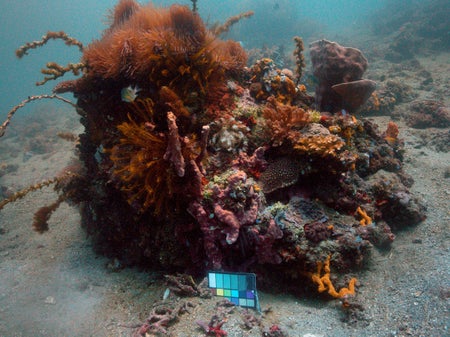
Sea-thru Brings Clarity to Underwater Photos
A new algorithm counteracts the distorting impact of water
Seeing through the Sea
Why do all the pictures you take underwater look blandly blue-green? The answer has to do with how light travels through water. Derya Akkaynak, an oceangoing engineer, has figured out a way to recover the colorful brilliance of the deep.