Climate ChangeAugust 1, 2018
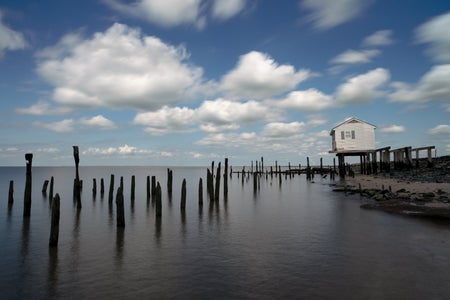
Surrendering to Rising Seas
Coastal communities struggling to adapt to rising seas are beginning to do what was once unthinkable: retreat
Jen Schwartz was a senior features editor at Scientific American. She produced stories and special projects about how society is adapting—or not—to a rapidly changing world, particularly in the contexts of climate change, health, and misinformation. Schwartz led several editorial projects at Scientific American, including a special issue, “How COVID Changed the World” (March 2022); the “Confronting Misinformation” special report (November 2020); and “The Future of Money” special report (January 2018), for which she was interviewed in more than a dozen media outlets, including CNBC, CBS and WNYC. She co-led projects that included the “Truth, Lies & Uncertainty” special issue (2019) and “Inconceivable” (2018), a special report about research gaps in female reproductive health. Schwartz also wrote and edited essays and book reviews for Scientific American. For more than 15 years, Schwartz has reported on sea-level rise and the vexing choices of coastal communities. In 2016 she flew with NASA’s Operation IceBridge over Antarctica to report on how polar observations of ice melt lead to ever improving models for sea-level rise; her resulting feature story about how a community in New Jersey was retreating from worsening floods won the 2019 Science in Society Award from the National Association of Science Writers. It has been widely cited in policy and academia, and she has discussed her work on radical climate adaptation at places that include the World Economic Forum’s Sustainable Development Impact Summit, the Telluride Mountainfilm festival, PBS’s Story in The Public Square, the Denver Museum of Nature & Science, and Princeton University’s Council on Science and Technology. Schwartz has moderated panel discussions for a range of audiences, from corporate (3M’s State of the World’s Science) to global developmental (United Nations General Assembly) to governmental (Earth from Space Institute) to representative of the arts (Tribeca Film Festival). She previously worked at Popular Science, GQ, New York Magazine, Outside and the Boston Globe. She has an B.S. in journalism from the College of Communication at Boston University.
Surrendering to Rising Seas
Coastal communities struggling to adapt to rising seas are beginning to do what was once unthinkable: retreat
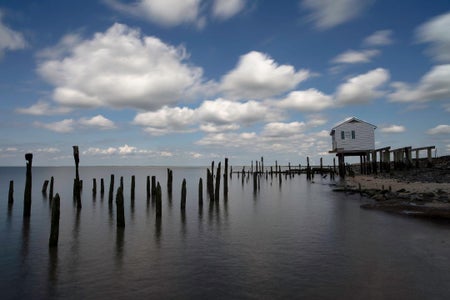
How Coastal Communities Are Already Retreating from Rising Seas
When it comes to the unsustainable development of the American coastline, New Jersey owns the honor of being the first and worst. But one town in the state is experimenting with moving a cluster of people out of harm’s way and turning the newly open land into a flood buffer to protect the rest of the community.
Read the full story to learn more: "Surrendering to Rising Seas"
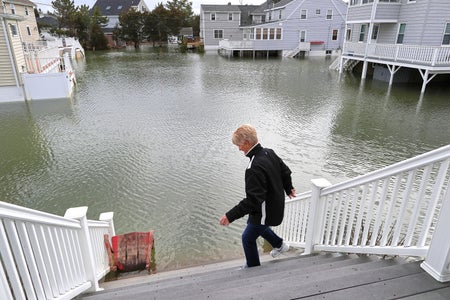
National Flood Insurance Is Underwater Because of Outdated Science
The FEMA program will continue to be financially unviable until it uses the latest research to help fix its broken system
Why People Refuse to Believe Scientists
It has nothing to do with science itself
How Christiana Figueres Saved the Planet
By harnessing “female energy,” Christiana Figueres convinced humanity to take on climate change