ConservationJuly 29, 2018
It's Global Tiger Day—How Is the Effort to Save Them Going?
Overall, badly. Instead of the 25,000–50,000 that should be living in the wild, we're urged to "celebrate" a miserable 5,000 with annoying frequency
K. Ullas Karanth is a senior scientist at the Wildlife Conservation Society, headquartered in New York City. Originally trained as an engineer, he later became a conservation biologist. Karanth has studied tigers for more than 30 years.
It's Global Tiger Day—How Is the Effort to Save Them Going?
Overall, badly. Instead of the 25,000–50,000 that should be living in the wild, we're urged to "celebrate" a miserable 5,000 with annoying frequency
The Trouble with Tiger Numbers
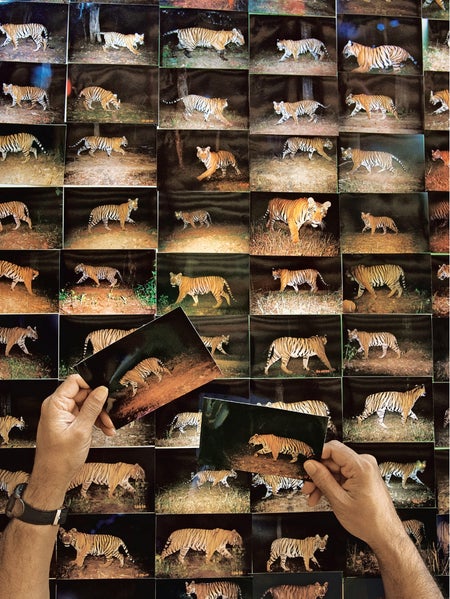
The science of surveying these elusive cats has advanced dramatically, but conservation agencies lag behind

Tiger, Tiger, Being Tracked
Wildlife Conservation Society researcher Ullas Karanth talks about his July, 2016, Scientific American article on state-of-the-art techniques for tracking tigers and estimating their populations and habitat health.

Along the Tiger's Trail: Trapping Season Begins
Editor’s Note: “Along the Tiger’s Trail” is a series about the efforts to monitor tigers and their prey in the Malenad landscape in southwestern India that harbors one of the world's largest population of wild tigers.