
Can anthropology defeat self-deception to build better apps?
Last September, I participated in the relaunch of Ignite NYC. These mini-presentations test your game by only allowing you five minutes and 20 slides to share your idea with audience.
Krystal D'Costa is an anthropologist working in digital media in New York City. You can follow AiP on Facebook.

Can anthropology defeat self-deception to build better apps?
Last September, I participated in the relaunch of Ignite NYC. These mini-presentations test your game by only allowing you five minutes and 20 slides to share your idea with audience.

Is email one of the last private spaces online?
Given the large role email plays in our our online transactions, it can be unsettling when it seems like one of our associated identities has been commandeered by someone else.

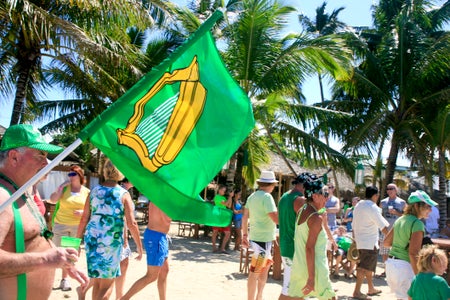
It's True: We're Probably All a Little Irish--Especially in the Caribbean
Everyone is supposedly a little Irish on St. Patrick's Day but there is more truth to this saying than most recognize. It's not merely a loophole allowing for the uninhibited consumption of Guinness. The Irish have traveled to all corners of the world, and like other immigrant groups, wherever they have stayed they have left a mark.

How many TV sets do you have—and why does it matter?
In the early nineties, researchers predicted that at the current rate of growth, there would be two televisions per US household by 1995. It’s probably safe to say that we have likely exceeded that prediction.

Is there joy in missing out?
Researchers talk about our attachment to social media in terms of the fear of missing out (FOMO). We can’t look away from our mobile devices because we might miss the possibility to make or enhance a connection.

Whose time are we celebrating for the New Year?
Note: A version of this post appeared on Anthropology in Practice in 2010. It’s New Year’s Eve in the United States, and in New York City tourists and residents are getting ready for the countdown in Times Square that marks the end of the year and the beginning of a new one.

Our public affair with food porn
Do you ever feel like your social feed is overrun by pictures of food? A report from the Pew Internet & American Life Project from October 2013 found that more than half of all Internet users have posted original photos or videos to a website.

The Obligation of Gifts
For those of you with Christmas trees, they probably look a little barren following the unwrapping of presents. What did you get for Christmas?

Santa Traditions Around the World
Let's take a walk around the globe and visit some other Santa traditions.

Thanksgiving Tidbits
Now that you’ve filled yourself with good company and good food and you’re settled on your couch, how about some light reading before the tryptophan sets in?

Thanksgiving Live Blog 2015
Happy Thanksgiving from the D’Costas! Back in 2011, I experimented with sharing my Thanksgiving with you, Readers, and I thought it might be time for a resurrection, so welcome to our kitchen and table.

The Emergence of Death and Dying as We Know It
Once upon a time, people died in their homes. Up until the time of death they were cared for by friends, family members, and appointed religious leaders.

Why Do We Need to Have So Many Meetings?
We believe that our "busy-ness" means that we're being productive, but that, as you can imagine, is not entirely true.

Why did Pirates Fly the Jolly Roger?
The “pirate brand” has long been tied to the skull and crossbones—the Jolly Roger—as a symbol of terror on the high seas.

Is Data Really Changing the Nature of Wearable Technology?
Do you have a FitBit story? Last November, S came home with a Fitbit Flex. For those of you who don’t have one of these increasingly ubiquitous devices, it’s a small, plastic band that you wear on your wrist (there are other tracker options as well).

Hibiscuses and Hinduism: How Gardens Cultivate Culture
One of my goals this year—with a solid year of gardening experience under my belt—has been to try to make my garden pretty as well as practical.

How will today’s technology change our concept of “work”?
Change is hard. We meet it with some trepidation and skepticism. This is certainly true when it comes to technology. Each wave of technological advancement has changed the economy; and in each age where it has done so, the there has been a ripple effect.

Egyptian Mummification Began Earlier than Thought, Wrappings Reveal
I want to talk about patterns. We take them for granted but they shape our lives. That morning coffee you need to start your day has more meaning than you think.

Why Digital Education Means Reimagining Individual Agency
Scientific American's August supplement takes a look at the changing landscape of education in the face of emerging technology, and asks the question, how do we increase interest and engagement in STEM initiatives?

How to Manage Death in a World of Social Networks
A good friend of mine passed away in June. John had cancer. Before you offer condolences, you should know he did not want to be mourned. It’s been a hard request to follow, but he felt he had lived a full life.

Why is the grass always greener on social media?
Are you on social media? I’m willing to bet you’re on at least one channel (and it’s probably Facebook). In December 2013, 73% of adults online were using a social networking site of some sort.

Green Thumbery: Water, Sunlight, and Data
This article is a part of the Green Thumbery series, where everyday gardening meets history and science.

What can teeth tell us about our prehistoric ancestors?
Our distant past is just that: the distant past. It’s this murky place that science is slowly filling in but the landscape still largely exists just on the periphery of our imagination, and it’s dominated by raw, somewhat violent natures.

“Rethinking Home” with Citizen Anthropologists
There is something to be said for having a space that you call home. It grounds you in social and cultural ways. As much as your home is a reflection of who you are, it also becomes a mirror for larger social observances.