
HealthOctober 10, 2014
Ebola Spread Shows Flaws in Protective Gear and Procedures
A Spanish nurse who contracted the virus is just one of hundreds infected while battling the deadly disease, often with substandard equipment and safety protocols
Larry Greenemeier is the associate editor of technology for Scientific American, covering a variety of tech-related topics, including biotech, computers, military tech, nanotech and robots.
Ebola Spread Shows Flaws in Protective Gear and Procedures
A Spanish nurse who contracted the virus is just one of hundreds infected while battling the deadly disease, often with substandard equipment and safety protocols
Drivers While Voice Texting Are Still Distracted
Drivers in a simulator reacted slowly to sudden traffic emergencies regardless of whether they were thumbing texts into smartphones or dictating them to Google Glass. Larry Greenemeier reports
App IDs Other Battery-Eater Apps
More than a million volunteer users of the smarthphone app Carat have helped researchers identify those apps that really suck battery power in both the Android operating system and Apple's iOS. Larry Greenemeier reports
“Glass Brain” Offers Tours of the Space between Your Ears
3-D visualizations combine EEG and MRI data to illustrate how brain signals propagate and could be used to study neural disorders
Smart Machines Join Humans in Tracking Africa Ebola Outbreak
Web sites devour piles of disease-related information but still keep a person in the loop to help make sense of the data glut
Jet Pack Keeps You Grounded, but Faster
Mini-jet backpack for runners could help military personnel and others get home faster. Larry Greenemeier reports
Bike Helmet Meets Black Box
A future smart bike helmet can track the rider's motion, determine if a crash was likely and call for help if the rider is incapacitated. Larry Greenemeier reports
Smartphone App Takes Morality Science Out of the Lab and Into the Real World
Just when it seems there's a mobile app for just about everything, psychologists have shown there's room for one more: they are using smartphones to help them better understand the dynamics of moral and immoral behavior out in the community.
Apple Expected to Set Its Sights on Wearables, Mobile Payments
The rumor mill surrounding the company's latest is in high gear, with possibly a wearable device and smartphone wallet capabilities to be announced next week. Larry Greenemeier reports
We're All Hawking Products Now
Software start-ups getting big bucks to write code that can identify, find and link logos and brands in the billions of images posted daily. Larry Greenemeier reports
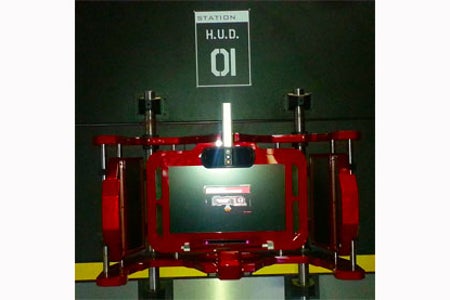
Marvel Comics Gets Inside the Heads of the Avengers
The neuroscience behind the Hulk, Captain America and Iron Man, explained in a Times Square exhibit. Excelsior!
Robotic Exoskeletons Giving (and Gaining) Support
Hydraulic-powered, mind-controlled support suits aren’t just for superheroes. Soon you might have to wear one to work. Larry Greenemeier reports
Brain-Inspired Computing Reaches a New Milestone
For the past few years, tech companies and academic researchers have been trying to build so-called neuromorphic computer architectures—chips that mimic the human brain's ability to be both analytical and intuitive in order to deliver context and meaning to large amounts of data.
Medical Workers Page Google Glass
The Internet-connected headset is drawing interest in the medical community as a video consultation tool. Larry Greenemeier reports.
Why Lasers Won't Protect Airliners From Missiles
Questions over the best way to protect civilian aircraft from surface-launched missiles have reemerged in light of the recent Malaysia Airlines tragedy over the Ukraine.
Moth Eyes Inspire Different Solar Cell
Moth eyes absorb almost all incident light, thus reducing reflection that predators would notice. Researchers have now used the moth eye structure as the basis of a highly efficient solar absorbing cell. Larry Greenemeier reports
3 Projects Prove Privacy Is Not Dead
Web and mobile phone users willingly share personal data in exchange for free stuff, but not everyone is ready to throw in the towel on privacy
Feline Facial Recognition Overcomes Kitty Overconsumption
A multicat feeder system incorporates facial recognition so that owners can tell if individual cats are eating too much or too little. Larry Greenemeier reports
Remembrances of AIDS and HIV Workers Killed in Shot-Down Plane
HIV health workers, a WHO staffer and at least one top AIDS researcher were among those killed when a Malaysia Airlines plane was shot down over Ukraine
Hacked E-Cigs May Get around Regulations
Some users are modifying electronic cigarettes to produce stronger flavors, more impressive vapor clouds and to deliver even more nicotine. Larry Greenemeier reports
“Neuro Scout” Gets into Batters’ Heads to Rate Hitters
Columbia University start-up Neuroscout is developing a tool that would allow baseball and other sports teams to evaluate talent by examining players’ brain waves
Software Finds Best Parts of Boring Video
Machine-learning researchers are developing software that automatically searches through long videos to create edited summaries, or personalized trailers. Larry Greenemeier reports
Sudden Death: What Is Marfan’s Syndrome?
A congenital connective tissue disorder that confers pro basketball height also permanently benches an NBA prospect’s dreams of joining the league
Starbucks to Offer Wireless Caffeine for Smartphones
The coffee chain is putting wireless mobile device charging on the menu, a harbinger of cable-free communications and computing