
EnvironmentJanuary 1, 2010
The Nuclear Doomsday Clock Still Ticks
As long as opportunities and excuses for nuclear aggression persist, the world will never be safe from annihilation
Lawrence M. Krauss is Foundation Professor in the School of Earth and Space Exploration and the physics department and inaugural director of the Origins Project at Arizona State University. Author of several popular books and commentaries for national publications, radio and TV, he also lectures widely on science and public policy. Krauss has the unique distinction of having received the highest awards from all three U.S. physics societies. In his spare time, he has performed The Planets with the Cleveland Orchestra and served as a Sundance Film Festival judge. He has written many articles and columns for Scientific American.
The Nuclear Doomsday Clock Still Ticks
As long as opportunities and excuses for nuclear aggression persist, the world will never be safe from annihilation
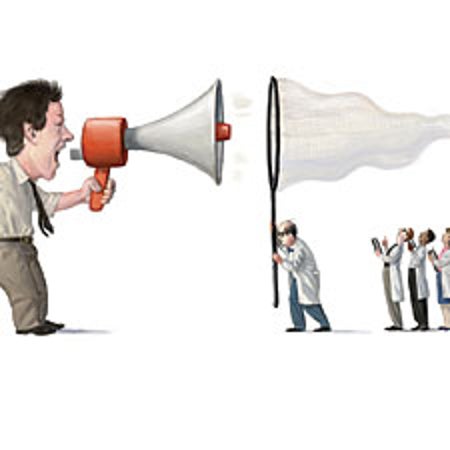
War Is Peace: Can Science Fight Media Disinformation?
In the 24/7 Internet world, people make lots of claims. Science provides a guide for testing them

How Women Can Save the Planet
Empowering young women through education will help reduce overpopulation in areas that cannot support it and avoid extremism in the children they raise
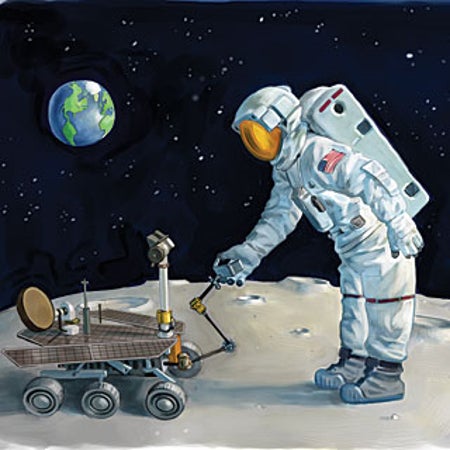
Why We Really Want to Go Back to the Moon
40 years after the Apollo 11 mission, let's stop kidding ourselves about why we really want to go back
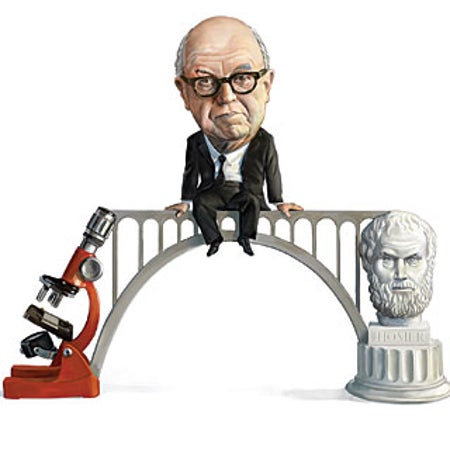
An Update on C. P. Snow's "Two Cultures"
A new column that examines the intersection between science and society provides an update on the historic essay

The Science of Origins: Studies Across All Disciplines
A first-of-it-kind symposium on origins brought together 80 scientists to discuss and collaborate on these intriguing puzzles

The End of Cosmology?
An accelerating universe wipes out traces of its own origins
Fade to Black: The Night Sky of the Future [Slideshow]
The night sky on Earth (assuming it survives) will change dramatically as our Milky Way galaxy merges with its neighbors and distant galaxies recede beyond view.

Should Science Speak to Faith?
Two prominent defenders of science exchange their views on how scientists ought to approach religion and its followers
Should Science Speak to Faith? (Extended version)
Two prominent defenders of science exchange their views on how scientists ought to approach religion and its followers
A Cosmic Conundrum
A new incarnation of Einstein's cosmological constant may point the way beyond general relativity
A Cosmic Conundrum
A new incarnation of Einstein's cosmological constant may point the way beyond general relativity
Cosmological Antigravity
The Long-Derided Cosmological Constant-a Contrivance of Albert Einstein's-- may explain changes in the expansion rate of the universe
The Fate of Life in the Universe
Billions of years ago the universe was too hot for life to exist. Countless aeons from now, it will become so cold and empty that life, no matter how ingenious, will perish.
The Fate of Life in the Universe
Billions of years ago the universe was too hot for life to exist. Countless eons hence, it will become so cold and empty that life, no matter how ingenious, will perish
Cosmological Antigravity
The long-derided cosmological constant--a contrivance of Albert Einstein's that represents a bizarre form of energy inherent in space itself--is one of two contenders for explaining changes in the expansion rate of the universe
Dark Matter in the Universe
More matter exists than is seen. The motions of stars and galaxies indicate where some of it is; theory suggests there is far more. What and where is it? Particle physics and astrophysics are yielding clues