
Mind & BrainMarch 19, 2008
Politically Correct: Why Great (and Not So Great) Minds Think Alike
A new study shows how people get inside one anothers' heads
Politically Correct: Why Great (and Not So Great) Minds Think Alike
A new study shows how people get inside one anothers' heads
Self-Experimenters: Can 200,000 Hours of Baby Talk Untie a Robot's Tongue?
Deb Roy wants to make robots smarter by getting them to imitate his kid
News Bytes of the Week--Showy send-off for stealth fighter
Cancer-causing agent in "organic" soaps, Digital patients, Deadly wheat fungus and more...
Song-Learning Birds Shed Light on Our Ability to Speak
The answer may provide clues to get to the bottom of speech deficiencies in humans
Self-Experimenters: To Purge Binges, Alcoholic Cardiologist Self-Prescribed an Experimental Drug
Olivier Ameisen had tried everything to dry out--then he heard about baclofen
Deep-Sea Denizen Inspires New Polymers
A new material, which makes like a sea cucumber, shifting from rigid to soft, could have medically valuable applications
News Bytes of the Week—Flooding the Grand Canyon to Save a Fish
The Pentagon punts Google off its turf, the Wiimote is co-opted for scientific purposes, and more ...
Do You See What I See? Translating Images out of Brain Waves
Visual decoder allows researchers to translate brain wave activity into images
Why are different breeds of dogs all considered the same species?
Girl Talk: Are Women Really Better at Language?
New research shows that young girls may learn language more completely than their male peers
How did they find the chemical that makes your pupils dilate?
"Junk" RNA May Have Played Role in Vertebrate Evolution
New study says tiny snippets of RNA co-evolved with vertebrates, likely accounting for the new organisms' complexity
When Incest Is Best: Kissing Cousins Have More Kin
Study analyzing more than 200 years of data finds that couples consisting of third cousins have the highest reproductive success
Unraveling Alzheimer's Disease Plaques
Could plaque buildup in the brain be the cause rather than the result of the debilitating neurogenerative disorder?
How Our Genomes Control Diversity
Two research efforts have determined DNA recombination mechanisms that underlie population diversity, how it happens and where in the genetic code it occurs
Scientists & Engineers for America suggest voting science in 2008
Running Dialog: New Languages Rapidly Spring from Old Ones
Researchers find that when a language splits off from another, its vocabulary undergoes immediate changes, rather than a slow and steady evolution
A Blood-Brain Balance
A new theory proposes that blood may do more than nourish neurons
Mind Reviews
Reviews and recommendations from the February/March 2008 issue of Scientific American MIND
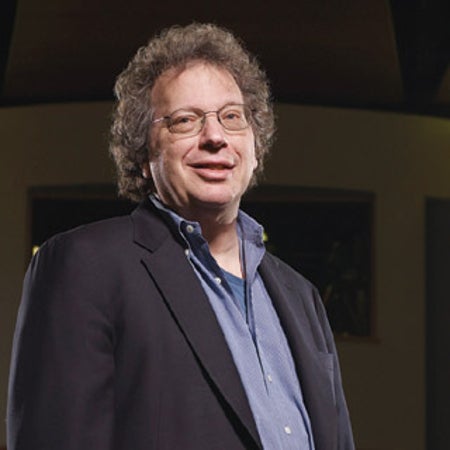
Maverick Against the Mendelians
Using standard inheritance theory, scientists have searched for the genes underlying autism with little success. Michael Wigler thinks he knows why - and how the disorder persists over generations
Supplement: Working around the Mendelians: A Q&A with Michael Wigler
Is Old Age Memory Decline Reversible?
New research suggests that triggering new nerve cell production in adult brains could stave off short-term forgetfulness
What Are We Thinking When We (Try to) Solve Problems?
New research indicates what happens in the brain when we're faced with a dilemma
Blood Flow May Be Key Player in Neural Processing
An M.I.T. scientist believes that if blood flow actually impacts neuronal behavior, the fMRI would be an even more powerful tool for diagnosing disorders such as Alzheimer's and schizophrenia
Navigating the Genome for Autism Clues
Two new studies connect structural variations to 1 percent of autism cases, a finding that may help unlock the enigmatic disorder's genetic footprint