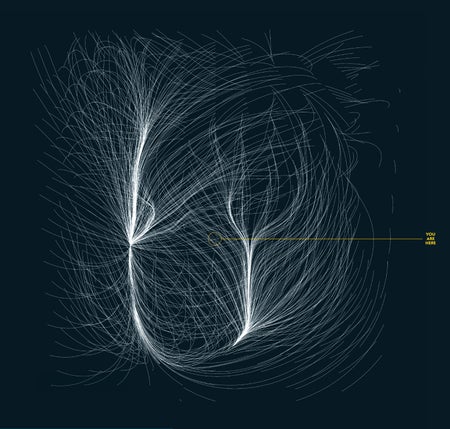
How Astronomers Found Our Cosmic Address
The Milky Way turns out to be part of a massive supercluster of galaxies that forms one of the largest known structures in the universe. This discovery is only the beginning of a new effort to map the cosmos
Noam I. Libeskind is a cosmologist at the Leibniz Institute for Astrophysics Potsdam in Germany. He uses supercomputers to model the evolution of the universe and the formation of galaxies, with a focus on the Milky Way, the Local Group and the small dwarf galaxies that surround us.

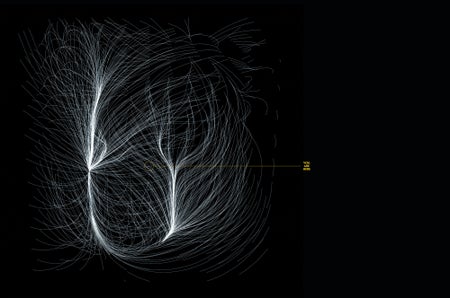
How Astronomers Found Our Cosmic Address
The Milky Way turns out to be part of a massive supercluster of galaxies that forms one of the largest known structures in the universe. This discovery is only the beginning of a new effort to map the cosmos

How Astronomers Found Our Cosmic Address
The Milky Way turns out to be part of a massive supercluster of galaxies that forms one of the largest known structures in the universe. This discovery is only the beginning of a new effort to map the cosmos

How the Milky Way Got Its Dwarf Galaxies
Small galaxies orbiting the Milky Way may have arrived via dark matter superhighways stretching across the universe