AstronomyJuly 21, 2023
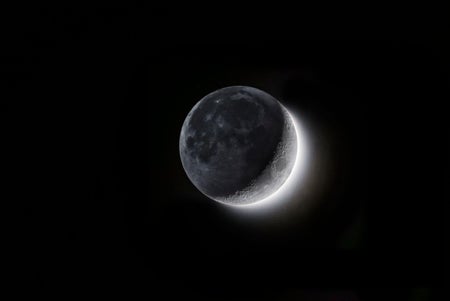
Earthshine Lights up the ‘Dark Side’ of the Moon
This week—and any time there’s a new crescent moon—the lunar night is a little less dark, thanks to the bright reflected light of Earth
Phil Plait is a professional astronomer and science communicator in Virginia. His column for Scientific American, The Universe, covers all things space. He writes the Bad Astronomy Newsletter. Follow him online.
Earthshine Lights up the ‘Dark Side’ of the Moon
This week—and any time there’s a new crescent moon—the lunar night is a little less dark, thanks to the bright reflected light of Earth
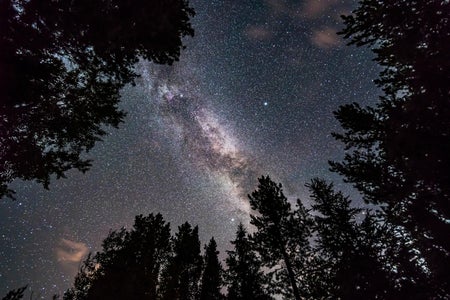
Meet the Stars of the ‘Summer Triangle’
Get to know the stellar trio behind one of the most iconic sights in summer’s night sky
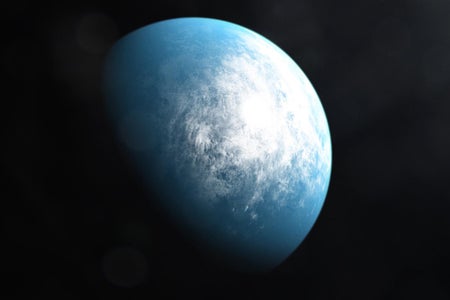
We Need to Widen the ‘Habitable Zones’ Seen around Alien Stars
When looking for life in space, we should broaden our horizons
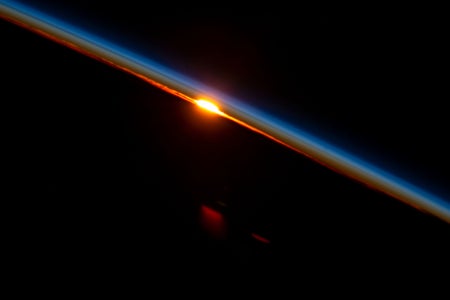
Earth’s Aphelion Isn’t the Reason for the Seasons
Our planet’s not-quite-circular orbit means that on July 6 we’ll be about 2.5 million kilometers farther from the sun than average—but we won’t feel any colder

Why Does Smoke Turn the Sky Orange?
The wildfire smoke that smothered the U.S. Northeast last week has surprising connections to astrophysics—and to the historic search for our place in the cosmos
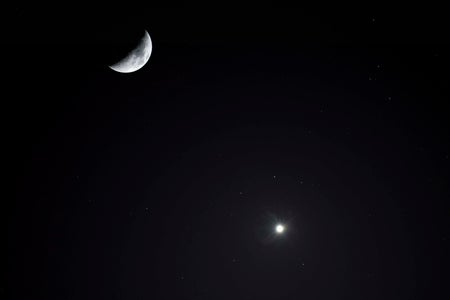
Why Venus Is So Bright Right Now
Our planetary neighbor Venus becomes a brilliant beacon in the sky each time it reaches its greatest orbital distance from the sun
Is E.T. Eavesdropping on Our Phone Calls?
Cell-phone towers leak radio waves into space, but they’ll be tough for aliens to detect
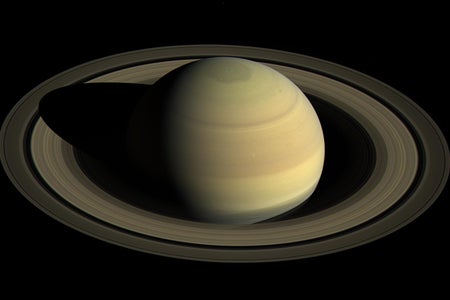
Saturn’s Youthful Rings and Newfound Moons Put It in Stargazing Spotlight
Saturn’s surprisingly young rings and record-breaking bounty of moons make the planet a ripe target for springtime sky watchers
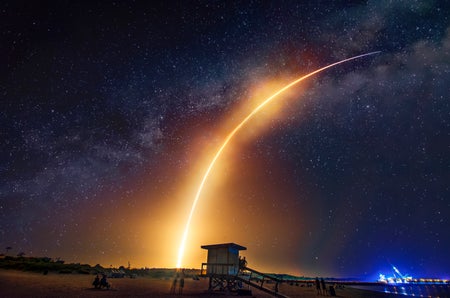
Elon Musk’s Starship Won’t Save Astronomy from Satellites Cluttering the Sky
Launching a fleet of space telescopes is not the solution to the Starlink problem
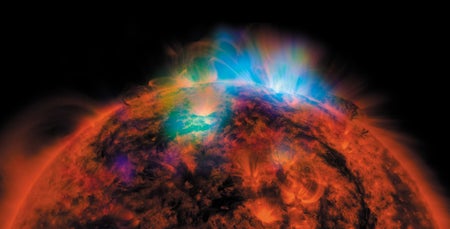
Our Sun Was Born in a Stellar Family Far, Far from Here
We only have a few clues about where the sun was born. Some new ones point to a crowded origin story for our nearest star
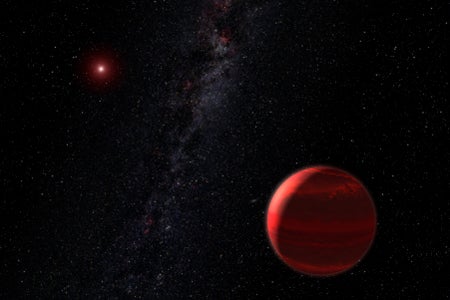
Most Planets in the Galaxy Orbit Stars You Can’t Even See
Red dwarfs are dim bulbs but host more Earth-like planets than any other kind of star
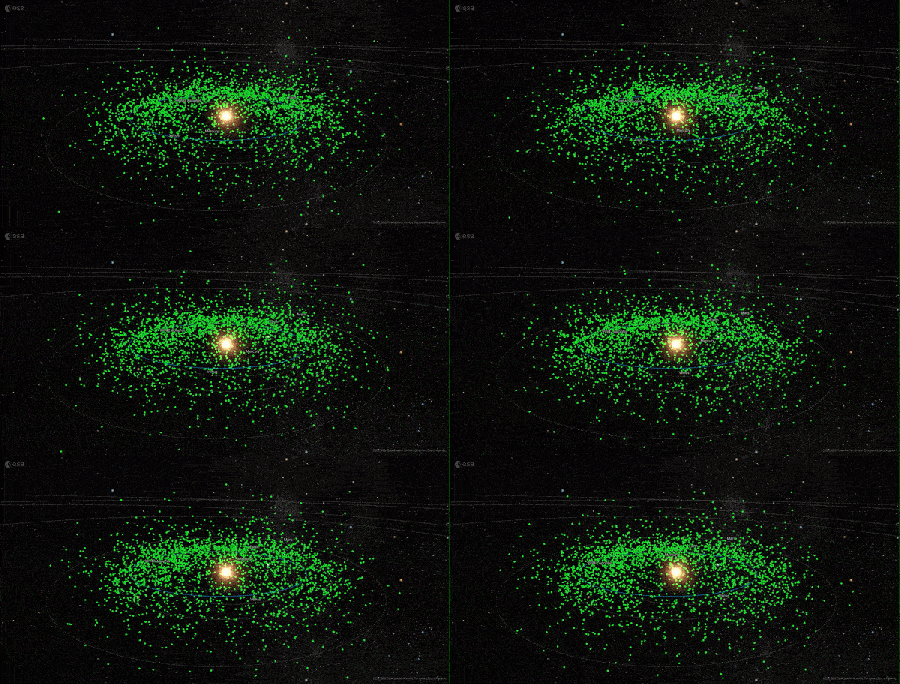
Don’t Panic: The Valentine’s Day 2046 Asteroid Will Not Hit Earth. Here’s Why
How I learned to stop worrying and love the next Earth-threatening asteroid
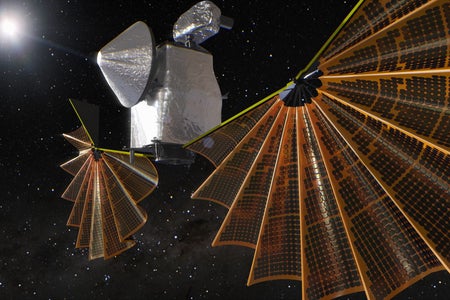
NASA’s Latest Asteroid Explorer Celebrates Our Ancient Origins in Space and on Earth
The Lucy spacecraft and its target asteroids show that the way that we name discoveries matters
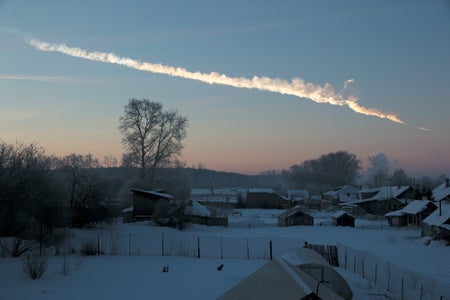
The Asteroid Blast That Shook the World Is Still Making an Impact
The Chelyabinsk asteroid slammed into Earth’s atmosphere 10 years ago, the largest impact in more than a century
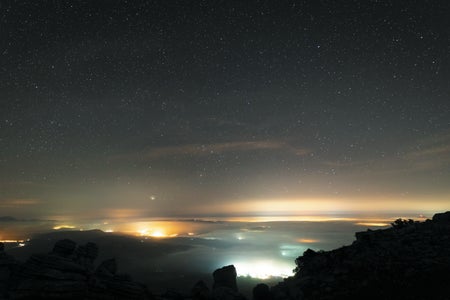
Light Pollution Is Dimming Our View of the Sky, and It’s Getting Worse
Citizen scientists and researchers found that we are losing our view of the sky at an astonishing rate of almost 10 percent each year
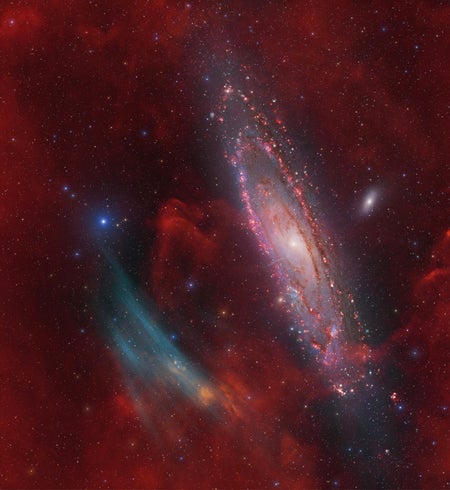
A Recently Discovered Gas Cloud Near Andromeda Stumps Astronomers
Clues to the origin of this enormous cloud of gas have been maddeningly vague
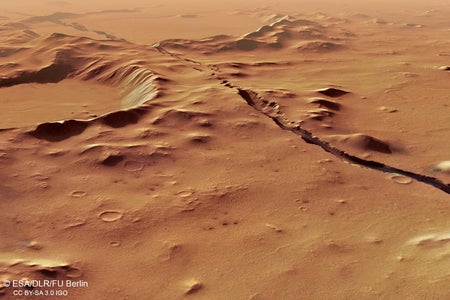
Volcanic Activity on Mars Upends Red Planet Assumptions
A mass of moving material on Mars called a mantle plume may be causing marsquakes and volcanism
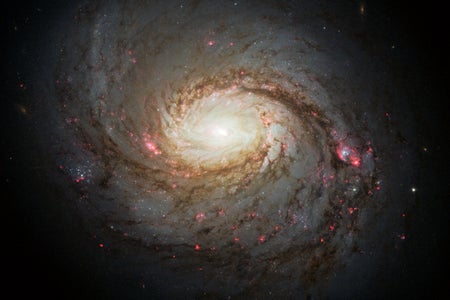
Neutrinos from a Nearby Galaxy Reveal Black Hole Secrets
The IceCube observatory has detected neutrinos from an active galaxy for the first time, revealing clues about how supermassive black holes gobble matter
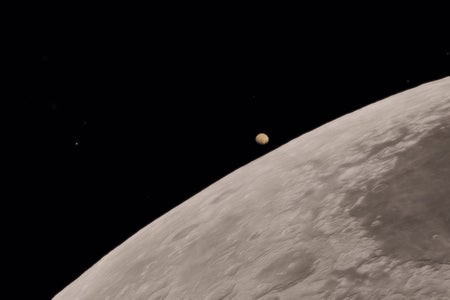
On December 7 the Moon Will Photobomb Mars
Much of North America can witness a delightful astronomical event on the evening of December 7 as the moon blocks out Mars
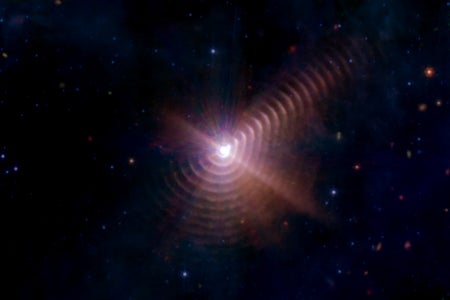
Dazzling New JWST Image Shows Dusty Stellar Spirals
A new JWST image of a star surrounded by strange, rippling spirals reveals a hidden chapter in the story of how dust spreads across the cosmos
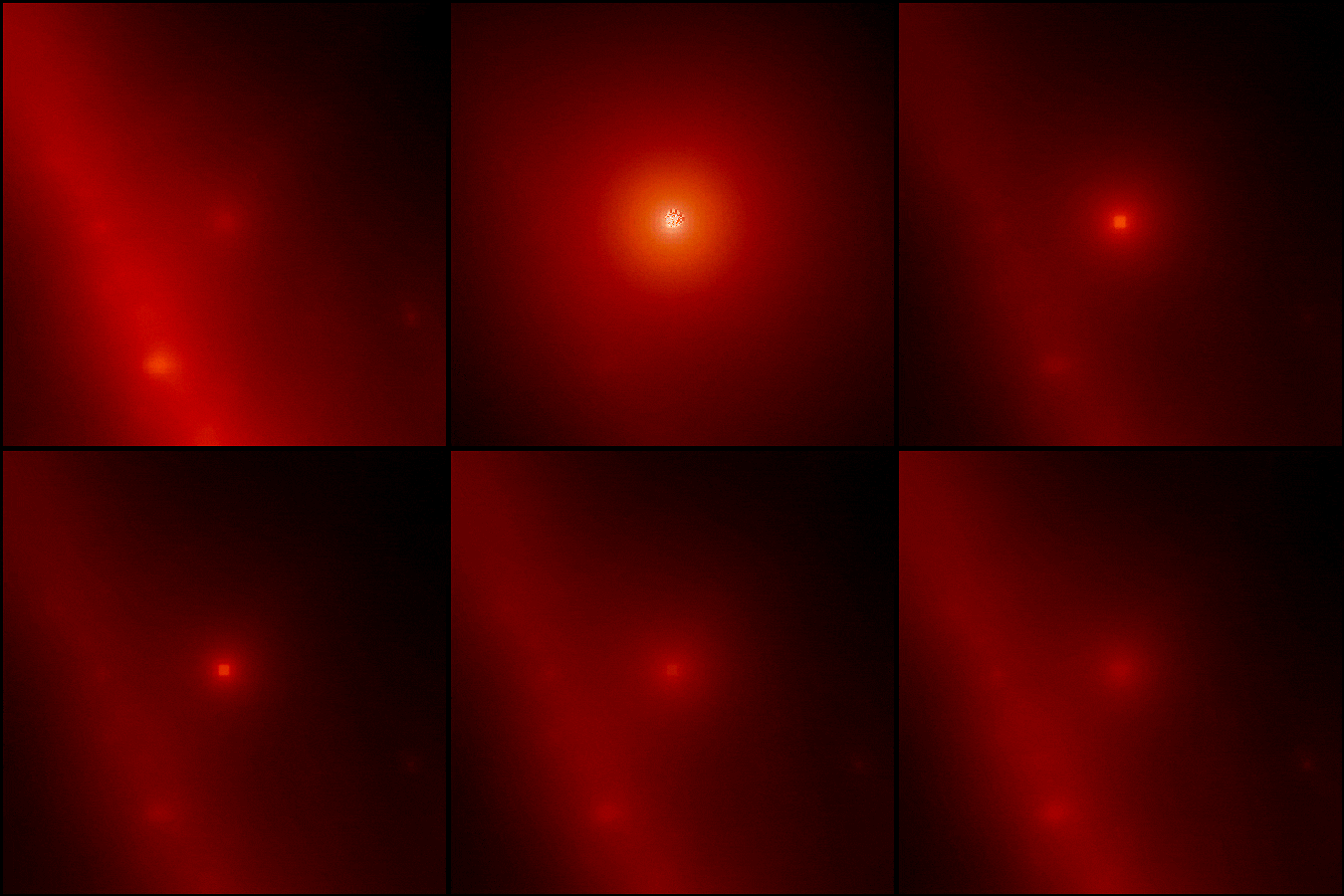
The Brightest Gamma-Ray Burst Ever Recorded Rattled Earth’s Atmosphere
The death of a massive star far across the universe affected lightning on our planet and could teach us about the Milky Way