OpinionFebruary 23, 2021
How to Restore America’s Humanity
Guaranteeing economic security is crucial. So is sending the message that every one of us matters
Scott Barry Kaufman is a humanistic psychologist exploring the depths of human potential. He has taught courses on intelligence, creativity and well-being at Columbia University, N.Y.U., the University of Pennsylvania, and elsewhere. He hosts the Psychology Podcast and is author and/or editor of nine books, including Transcend: The New Science of Self-Actualization, Wired to Create: Unraveling the Mysteries of the Creative Mind (with Carolyn Gregoire), and Ungifted: Intelligence Redefined. Find out more at http://ScottBarryKaufman.com. In 2015 he was named one of "50 groundbreaking scientists who are changing the way we see the world" by Business Insider. He wrote the extremely popular Beautiful Minds blog for Scientific American for close to a decade. Follow him on X.
How to Restore America’s Humanity
Guaranteeing economic security is crucial. So is sending the message that every one of us matters

The Science of Spiritual Narcissism
Self-enhancement through spiritual practices can fool some of us into thinking we’re evolving and growing when all we’re growing is our ego
The Science of Nerdiness
It’s a neurotransmitter thing

In Defense of the Psychologically Rich Life
It involves complex mental engagement; a wide range of deep, intense emotions; and diverse, novel and interesting experiences
Unraveling the Mindset of Victimhood
Focusing on grievances can be debilitating; social science points to a better way

Review of Learned Hopefulness: The Power of Positivity to Overcome Depression
By refocusing on the positive potential that already lies within, you will restore a greater sense of hope than you ever thought possible

On Consciousness: Science and Subjectivity: A Q&A with Bernard Baars
Here’s a chat with Baars about his latest thinking on the scientific study of consciousness

Forced Social Isolation Causes Neural Craving Similar to Hunger
New research highlights the profound effect of severe social isolation on the brain

Finding Inner Harmony: The Underappreciated Legacy of Karen Horney
She believed in the great potential for growth and development

Embracing the Ultimate Unknown
The best way to have a good death is to live a good life

Post-Traumatic Growth: Finding Meaning and Creativity in Adversity
Resilience and strength can often be attained through unexpected routes

What Humans Could Be
As psychologist Abraham Maslow wrote, “Perhaps human nature has been sold short”

Choose Growth
As Abraham Maslow wrote, “One can choose to go back toward safety or forward toward growth. Growth must be chosen again and again; fear must be overcome again and again”

The Neuroscience of Free Will: A Q&A with Robyn Repko Waller
We discuss blending philosophy and neuroscience in unraveling the mysteries of free will

Autistic People Make Great Social Partners if You Actually Give Them a Chance
Style, not substance, drives negative impressions of the social life of people on the autism spectrum

Why Don’t People Care That More Men Don’t Choose Caregiving Professions?
People attribute the lack of women in STEM fields to external factors but attribute the lack of men in helping professions to internal ones

RIP Jerome L. Singer, “The Father of Daydreaming” (1924–2019)
A seminal psychologist who explored the positive, creative and productive aspects of daydreaming has passed away at the age of 95
Taking Sex Differences in Personality Seriously
New approaches are shedding light on the magnitude of sex differences in personality, and the results are so strong and pervasive that they can no longer be ignored
Can Empathic Concern Actually Increase Political Polarization?
New research suggests that those who display the most concern for others are also the most socially polarized

Are You a Moral Grandstander?
New research suggests that moral grandstanding may be a major source of conflict in the world today

Do Narcissists Ever Grow Up?
New research investigates continuity and change in narcissism from young adulthood to midlife

Cultivating Emotion Regulation and Mental Health
Susanne Schweizer is a neuroscientist investigating the development of emotional regulatory processes and their role in mental health across the life span
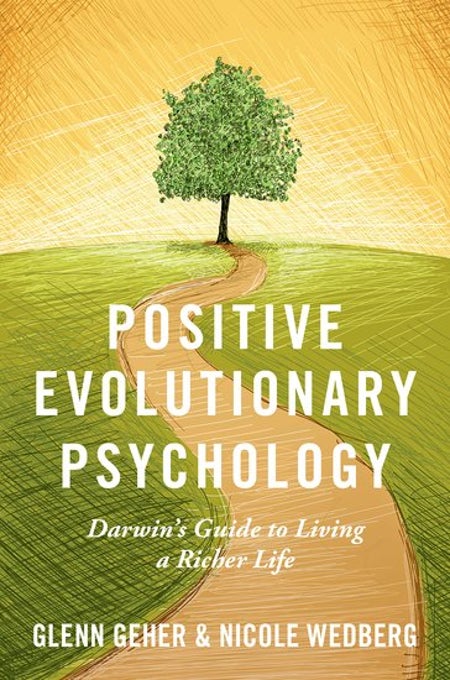
Toward a Positive Evolutionary Psychology
A new book integrates positive psychology and evolutionary psychology to help advance the human condition

Emotionally Extreme Experiences, Not Just “Positive” or “Negative” Experiences, Are More Meaningful in Life
Peak emotional experiences are the most meaningful ones in our lives