ComputingApril 26, 2022
Love Computers? Love History? Listen to This Podcast
In the newest season of Lost Women of Science, we enter a world of secrecy, computers and nuclear weapons—and see how Klára Dán von Neumann was a part of all of it.
The Lost Women of Science Initiative is a 501(c)(3) nonprofit with two overarching and interrelated missions: to tell the story of female scientists who made groundbreaking achievements in their fields—yet remain largely unknown to the general public—and to inspire girls and young women to embark on careers in STEM (science, technology, engineering and math).
Love Computers? Love History? Listen to This Podcast
In the newest season of Lost Women of Science, we enter a world of secrecy, computers and nuclear weapons—and see how Klára Dán von Neumann was a part of all of it.
Lost Women of Science Podcast, Season 2, Episode 4: Netherworld
Klára Dán von Neumann enters the netherworld of computer simulations and the postwar Los Alamos National Laboratory
Lost Women of Science Podcast, Season 2, Episode 3: The Experimental Rabbit
ENIAC, an early electronic computer, gets a makeover
Love Computers? Love History? Listen to This Podcast
In the newest season of Lost Women of Science, we enter a world of secrecy, computers and nuclear weapons—and see how Klára Dán von Neumann was a part of all of it.
Lost Women of Science Podcast, Season 2, Episode 2: Women Needed
Klára Dán von Neumann arrives in Princeton, N.J., just as war breaks out in Europe
Lost Women of Science Podcast, Season 2, Episode 1: The Grasshopper
Before she entered a world of secrecy, computers and nuclear weapons, who was Klára Dán von Neumann?
Lost Women of Science Podcast, Bonus Episode: The Resignation
We investigate the curious, charged circumstances surrounding the resignation of the director of pediatrics at Columbia University’s Babies Hospital and one pathologist at the center of it all: Dorothy Andersen
Listen to This New Podcast: Lost Women of Science
A new podcast is on a mission to retrieve unsung female scientists from oblivion.
Lost Women of Science Podcast: Season One, The Pathologist in the Basement
Lost Women of Science digs deep to uncover stories of scientists that have long been overlooked
Lost Women of Science, Episode 4: Breakfast in the Snow
In our final episode, we explore pathologist Dorothy Andersen’s legacy—what she left behind and how her work has lived on since her death. Describing her mentor’s influence on her life and career, pediatrician Celia Ores gives us a rare look into what Andersen was really like. We then turn to researchers, doctors and patients, who fill us in on the progress that has grown from Andersen’s initial work. These major developments include the discovery of the cystic fibrosis gene, the tremendous impact of the drug Trikafta and the potential of lifesaving gene-editing techniques
Lost Women of Science, Episode 3: The Case of the Missing Portrait
A missing portrait of physician and pathologist Dorothy Andersen takes us on a journey into the perils of memorialization—and who gets to be remembered. Pediatric intensivist Scott Baird hunts for the portrait, and psychiatry resident Nientara Anderson and emergency medicine resident Lizzy Fitzsousa, both former medical students at Yale University, explain how, in today’s diverse communities, “dude walls” can have an insidious effect on those who walk past them every day
Lost Women of Science, Episode 2: The Matilda Effect
A passionate outdoorswoman, a “rugged individualist” and a bit of an enigma—the few traces Dorothy Andersen left behind give us glimpses into who she was. In this episode, we track down people determined to stitch together her life. Our associate producer Sophie McNulty rummages through the basement of one of Andersen’s colleagues for clues about the elusive pathologist. Meanwhile, in Manhattan, N.Y., pediatric intensivist Scott Baird suggests we take a second look at the conventional wisdom surrounding the evolution of cystic fibrosis research in the 1950s. This is the Lost Women of Science podcast
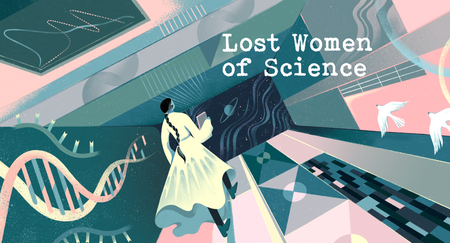
Listen to This New Podcast: The Lost Women of Science
A new podcast is on a mission to retrieve unsung female scientists from oblivion.

The Lost Women of Science, Episode 1: The Question Mark
When physician and pathologist Dorothy Andersen confronted a slew of confounding infant deaths, she suspected the accepted diagnosis wasn’t right. Her medical sleuthing led to the world’s understanding of cystic fibrosis, a disease that affects the lungs, the pancreas and a host of other organs. But she is by no means a household name. Who was this scientist, and how did she come to quietly make such an important medical contribution? This is the Lost Women of Science podcast