
This article was published in Scientific American’s former blog network and reflects the views of the author, not necessarily those of Scientific American
The cover of the issue of Scientific American from 100 years ago today is a snapshot of a country at peace. As historians, we know that five months later the United States would declare war on Germany, but there is nothing in the statistics from November 1916 to suggest that the country planned to go to war.
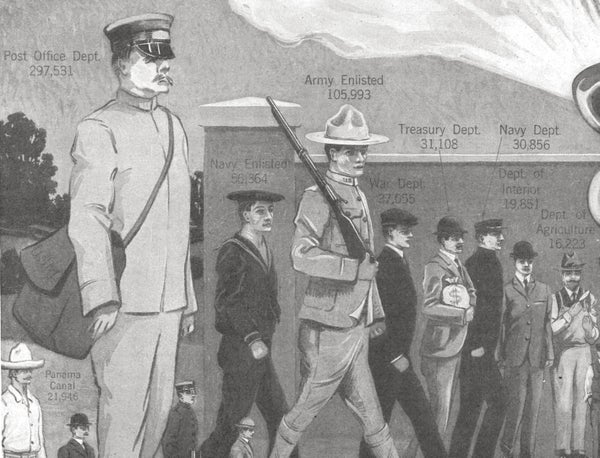
The graphic from November 18, 1916, shows the number of people employed by the Federal Government: Post Office Department, 297,531; Army, Navy and Marines, 172,618 officers and enlisted men; War Department, 37,655; Treasury Dept., 31,108; “Panama Canal,” 21,946. The military forces listed are quite small. They are about the same size as the paltry 1914 (pre-war) armies of smaller countries such as Serbia or Greece. By comparison, Germany and France, in 1914 before the war broke out, each had spent heavily to keep standing armies of more than 20 times that size.
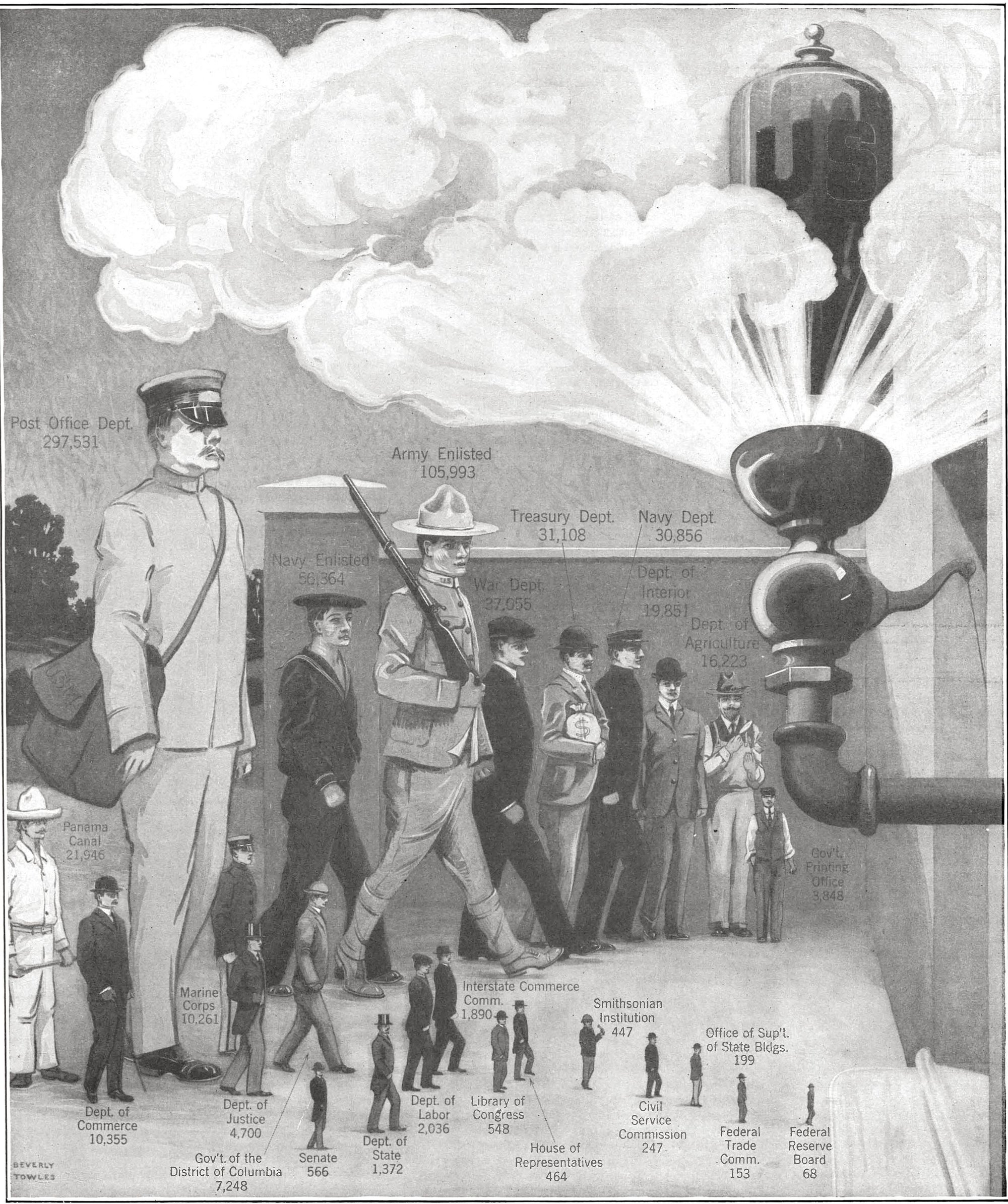
People employed by the Federal Government in November 1916: the Post Office Department was almost twice as large as the armed forces. Credit: Scientific American, November 18, 1916
On supporting science journalism
If you're enjoying this article, consider supporting our award-winning journalism by subscribing. By purchasing a subscription you are helping to ensure the future of impactful stories about the discoveries and ideas shaping our world today.
The other story, the one behind the numbers, shows that in 1916, the National Defense Act, the Naval Act and the “preparedness movement” were part of a broader effort within the U.S. to gather its strength and ready itself for active military participation in a more hostile world.
Within two years of this issue, the U.S. Army had grown to a peak strength of 3,685,458 men.
-
Our full archive of the war, called Scientific American Chronicles: World War I, has many articles from 1914–1918 on technological developments in the First World War. It is available for purchase at www.scientificamerican.com/products/world-war-i/