
This article was published in Scientific American’s former blog network and reflects the views of the author, not necessarily those of Scientific American
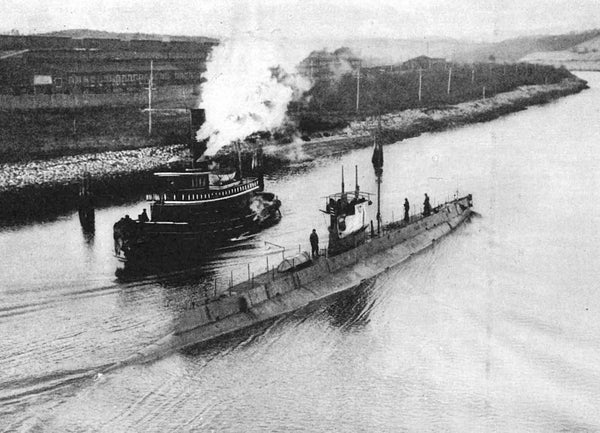
Spain was carefully neutral in World War One. Internal political problems plagued the war-readiness of the military and divided the country as to which side ought to be supported. The Spanish navy had been destroyed by the United States during their war in 1898 and by 1917 was still rebuilding. Ship construction, though, had relied heavily on foreign shipyards and technology, which were now tied up with the war in Europe. Spain turned to the shipyards of its old adversary, the U.S (still a neutral country at this point). On this date 100 years ago the cover story featured the delivery to Spain of an American-built state-of-the-art submarine:
“There has recently been completed at Quincy, Mass., by the Electric Boat Company, a submarine, the ‘Isaac Peral,’ which represents the latest development of the art of submarine building in the United States. The vessel is about two hundred feet in length, and the company states that in her size and dimensions she may be compared to the German submarine ‘U-53,’ which very suggestively put into Newport last summer before starting out to raid shipping off our coast. The company claims that she is entitled to be reckoned as of the 800-ton type, although it seems to us that she is scarcely large enough to fulfill the requirements which the experts of our Navy Department consider to be indispensable in a sea-going submarine of 800 or 900 tons displacement. .... For running on the surface and for charging her batteries, the ‘Peral’ is equipped with two 600-horse-power Diesel engines, which were built at the Groton plant of the Electric Boat Company.... It is of historical interest to note that the ‘Peral’ takes her name after a Spanish naval officer who completed the first practical submarine for Spain in 1887.”
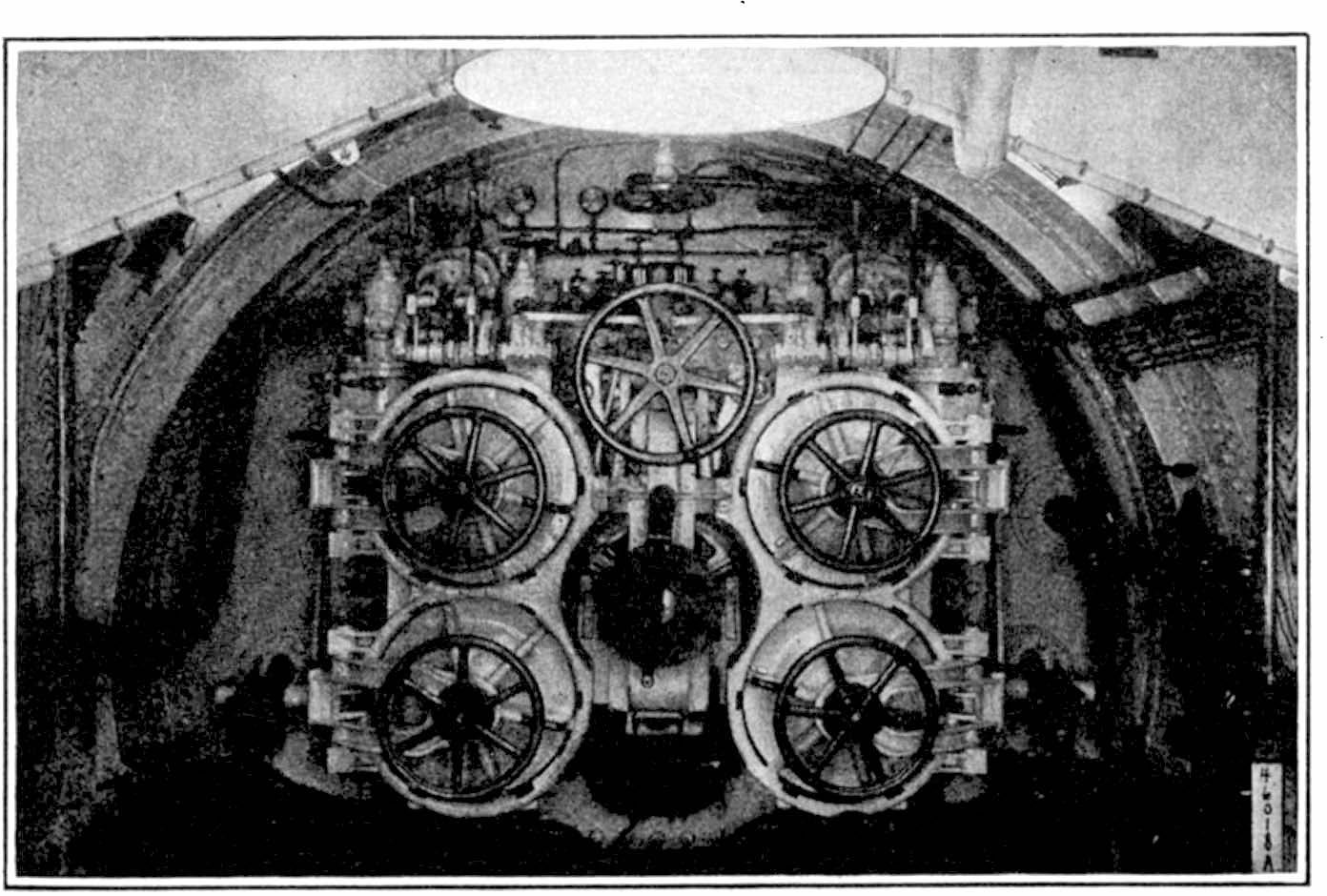
The business end of the submarine: the hatches covering the four forward torpedo tubes. Credit: Scientific American, February 3, 1917
On supporting science journalism
If you're enjoying this article, consider supporting our award-winning journalism by subscribing. By purchasing a subscription you are helping to ensure the future of impactful stories about the discoveries and ideas shaping our world today.
General Dynamics Electric Boat still builds submarines in Groton, Connecticut, and elsewhere; the latest order from the U.S. Navy is for a series of 7,800-ton Virginia-class nuclear-powered fast-attack submarines to be built through 2043.
-
The views expressed are those of the author and are not necessarily those of Scientific American.
Our full archive of the war, called Scientific American Chronicles: World War I, has many articles from 1914–1918 on naval technology of the First World War. It is available for purchase here.