
This article was published in Scientific American’s former blog network and reflects the views of the author, not necessarily those of Scientific American
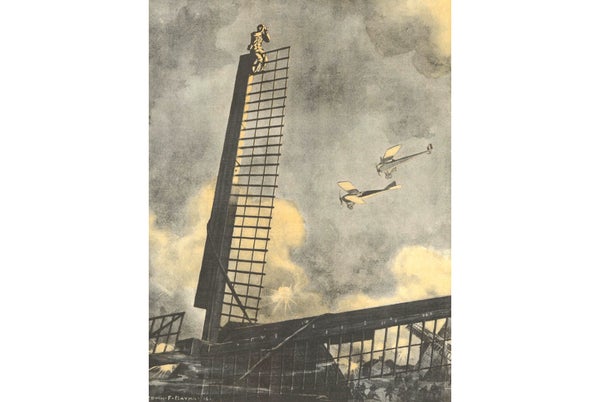
The cover of the Scientific American issue from exactly 100 years ago today has one image and a caption: “A windmill observation post somewhere in Flanders.”
A soldier seems to have climbed to the top of a windmill arm, perhaps to observe the effects or accuracy of artillery fire. His view of the enemy lines through binoculars would have been quite good in the flat countryside of Northern France and Flanders (Belgium).
It was routine during the early years of the 20th century to have nicely painted covers with just a caption and no other information appearing in the issue. Perhaps one of our readers can supply some background details from a regimental history? A plucky observer like this would probably have been noted in military records.
On supporting science journalism
If you're enjoying this article, consider supporting our award-winning journalism by subscribing. By purchasing a subscription you are helping to ensure the future of impactful stories about the discoveries and ideas shaping our world today.
-
Our full archive of the war, called Scientific American Chronicles: World War I, has many articles from 1914–1918 on warfare on the Western Front in the First World War. It is available for purchase at www.scientificamerican.com/products/world-war-i/