
This article was published in Scientific American’s former blog network and reflects the views of the author, not necessarily those of Scientific American
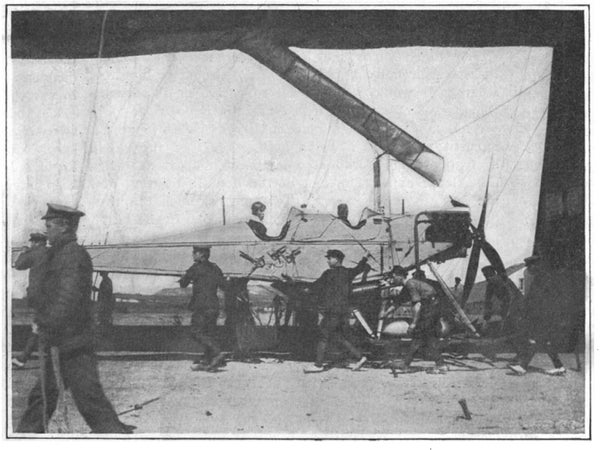
The cover article from the June 10, 1916, issue was written by one of the foremost experts on airships and aviation before, during and after World War I, Baron Ladislas d'Orcy.
The information about the capabilities of the airship is noncommittal; the location of the photographs is deliberately vague:
“The dirigible represented herewith is one of Great Britain's small scouting airships, which have been provided for in the new British aerial construction program for 1915-17. This program is said to comprise the laying down of 50 airships of both the rigid and non-rigid types, the construction to be completed within two years.” [In reality approximately 158 of this type were made]
On supporting science journalism
If you're enjoying this article, consider supporting our award-winning journalism by subscribing. By purchasing a subscription you are helping to ensure the future of impactful stories about the discoveries and ideas shaping our world today.
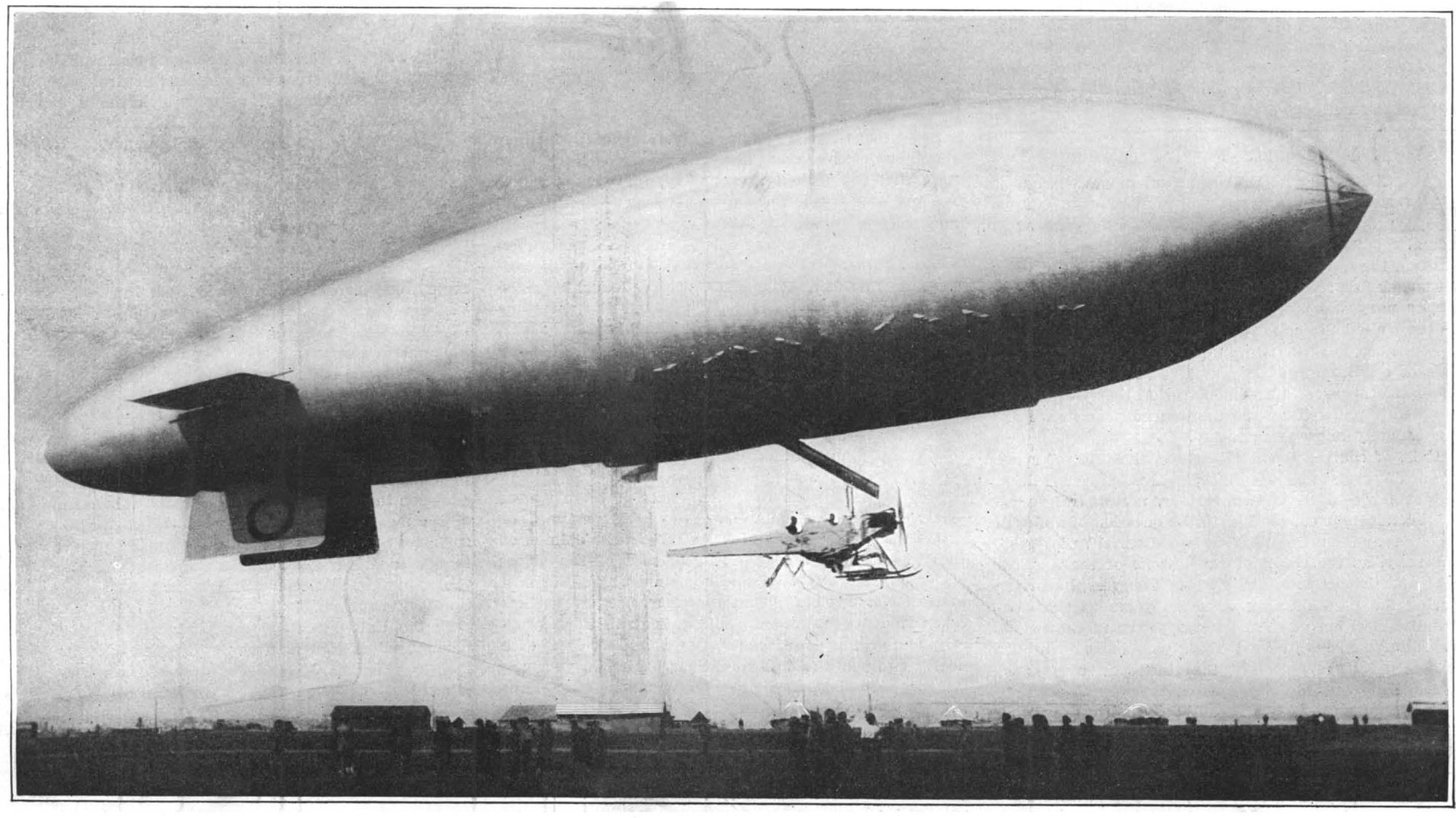
Pragmatic technology: the scouting airship, designed in 1915 for anti-submarine scouting and made from relatively cheap components. Credit: Scientific American, June 10, 1916
“Although their work has been less spectacular than the operations of German Zeppelins, the non-rigid and semi-rigid airships of Great Britain and France have proven very useful for night raids on enemy encampments, and, in connection with naval warfare, for harbor defense and coast patrol work. According to the Echo de Paris, the mobile forces of every French naval port now comprise, in addition to destroyers and submarines, two small non-rigid airships. These are chiefly used for detecting enemy submarines, and are said to have given an excellent account of themselves.”
One of the satisfying parts of being a historian is being able to look back on such articles and fill in the details that may have been removed or discouraged by the military censors of the day.
These “submarine scout” or “sea scout” airships begun construction in March 1915 by the British Royal Naval Air Service as small, cheap, easily manufactured, easy-to-fly airships for anti-submarine work. A relatively small lifting blimp carried slung below it the stripped-down fuselage of an aircraft carrying engine, pilot, observer and usually a machine gun and a few small bombs.
The version shown seems to be powered by the fuselage of a B.E.2c aircraft—a fighter/bomber designed early on in the war. The tube that runs from just behind the propellor goes up into a ballonet (air bag) inside the airship; it was designed to be filled with slightly pressurized atmospheric air to keep the balloon inflated and rigid.
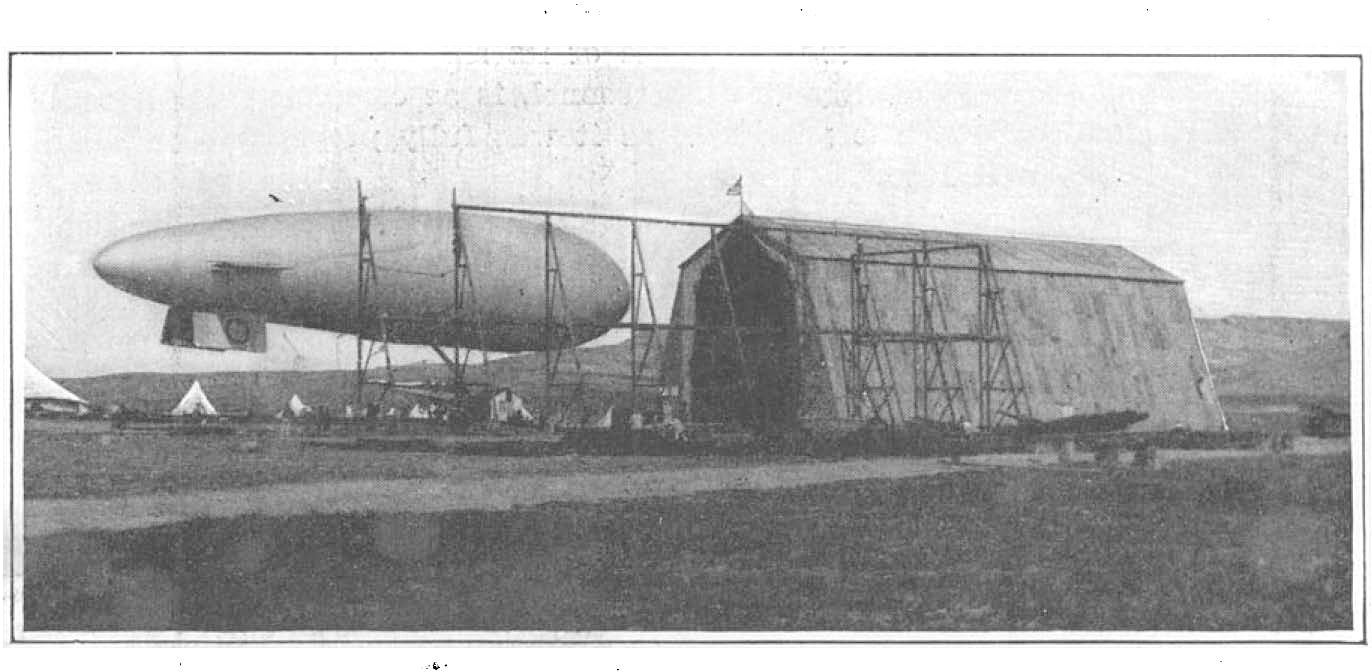
Military airship hangar “at a Mediterranean base” (possibly Lemnos, in the Aegean Sea). Credit: Scientific American, June 10, 1916
The story lists two areas of operation, the “Balkan front” and “a Mediterranean base” but the locations shown may be the air bases on the island of Lemnos and on the Greek peninsula of Kassandra. The airships were most likely used for anti-submarine patrols in the Aegean Sea and the Mediterranean, defending the Allied armies (and their long, vulnerable supply chains) near Salonika, Greece (now called Thessalonika). Allied forces, most of them redeployed from the failed Gallipoli campaign, had landed in Macedonia in Greece near Salonika in 1915 and struggled until 1918 against the combined forces of Bulgaria, Germany and Austria-Hungary.
An interesting blog written by Mark Clayton, senior curator at the Queensland Museum, Australia, goes into a little more depth about this intersection of history and aviation: https://blog.qm.qld.gov.au/2015/04/24/gallipoli-from-above-the-clouds/
-
Our full archive of the war, called Scientific American Chronicles: World War I, has many articles from 1914–1918 on aviation and technology in the First World War. It is available for purchase at www.scientificamerican.com/products/world-war-i/