
This article was published in Scientific American’s former blog network and reflects the views of the author, not necessarily those of Scientific American
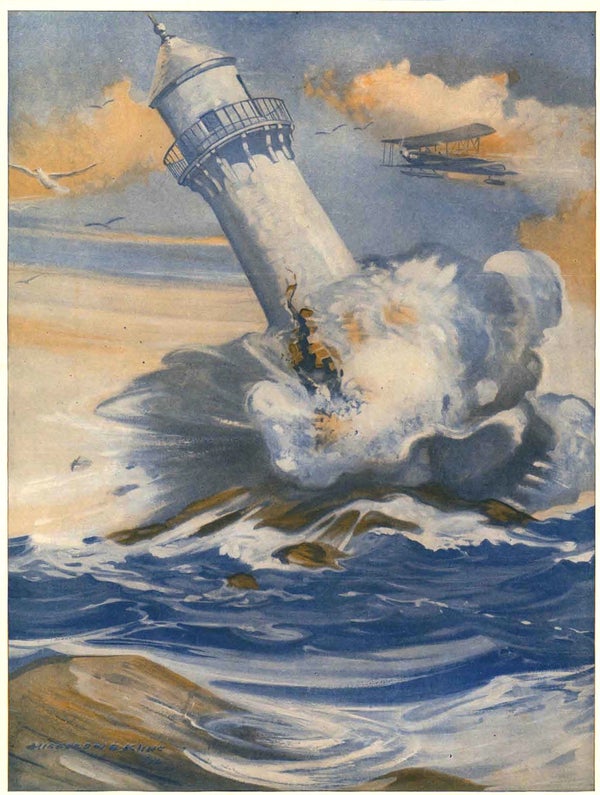
The cover to this issue from 100 years ago today contains a single startling image: a lighthouse being destroyed by a bomb dropped from an aircraft. The caption is unequivocal: “German destruction of landmarks along the Belgian coast.”
The implication is quite clear: that Germany, having decided that certain landmarks were an aid to the navigation of enemy ships or airplanes, had started to destroy them. There are in fact sound military reasons for hampering the enemy’s ability to navigate to a friendly target. There’s a problem with the history here, though.
There was only one Belgian lighthouse destroyed in the war: the “Vierboet” or “fire-light” at Nieuwport that dated from the 13th century. That one, however, was destroyed in 1914, having been blown up by retreating Belgian infantry, who did not wish to leave a handy elevated platform for invading German artillery spotters.
On supporting science journalism
If you're enjoying this article, consider supporting our award-winning journalism by subscribing. By purchasing a subscription you are helping to ensure the future of impactful stories about the discoveries and ideas shaping our world today.
There is no text about the story—not uncommon at the time, unfortunately. So we are left to guess why the image appeared on the cover of Scientific American in 1916. Amid plentiful stories of German barbarity from the early days of the war (some of which wer true, some of which were just made up) and coming on the heels of German submarine attacks on neutral civilian shipping, perhaps the editors of the day were only too willing to believe that, even if the story was exaggerated, here was another example of bad behavior from the “Huns.” Even though the image just reeks of Allied propaganda.
-
Our full archive of the war, called Scientific American Chronicles: World War I, has many articles from 1914–1918 on strangely interpreted events from the First World War. It is available for purchase at www.scientificamerican.com/products/world-war-i/