
This article was published in Scientific American’s former blog network and reflects the views of the author, not necessarily those of Scientific American
The fighting on the river Somme finished its second week; battles raged on the Eastern Front between Russia, Austria and the Ottoman Empire. Yet the military censors must have been hard at work: news from these fronts was sparse.
Instead, bizarrely (given that the summer weather felt as hot in July 1916 as it does in July 2016), we have an article in Scientific American that was borrowed and translated from the German periodical Die Umschau on the German army techniques of fighting in the snow:
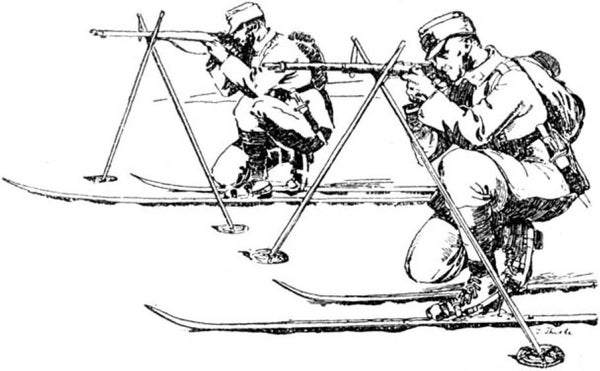
“The organized corps of ski-men of the German army have found during the past winter that aside from the facility lent to locomotion, the appurtenances of skiing are very handy things for various purposes. For example, the ski artist improves his marksmanship by thrusting his alpenstocks, of which he carries two, diagonally into the ground so that they cross at a proper height, and employing the crotch thus formed as a gun rest .... If he should be so unfortunate as to be wounded, his companions will pack him back to the nearest base on a hastily improvised sledge built up on two skiis as runners .... If he chances to be operating in connection with a force of cavalry, the ski-man does not even have to furnish his own motive power, but by means of lines attached to the saddle he catches on behind a mounted companion. That the ‘Schneelaufer’ has frequent opportunity to hitch behind in this fashion is attested by the fact that he has coined a word to describe the act.”
On supporting science journalism
If you're enjoying this article, consider supporting our award-winning journalism by subscribing. By purchasing a subscription you are helping to ensure the future of impactful stories about the discoveries and ideas shaping our world today.

German ski troops: bringing in the wounded over the snow. Credit: Scientific American Supplement, July 15, 1916

German ski troops: borrowing the horse-power of the cavalry. Credit: Scientific American Supplement, July 15, 1916