
This article was published in Scientific American’s former blog network and reflects the views of the author, not necessarily those of Scientific American
Italy was smaller than its rival Austria-Hungary, and as a country perhaps just as riven with the strains of disunity created by its varied factions and their histories. But the Italian industrial base was more developed, and was particularly strong in the northwest of the country around the towns of Genoa, Turin and Milan. When Italy entered the war in 1915, this manufacturing base expanded on a solid foundation of technical skill. Engineering companies such as the one discussed here, Ansaldo, grew by 1918 to have 80,000 workers in an organization that was diversified vertically, including banking, and over many different kinds of armaments and industrial production.
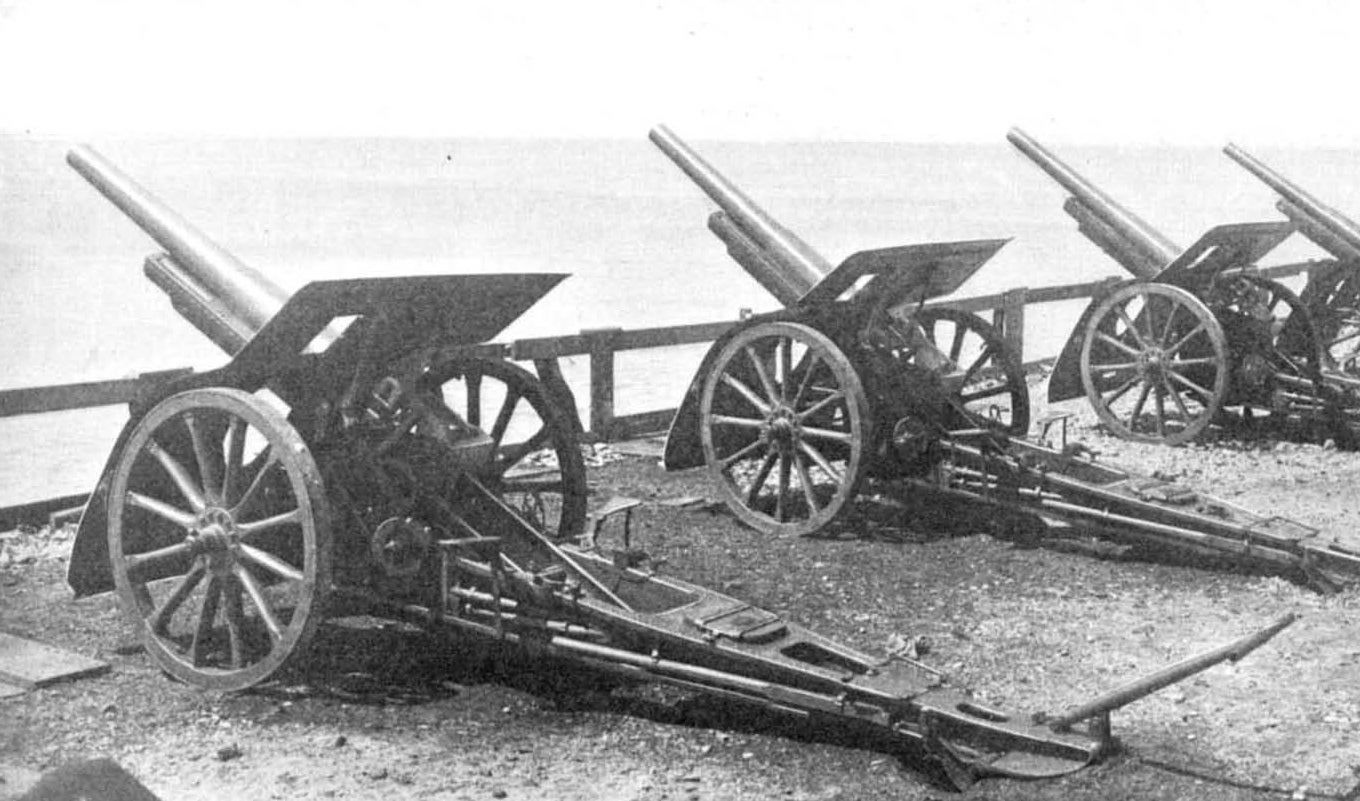
Gun manufacture: field guns made by the Ansaldo company, Italy, 1916 or 1917. Credit: Scientific American, February 17, 1917
“When Italy is mentioned in America the first impression that is suggested to the minds of most of us is most likely to be of a land of fine natural scenery; of art, music and grand ruins, in short, a resort of the pleasure seeker and tourist; and this is but natural, for it is to these features that the average traveler devotes his attention, and about them writes his stories, entirely overlooking the practical side of life in this country and its institutions.
“Of the wonderful engineering features of Italy, both past and present, too little is published, and this applies to our technical as well as our general, literature, and is much to be regretted, for there is much being done in Italy that would be of advantage for us to know. This condition, moreover, is not easily understood, for if we investigate the details of many of the older ruins of Italy, we find that even in the time of ancient Rome the inhabitants of the country displayed unusual ability, not only as architects and builders, but as both civil and mechanical engineers, as is evidenced in the magnificent aqueducts, whose remains still exist, the feats of hydraulic engineering indicated in the great public and private baths, with the pumping and distributing machinery connected with them.
“There are also many other evidences of the ability of the Roman craftsmen as workers in stone, in metals and as builders of ships of no mean size; and if we trace the technical history of the country down to the present day we find that the traditions of the past are fully maintained by the engineers of modern times. “An excellent example of the technical work that is being done in Italy to-day is shown by the establishment of Gio. Ansaldo & Company, which may be rated as not only one of the largest manufacturing companies in that country, but in the world. Its headquarters is in Rome, but its works are in the neighborhood of Genoa.”
On supporting science journalism
If you're enjoying this article, consider supporting our award-winning journalism by subscribing. By purchasing a subscription you are helping to ensure the future of impactful stories about the discoveries and ideas shaping our world today.
The Italian armed forces, however, were badly led during the war, and even if the engineering skill existed in Italian firms, as with other countries fighting the war, there was an insufficient quantity of armaments produced.
The Ansaldo company lives on in several subsidiaries, but the bulk of the company was absorbed by the Finmeccanica company in 1993.
External Sources:
Some interesting reading about the Italian economy: “Italy at War, 1915-1918,” by Francesco L. Galassi and Mark Harrison in The Economics of World War I, Edited by Stephen Broadberry and Mark Harrison. Cambridge University Press, 2005.
-
Our full archive of the war, called Scientific American Chronicles: World War I, has many articles from 1914–1918 on arms manufacturing during the First World War. It is available for purchase at www.scientificamerican.com/products/world-war-i/