
This article was published in Scientific American’s former blog network and reflects the views of the author, not necessarily those of Scientific American
The scope of artillery use increased during World War 1 as its utility was recognized as the winner of battles. A handy publication from the U.S. Army War College published in 1917, “General Notes on the Use of Artillery,” lists such actions as: counter-battery fire (destruction or neutralization); fire on enemy fieldworks such as wire entanglements, shelters, trenches and railways; fire with gas shells; fire on lines of communication; and “fire in reprisal” (“intended to keep up the morale of our infantry by demonstrating that the artillery is looking out for it” by returning fire at the rate of two shells to one).
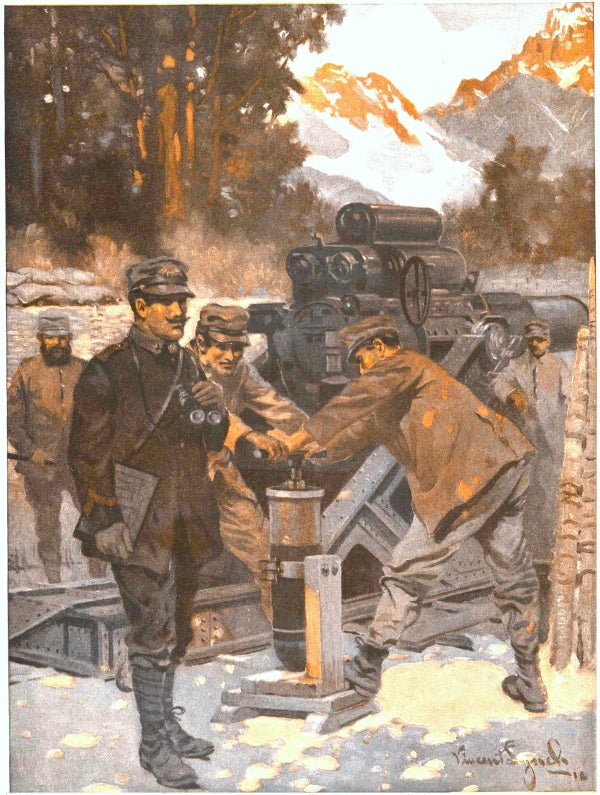
The cover of the May 20, 1916, issue of Scientific American shows artillery troops—I believe Austrian— preparing shells for firing by screwing the primer into the base of the shell—I believe it is a shell for the 21-centimeter “morser” or howitzer behind the troops. There is no article associated with the image—a practise not unusual for the time. Shells were shipped without primers, for safety reasons, so inserting the primer at the front lines was the last link in a long and complex chain of manufacture, shipping and preparation that frequently went wrong: perhaps up to a third of the billion or so shells fired during the First World War were duds.
-
On supporting science journalism
If you're enjoying this article, consider supporting our award-winning journalism by subscribing. By purchasing a subscription you are helping to ensure the future of impactful stories about the discoveries and ideas shaping our world today.
Our full archive of the war, called Scientific American Chronicles: World War I, has many articles from 1914–1918 on artillery in the First World War. It is available for purchase at www.scientificamerican.com/products/world-war-i/