
This article was published in Scientific American’s former blog network and reflects the views of the author, not necessarily those of Scientific American
The news from Europe in 1916 was full of woe on a vast scale. Closer to home, American generals Frederick Funston and John J. “Black Jack” Pershing were pursuing Pancho Villa and his band of rebels in Mexico following an attack on a U.S. military base in Columbus, New Mexico.
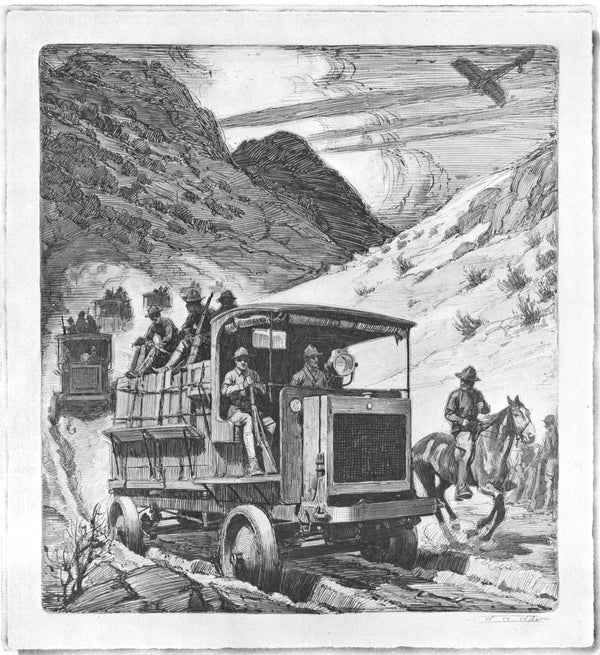
American truck manufacturers were working as fast as they could to provide the transportation for all the soldiers and supplies being thrown into these military ventures. The marketing effort from these companies included advertisements in Scientific American, then as now a general consumer magazine. Shown here from the June 3, 1916, issue of exactly 100 years ago, are three of those advertisements.
The Jefferey Quad (seen above) was used extensively by the U.S. military and the French army. 11,500 of these were sold between 1913 and 1919. They were advanced and robust for their time: four-wheel drive, front and rear wheels could steer, and a slip differential mechanism helped provide traction in muddy conditions. The company eventually evolved into the American Motors Corporation.
On supporting science journalism
If you're enjoying this article, consider supporting our award-winning journalism by subscribing. By purchasing a subscription you are helping to ensure the future of impactful stories about the discoveries and ideas shaping our world today.
Packard trucks were widely used commercially: according to the ad, 27 of them were “with Funston in Mexico,” and the American Express company had 164 of them.
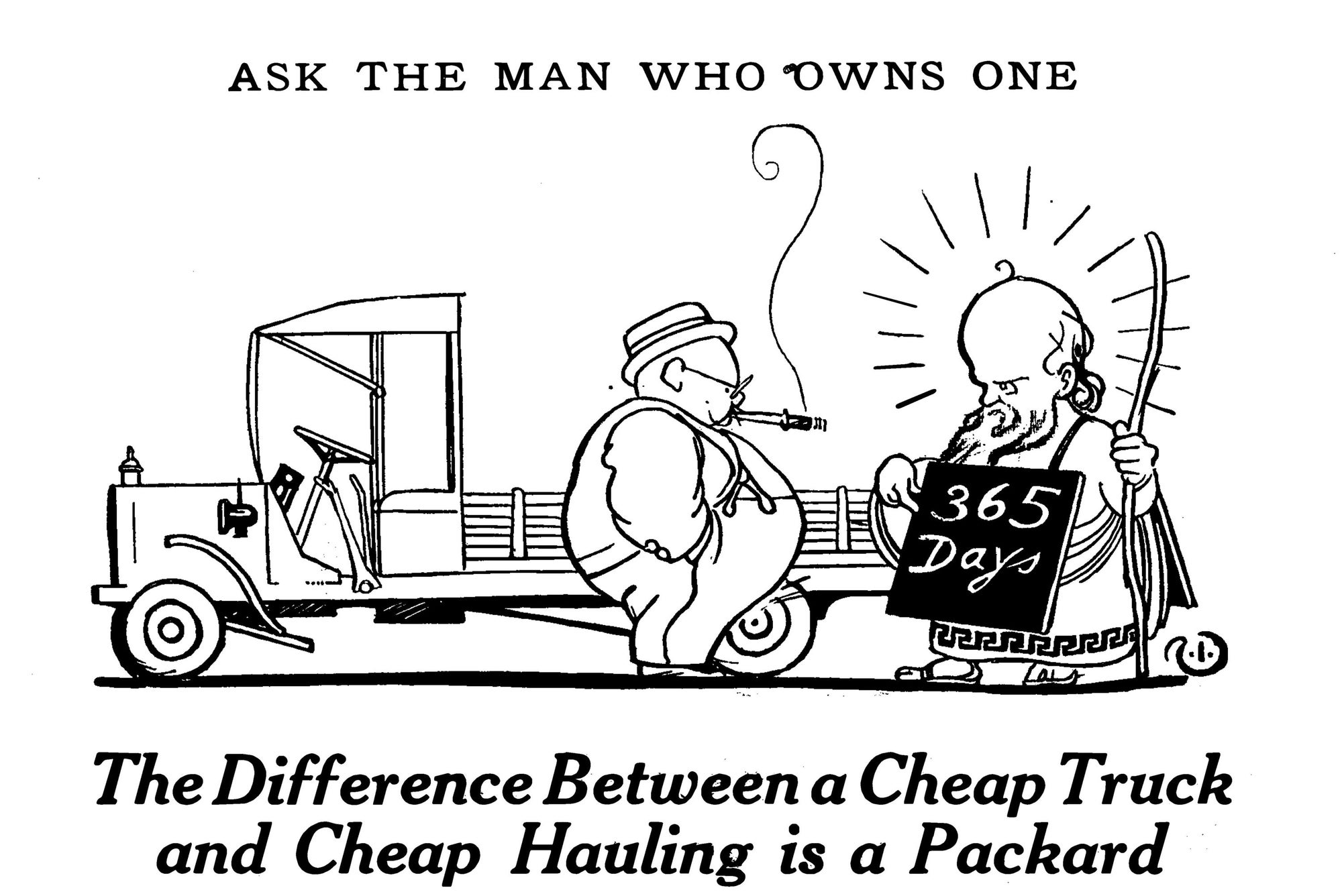
Packard ad: a leading commercial supplier also had some trucks in military service.
Buda Motor proclaims the reliability and readiness of its truck motors when Uncle Sam “had to go into Mexico on Villa’s trail.” The company made engines for a wide assortment of vehicles and was bought out in 1953 by Allis-Chalmers.
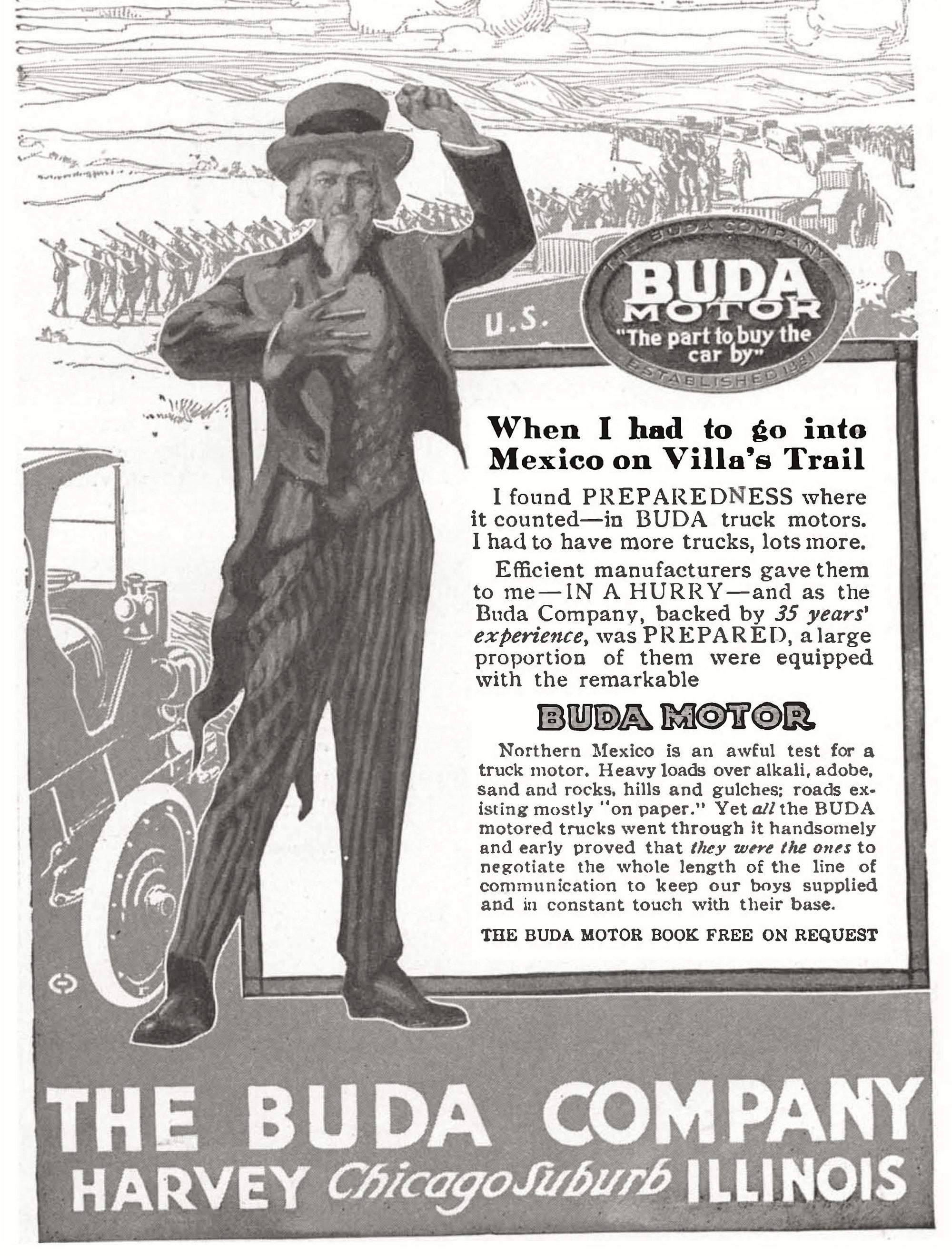
Buda motors: An advert from 1916 touts the usefulness of this brand of motors in trucks with the American army in Mexico.
According to The Automobile of January 4, 1917, the U.S. Army bought 2,300 trucks costing $34.5 million for use on the Mexican border.
-
Our full archive of the war, called Scientific American Chronicles: World War I, has many articles from 1914–1918 on economic aspects of the First World War. It is available for purchase at www.scientificamerican.com/products/world-war-i/