
This article was published in Scientific American’s former blog network and reflects the views of the author, not necessarily those of Scientific American
By early 2017 there was a growing recognition in the U.S. that the country might have to join the Great European War. The vast Atlantic and Pacific oceans, so long a formidable obstacle to potential enemies, were beginning to seem less formidable given the increasing speed and range of modern warships—particularly submarines.
The special issue of Scientific American on this date 100 years ago looked at naval power worldwide, particularly as it stacked up against the U.S. Navy. The issue is a mix of the leading naval warfare theorems of the day, with a look at the realities of the current war—especially the battle of Jutland and the ongoing submarine war. Some readers might also detect undercurrents of fear, paranoia and bravado in the articles. Here, though, we’ll just look at a sampling from one article on the value of the battleship, which was still considered to be the steel heart of any modern navy:

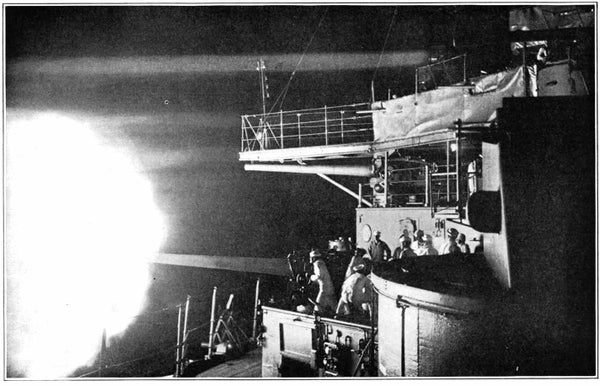
The USS New York was laid down in 1911, mounting the modern 14-inch naval gun. By 1917 standards it was slightly under-gunned, slow, and was fueled by less efficient oil-sprayed coal (hence the smoke). Credit: Scientific American, March 3, 1917
On supporting science journalism
If you're enjoying this article, consider supporting our award-winning journalism by subscribing. By purchasing a subscription you are helping to ensure the future of impactful stories about the discoveries and ideas shaping our world today.
“Barring England and Mexico, an attack upon the United States, in its initial stages, must be conducted in many vessels across many miles of sea. In the event of war, therefore, with an enemy across the sea, our first duty will be to gain touch with his attacking expedition as far from our coast as possible and convenient in order to harass and eventually annihilate it. Slow battleships seem to have no place in our ‘attacking’ fleet. We should have types capable of ‘controlling the surface’ from our shores to the advancing enemy. By this means we shall lessen, it not eliminate, the danger of enemy submarines, and give our own mobile offensive type of submarines an added value. Gun power, radius of action, and speed are essential for this work. These are the pivotal attributes. To gain them, all purely defensive attributes will have to be sacrificed. Every nation must eventually reach a maximum limit of displacement, which it would be ruinous financially to go beyond. In our case this limit is for all times fixed by the size of the Panama Canal locks.”
Given the hindsight from 2017, it was somewhat unrealistic to think that either Germany or Austria, then in the third year of their war and desperately straining for resources, would have been able to collect enough ships, fuel and manpower to mount an “attacking expedition.” When the U.S. entered the war, it was German submarines that quickly became a persistent menace to shipping.
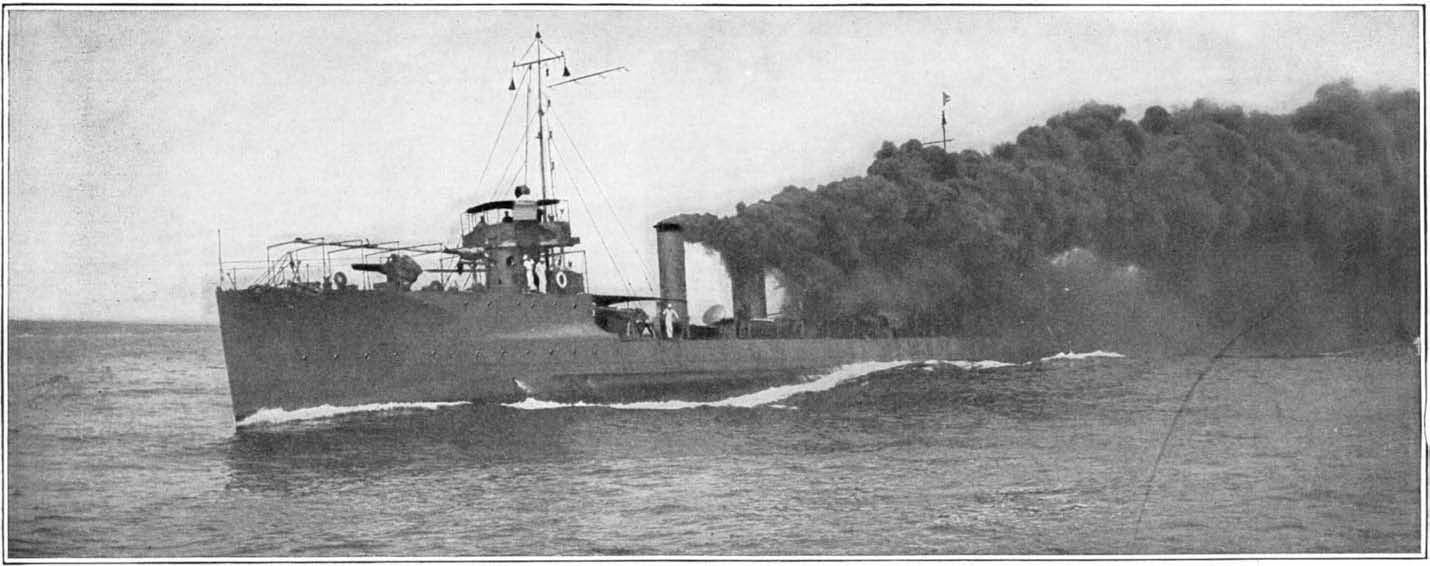
A modern “thousand-ton” destroyer lays down a thick smoke screen during maneuvers—a good tactic in 1917 (and decades before the invention of radar). Credit: Scientific American, March 3, 1917
-
The views expressed are those of the author and are not necessarily those of Scientific American.
Our full archive of the war, called Scientific American Chronicles: World War I, has many articles from 1914–1918 on naval warfare during the First World War. It is available for purchase at www.scientificamerican.com/products/world-war-i/